
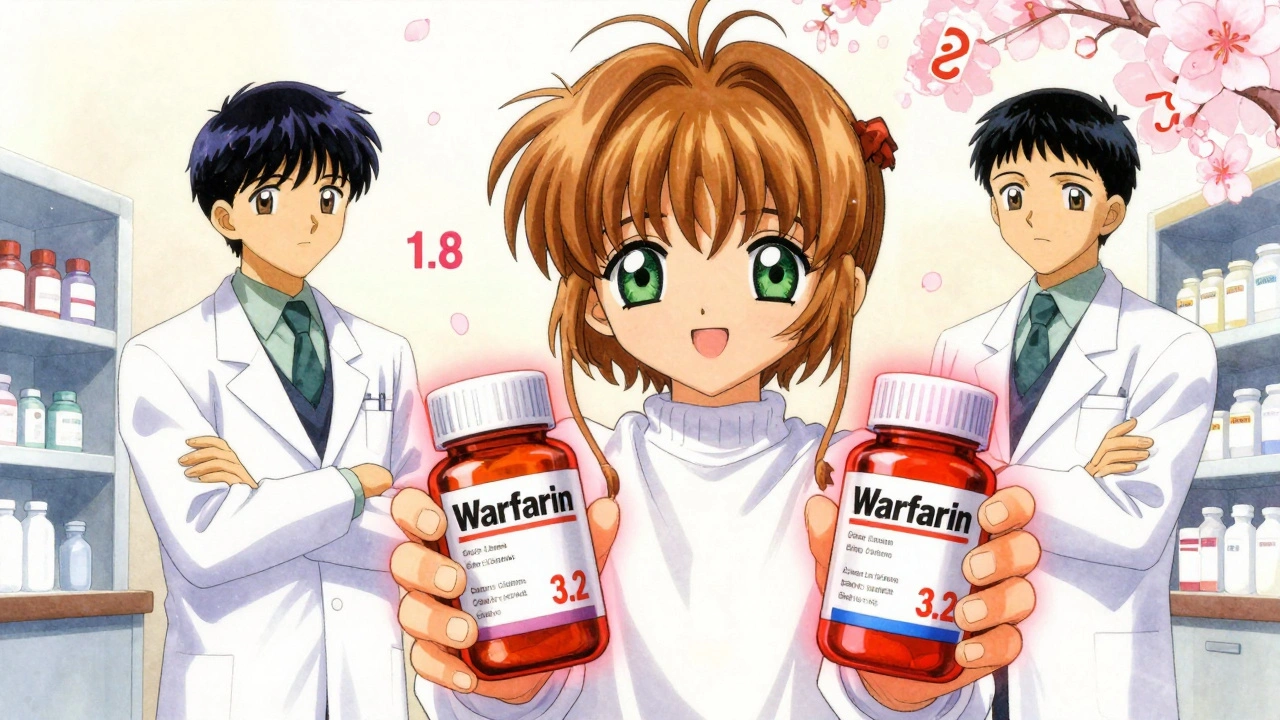
When you take a medication like warfarin or phenytoin, even a tiny change in your dose can mean the difference between being safe and being in the hospital. These are NTI drugs - narrow therapeutic index drugs - and they don’t play by the same rules as most other prescriptions. The gap between the dose that works and the dose that harms you is razor-thin. That’s why switching from a brand-name version to a generic, even one approved by the FDA, can be risky - and why many doctors and patients are deeply uneasy about it.
What Makes a Drug an NTI Drug?
An NTI drug has a therapeutic window so small that a slight shift in blood levels can cause serious harm. The FDA defines it simply: small changes in dose or concentration can lead to treatment failure or dangerous side effects. For example, warfarin - a blood thinner - needs to keep your INR between 2.0 and 3.0. Go below 2.0, and you risk a clot. Go above 3.0, and you could bleed internally. That’s a range of just 1 point. Phenytoin, used for seizures, has a therapeutic range of 10 to 20 mcg/mL. Above 20, you get dizziness, unsteady walking, and even coma. Below 10, seizures return.
These drugs aren’t rare. About 15 to 20% of commonly prescribed medications fall into this category. Others include lithium for bipolar disorder, digoxin for heart failure, theophylline for asthma, and methadone for pain or addiction. For each, the margin for error is slim. And that’s exactly why the standard rules for generic drugs don’t always fit.
How Generic Drugs Are Approved - and Why It’s a Problem for NTI Drugs
The FDA requires generic drugs to prove they’re bioequivalent to the brand-name version. That means their absorption in the body must fall within 80% to 125% of the original drug’s levels. On paper, that sounds reasonable. But for an NTI drug, that 45% spread is enormous. If the brand drug gives you a blood level of 15 mcg/mL, the generic could legally deliver anywhere from 12 to 18.75 mcg/mL. For phenytoin, that’s the difference between safe and toxic.
Some experts argue that for NTI drugs, the acceptable range should be tighter - maybe 90% to 111%. But the FDA hasn’t made that official. In 2010, its advisory committee said the current standards were fine. Yet, decades of real-world cases tell a different story. Patients on carbamazepine have had breakthrough seizures after switching generics. Others on warfarin have seen their INR swing wildly after a pharmacy substitution, even when no other meds or diet changed.

Real Cases, Real Consequences
It’s not theoretical. In the 1980s, multiple patients on phenytoin developed toxicity after switching to a generic version. Their blood levels jumped beyond 20 mcg/mL - not because they took more, but because the generic absorbed differently. One study found that switching from Coumadin (brand warfarin) to generic warfarin led to subtherapeutic INR levels in some patients, increasing stroke risk. Others saw INR spike dangerously high, causing bleeding.
For opioids like methadone, the stakes are even higher. In opioid-naïve patients, the ratio between an effective pain dose and a respiratory-depressing dose can be as low as 2:1. Switch to a generic with slightly higher bioavailability, and you could stop breathing. Switch to one with lower absorption, and you’re left in pain. Chronic users aren’t safe either - tolerance narrows the window even further over time.
These aren’t isolated incidents. They’re documented in medical journals, emergency room reports, and patient testimonies. And while some studies - like a 2007 HMO study on warfarin - found no major issues, those studies often involve stable, monitored patients in controlled settings. Real life isn’t like that. Patients miss appointments. They forget to get blood tests. They switch pharmacies. And suddenly, a tiny difference in absorption becomes a life-threatening event.
Doctors, Pharmacists, and Patients: Who Decides?
The American Medical Association (AMA) has been clear since 1997: the prescribing physician should decide whether to allow generic substitution for NTI drugs. That’s because no two patients are the same. One person might tolerate a switch without issue. Another might crash into toxicity. Only the doctor who knows the patient’s history, lab trends, and response to medication can judge the risk.
Pharmacists are caught in the middle. A 2019 survey showed most pharmacists trust generic NTI drugs - but skepticism was higher among those working outside big chains. Many say they’d never substitute without checking with the prescriber. Some states, like North Carolina, have laws that restrict automatic substitution for NTI drugs. Others don’t. It’s a patchwork.
And patients? They’re often left in the dark. Many assume “generic” means “identical.” But with NTI drugs, that’s not true. A patient on lithium might not realize that a new bottle from a different manufacturer could send their sodium levels spiraling. A person on warfarin might not know that switching brands could mean needing a blood test the next week - even if they’ve been stable for years.
What Should You Do If You Take an NTI Drug?
If you’re on one of these drugs, here’s what matters:
- Don’t let your pharmacy switch your drug without asking. Ask your pharmacist: “Is this the same brand I’ve been taking?” If it’s different, ask if you need a blood test.
- Keep a medication log. Write down your dose, when you take it, and any side effects. Share this with every provider you see.
- Know your numbers. If you’re on warfarin, know your last INR. If you’re on phenytoin, know your last blood level. Ask for a copy of your lab results.
- Stick with one pharmacy. That way, your records stay consistent, and the pharmacist can flag changes.
- Never stop or change your dose. Even if you feel fine, a change in formulation can silently throw you off.
Some experts say generic substitution for NTI drugs should be banned entirely. Others say it’s safe if monitored closely. The truth? There’s no universal answer. But one thing is clear: NTI drugs aren’t like antibiotics or statins. They demand more attention, more testing, and more caution.
The Bigger Picture: Cost vs. Safety
The push for generics comes from a good place - lowering drug costs. But for NTI drugs, the cost of a mistake isn’t just financial. It’s hospital stays, emergency rooms, and sometimes death. The FDA continues to review whether tighter bioequivalence standards are needed. Until then, the burden falls on patients and doctors to be vigilant.
There’s no perfect system. But we can make it safer. By demanding transparency, insisting on monitoring, and refusing to accept automatic substitution without consent, patients can protect themselves. And until regulations catch up to the science, that’s the best defense we have.
Are all generic drugs unsafe for NTI medications?
No, not all generics are unsafe. Many patients switch without issues. But the risk is higher than with other drugs because of how tightly the body must control blood levels. That’s why it’s not about whether generics work - it’s about whether the variation between them is acceptable for your specific condition.
Can I ask my doctor to prescribe only the brand-name version?
Yes. Your doctor can write “Dispense as Written” or “Do Not Substitute” on your prescription. This legally prevents the pharmacy from switching you to a generic without your consent. Many doctors do this for NTI drugs - especially if you’ve been stable on a specific brand.
Why doesn’t the FDA require stricter standards for NTI generics?
The FDA says current standards are adequate, but many experts disagree. The agency has recommended tighter limits for NTI drugs since the 1990s, but changing regulations takes time, data, and consensus. Without clear evidence of widespread harm, change moves slowly. Meanwhile, patients are left navigating uncertainty.
Which NTI drugs are most commonly switched to generics?
Warfarin, phenytoin, lithium, digoxin, and theophylline are the most common. These are widely prescribed, and generics are cheaper. But they’re also the drugs most likely to cause problems if blood levels shift. Methadone and carbamazepine are also high-risk, though less commonly substituted due to stricter controls.
How often should I get blood tests if I’m on an NTI drug?
After any switch - brand to generic, generic to generic, or even a different batch - get a blood test within 1 to 2 weeks. Even if you feel fine, levels can change silently. Once stable, testing frequency depends on your condition. Warfarin patients often test weekly at first, then monthly. Lithium and phenytoin patients may test every 3 to 6 months if stable.

Comments
Generic switches for NTI drugs are a gamble with lives. I’ve seen patients crash after a pharmacy swap-no warning, no notice. Doctors should have the final say, not a pharmacist following a script.
Bro, I’m on warfarin and my INR went from 2.4 to 4.1 after they switched my generic. 🤯 I ended up in the ER with a bloody nose and a $5k bill. FDA needs to wake up. This isn’t just ‘bioequivalent’-it’s a lottery.
Okay, I just want to say-this post made me cry. Not because I’m dramatic (okay maybe a little), but because my mom nearly died after a generic switch for lithium. She didn’t even know it happened. The pharmacy didn’t tell her. The doctor didn’t check for a week. 🫂 We’re lucky she’s here. Please, if you’re on one of these meds, fight for your brand. Your life isn’t a cost-saving metric.
I’m so tired of this. I’ve been on phenytoin for 12 years. Every time they switch me, I feel like I’m losing my mind. Dizziness, shaking, nightmares. And no one listens. ‘Oh, it’s just a generic.’ Just a generic? It’s my brain, my safety, my sleep. Why does nobody care?
USA made these generics so we don’t have to pay 500 bucks a month for Coumadin. If you can’t handle a little variation, maybe you shouldn’t be on meds at all. Stop whining and get your blood tested like the rest of us. 🇺🇸
Let me break this down for you like you’re five. The FDA’s 80-125% rule was made for antibiotics, not life-or-death drugs. Phenytoin isn’t Advil. You don’t just ‘take more if it doesn’t work.’ One point off INR = stroke. Two points up = internal bleeding. And guess what? The FDA’s been warned since the 90s. But bureaucracy moves slower than a Walmart cart in rush hour. Meanwhile, real people are dying because someone in a cubicle decided ‘close enough’ is good enough. 🙄
My pharmacist actually asked me if I wanted the brand when I picked up my digoxin last month. I said yes. Paid $12 extra. Worth it. If you’re on an NTI drug, don’t be cheap. Your body isn’t a lab rat. And if your doc won’t write ‘Do Not Substitute,’ find a new doc. Period.
I’ve been on methadone for 8 years. I switched generics twice and didn’t notice anything-until I did. One day I felt like I was underwater. Couldn’t think straight. My blood level was 30% higher than usual. I didn’t know it was the generic until I called the pharmacy. Now I only get my script from one place. And I always check the label. Small things matter. Thanks for the reminder, OP.