Your heart doesn't stop working when you close your eyes. In fact, for millions of people, the night is when their cardiovascular system faces its toughest challenge. If you snore loudly or wake up gasping, you might think it's just an annoyance. But that sound is often a warning sign of Sleep Apnea, a condition where breathing repeatedly stops and starts during sleep. Recent data suggests this disorder affects roughly 1 billion people globally, with about 40 million Americans living with it. The scary part? Most don't know they have it. And while they are unaware, their hearts are paying the price.
We used to treat sleep problems and heart problems as separate issues. That view has changed dramatically. Today, medical consensus treats moderate to severe sleep apnea as an independent risk factor for major cardiovascular events. It’s not just a side effect of being tired; it’s a direct driver of high blood pressure, stroke, and heart failure. Understanding this link isn’t just academic-it could save your life.
The Hidden Mechanism: Why Stopped Breathing Hurts Your Heart
To understand why sleep apnea damages the heart, we have to look at what happens in your body every time you stop breathing. There are two main types: Obstructive Sleep Apnea (OSA), which accounts for 80-90% of cases where the airway physically collapses, and Central Sleep Apnea, where the brain fails to send proper signals to breathe. OSA is the primary culprit behind most cardiovascular risks, largely driven by the obesity epidemic, with 70% of cases linked to excess weight.
When your airway closes, oxygen levels in your blood drop (hypoxemia) and carbon dioxide rises (hypercarbia). This triggers a panic response in your nervous system. Studies from the European Society of Cardiology show that catecholamine levels-stress hormones like adrenaline-can spike 2 to 4 times higher during these episodes compared to normal sleep. Imagine running a sprint every time you take a breathless pause. Now imagine doing that hundreds of times a night.
This constant stress causes three specific types of damage:
- Sympathetic Overdrive: Your nervous system stays in "fight or flight" mode, keeping your heart rate and blood pressure elevated even when you should be resting.
- Mechanical Strain: As you try to breathe against a closed airway, you create negative pressure in your chest. This increases cardiac afterload (the resistance the heart must pump against) by 30-50%, forcing the heart muscle to work much harder.
- Inflammation and Oxidative Stress: Chronic low oxygen levels raise C-reactive protein levels by 35-50% and increase oxidative stress markers like malondialdehyde by 2-3 times. This damages the lining of your blood vessels (endothelium), reducing their ability to dilate by 25-40%.
Over years, this wear and tear hardens arteries and weakens the heart muscle. It’s a slow-motion crisis happening while you’re supposed to be recovering.
Blood Pressure: The Silent Link
If there is one clear connection between sleep apnea and heart health, it is hypertension (high blood pressure). In fact, sleep apnea is found in up to 80% of patients with resistant hypertension-those whose blood pressure stays above 140/90 mmHg despite taking three different medications. If you are struggling to control your blood pressure with meds alone, your doctor needs to check your sleep.
The Wisconsin Sleep Cohort Study demonstrated that people with OSA are 2 to 3 times more likely to develop hypertension within 4 to 5 years. But it’s not just about the numbers on the cuff during the day. It’s about what happens at night. Healthy blood pressure drops by 10-20% during sleep-a pattern called "dipping." About 70-80% of OSA patients lose this dip, exhibiting "non-dipping" or even "reverse-dipping" patterns where pressure stays high or rises overnight. This lack of nighttime recovery is a strong predictor of future heart attacks and strokes.
Heart Disease, Stroke, and Arrhythmias
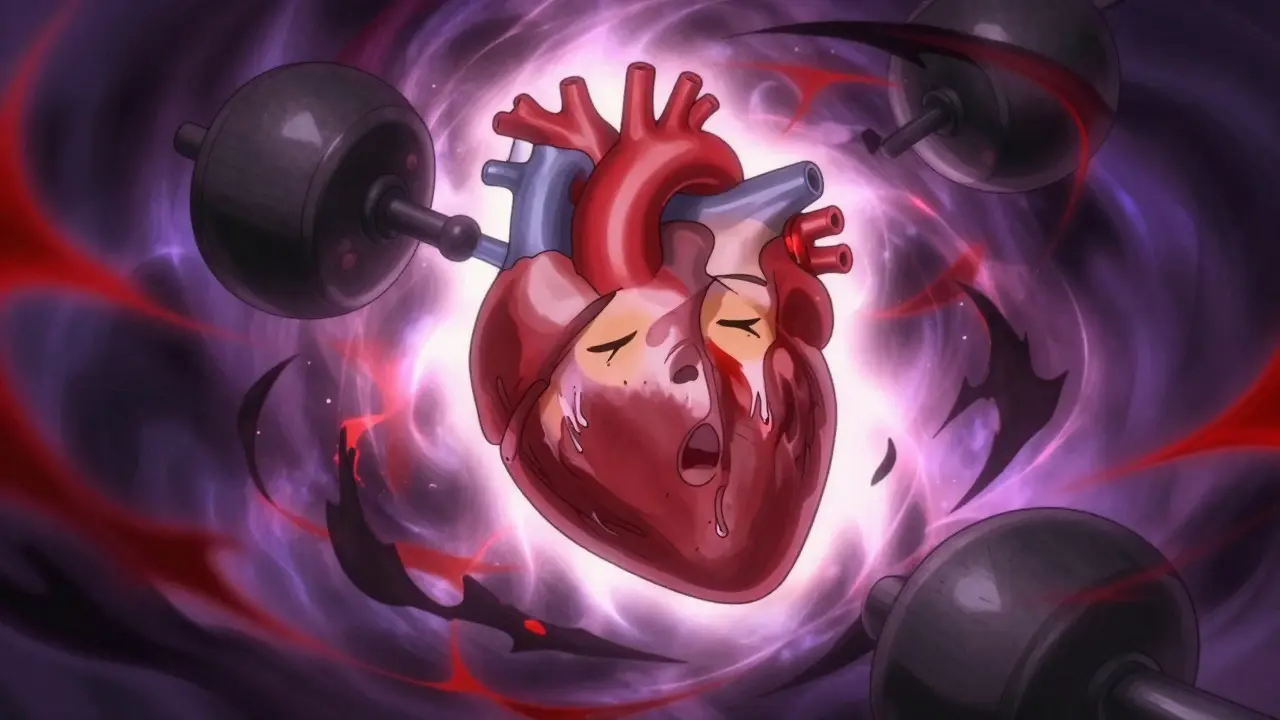
The impact goes far beyond blood pressure. Moderate to severe OSA (defined as an Apnea-Hypopnea Index of 15 or higher) increases the risk of coronary artery disease by 30%. A 2022 meta-analysis in the Journal of the American College of Cardiology found that severe OSA is associated with a 1.3 times higher incidence of myocardial infarction (heart attack) and a 1.6 times higher risk of fatal coronary events.
Timing matters too. A striking 2024 study from UT Southwestern analyzed data from nearly 10,000 adults and found that 26.5% of heart attacks in OSA patients occurred between midnight and 6 AM, compared to only 16.5% in those without the disorder. The early morning hours are already a vulnerable time for heart events due to natural hormonal shifts; sleep apnea amplifies this danger significantly.
Stroke risk is equally alarming. OSA increases the risk of a first-time stroke by 2.5 times and recurrence by 3.2 times. The severity of oxygen deprivation correlates directly with mortality; patients who spend more than 12% of their sleep time with oxygen saturation below 90% face a 4.3 times higher risk of dying from a stroke.
Then there is the rhythm of the heart. Atrial Fibrillation (AFib) is an irregular heartbeat that can lead to clots and stroke. OSA patients are 2 to 4 times more likely to develop AFib. Data from the Heart Rhythm Society shows that 49% of patients with paroxysmal AFib have undiagnosed sleep apnea, compared to just 21% of controls. If you have AFib and aren't screened for sleep apnea, you are missing a key piece of the puzzle.
| Condition | Risk Increase / Prevalence | Key Statistic |
|---|---|---|
| Hypertension | 2-3x higher risk of development | Present in 80% of resistant hypertension cases |
| Coronary Artery Disease | 30% increased risk | 1.6x higher risk of fatal events in severe OSA |
| Stroke | 2.5x incident risk; 3.2x recurrence | 4.3x higher mortality with severe nocturnal hypoxemia |
| Heart Failure | 140% increased risk | 40-60% of HF patients have concomitant sleep apnea |
| Atrial Fibrillation | 2-4x higher likelihood | 49% prevalence in paroxysmal AFib patients |
Who Is Most at Risk?
We often think of heart disease as an older person’s problem, but sleep apnea accelerates cardiovascular aging. The same UT Southwestern study highlighted a disturbing trend in younger adults. People aged 20-40 with OSA symptoms had a 45% higher likelihood of hypertension, a 33% higher risk of diabetes, and a 25% higher risk of metabolic syndrome compared to their peers. These ratios were much lower (10-12%) in adults over 41. This suggests that if you are young and have sleep apnea, you are fast-tracking the onset of chronic disease.
Obesity is the biggest driver, but it’s not the only one. Men are more frequently affected, though women’s risk increases significantly after menopause. Family history, neck circumference, and alcohol use also play roles. If you have a large neck size (over 17 inches for men, 16 inches for women), you are mechanically more prone to airway collapse.
Treatment: Does CPAP Actually Help?
The gold standard treatment is Continuous Positive Airway Pressure (CPAP), a machine that keeps your airway open with pressurized air. But does it fix the heart risks? The answer is nuanced.
For blood pressure, the results are modest. Meta-analyses show CPAP reduces systolic blood pressure by only 2-3 mmHg on average. While that sounds small, it’s statistically significant. However, CPAP shines in other areas. It reduces stroke recurrence by 37% and improves outcomes for heart failure patients, especially those with central sleep apnea, as shown in the SLEEP-HF trial.
The bigger issue is adherence. Only 46% of CPAP users maintain adequate compliance (using it for at least 4 hours a night, 70% of nights). If you aren’t wearing the mask, you aren’t getting the protection. Newer devices, better masks, and oral appliances are helping, but consistency remains the hardest part of treatment.
Untreated sleep apnea also undermines other heart treatments. Catheter ablation for AFib has a 30% lower success rate in patients with untreated OSA. Cardiac resynchronization therapy sees a 15% lower response rate. Fixing the sleep problem makes the heart treatments work better.
Screening and Next Steps
You don’t need to guess if you have sleep apnea. Cardiologists are now urged to screen all patients with hypertension, AFib, stroke, or heart failure, especially if treatments aren’t working well. The STOP-Bang Questionnaire is a simple tool used in clinics. It asks about Snoring, Tiredness, Observed apneas, Pressure (blood pressure), BMI, Age, Neck size, and Gender. A score of 5 or higher indicates high risk for moderate-to-severe OSA.
Diagnosis usually involves a home sleep test or an in-lab polysomnography. Home tests are convenient and have 85-90% sensitivity for moderate-to-severe cases, though they can miss mild OSA. Polysomnography remains the gold standard for complex cases.
If you suspect you have sleep apnea, talk to your doctor. Don’t dismiss snoring as harmless. Your heart is listening, and it’s telling you something is wrong.
Can sleep apnea cause a heart attack?
Yes. Moderate to severe obstructive sleep apnea increases the risk of coronary artery disease by 30% and is associated with a 1.3 times higher incidence of myocardial infarction. The repeated drops in oxygen and spikes in stress hormones strain the heart and arteries, making heart attacks more likely, particularly in the early morning hours.
Does CPAP lower blood pressure significantly?
CPAP therapy typically lowers systolic blood pressure by a modest 2-3 mmHg. While this reduction seems small, it is clinically meaningful. More importantly, CPAP helps restore normal nighttime blood pressure dipping patterns and significantly reduces the risk of stroke recurrence and improves heart failure outcomes.
What are the signs of sleep apnea?
Common signs include loud snoring, witnessed pauses in breathing during sleep, gasping or choking at night, excessive daytime sleepiness, morning headaches, and difficulty concentrating. If you have high blood pressure that is hard to control, you are at higher risk and should be screened.
Is sleep apnea linked to atrial fibrillation?
Strongly. People with sleep apnea are 2 to 4 times more likely to develop atrial fibrillation. Nearly half of patients with paroxysmal AFib have undiagnosed sleep apnea. Treating sleep apnea can improve the success rates of AFib treatments like catheter ablation.
How is sleep apnea diagnosed?
Diagnosis begins with screening tools like the STOP-Bang questionnaire. If risk is identified, a home sleep apnea test may be ordered for moderate-to-severe suspicion. For complex cases or mild symptoms, an in-lab polysomnography (overnight sleep study) is the gold standard for accurate diagnosis.
Why is sleep apnea worse for younger people?
Research shows that adults aged 20-40 with sleep apnea have a much higher relative risk of developing hypertension, diabetes, and metabolic syndrome compared to older adults. This suggests that sleep apnea accelerates the onset of cardiovascular disease in younger populations, leading to earlier health complications.