
AUD Medication Suitability Calculator
When someone is trying to quit drinking, the biggest fear isn’t withdrawal - it’s relapse. And for many, the problem isn’t willpower. It’s biology. Alcohol rewires the brain. Cravings don’t just go away because you say they should. That’s where medications come in. But here’s the catch: these drugs only work if you understand how they work - and what they can’t do.
How AUD Medications Actually Work
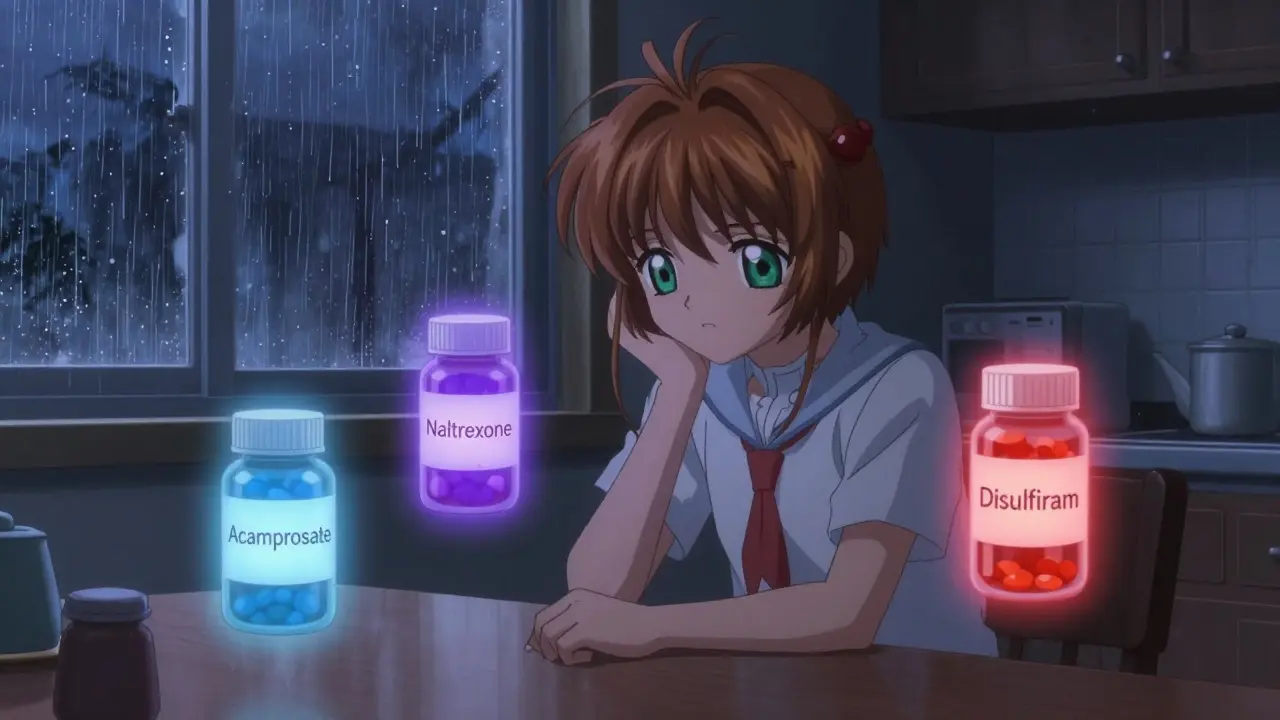
There are three FDA-approved medications for Alcohol Use Disorder (AUD), each with a different job. They don’t cure addiction. They don’t make you stop wanting alcohol. They help your brain reset so you’re less likely to fall back into old patterns.Acamprosate (Campral) targets the brain’s chemical imbalance after you stop drinking. Alcohol messes with glutamate and GABA - two key neurotransmitters. When you quit, your brain goes haywire. Acamprosate helps calm that storm. It’s not a quick fix. You need to be alcohol-free for at least three to five days before starting it. People who take it often say they feel more emotionally stable, less on edge. But if you drink even a little while on it, it won’t make you sick. It just doesn’t work as well.
Naltrexone (Revia, Vivitrol) works differently. It blocks the part of your brain that feels pleasure from alcohol. Think of it like turning down the volume on the reward signal. You still might drink, but it won’t feel as good. That’s why it’s especially helpful for people who struggle with heavy drinking episodes. The oral version (50 mg daily) is cheaper and easier to start. The monthly shot (Vivitrol) removes the daily pill burden - but studies show it doesn’t help people stop drinking entirely. It helps them drink less. And fewer heavy days. That’s a win, but not a cure.
Disulfiram (Antabuse) is the old-school option. It makes your body react badly to alcohol. Drink while on it? You’ll get flushed, nauseated, dizzy, maybe even have trouble breathing. It’s a deterrent. But here’s the problem: it only works if you take it every day - and don’t drink. If you skip a dose, you’re vulnerable. If you drink anyway, you’re risking a medical emergency. It’s effective for highly motivated people. For most? The fear of side effects outweighs the motivation to quit.
Who Gets the Most Out of These Drugs?
Not everyone responds the same way. The right medication depends on your history, your goals, and your body.If your goal is total abstinence, acamprosate is your best bet. It’s the only one proven to help people stay completely sober over the long term. But you have to be ready to stop drinking first. If you’re still drinking, it won’t help.
If you’re trying to cut back - especially if you binge drink - naltrexone is stronger. It doesn’t care if you’ve had a drink today. It just reduces how much you’ll want to drink tomorrow. That’s why it’s often recommended for people who can’t quit cold turkey but want to avoid the worst episodes.
Disulfiram? Only if you’re ready to treat it like a life-or-death rule. One sip can mean hours of misery. It’s not for the faint of heart. And it’s dangerous if you have liver problems.
There’s also gabapentin - not FDA-approved for AUD, but used off-label with strong results. It’s especially helpful for people with a history of severe withdrawal. One study showed 45% of those with high withdrawal symptoms stayed abstinent on gabapentin, compared to 28% on placebo. And unlike naltrexone, it’s safe for people with liver disease. That’s huge.
The Hidden Problem: Adherence
The biggest reason these medications fail? People stop taking them.In clinical trials, only about 60% of people stick with acamprosate or naltrexone for 16 weeks. For disulfiram? Only 71% make it past the first month. Why?
- Acamprosate causes diarrhea and nausea in 10-12% of users. Not life-threatening, but enough to make people quit.
- Naltrexone’s side effects are mild - mostly nausea - but people still drop out because they don’t feel an immediate difference.
- Disulfiram? Metallic taste, drowsiness, and the constant fear of accidental alcohol exposure (mouthwash, cough syrup, even some foods) make it unbearable for many.
Real-world data is even worse. Only 35% of people prescribed these drugs are still taking them after three months. And cost? It’s not the main barrier - most are generic. The real issue? No one checks in. No one follows up. You get a script, and that’s it.

Why Doctors Don’t Prescribe Them
You’d think with solid evidence, these drugs would be everywhere. But here’s the truth: only 8.6% of Americans with AUD get any medication. That’s not because they don’t work. It’s because most doctors don’t know how to use them.A survey by SAMHSA found only 28% of primary care doctors feel trained to prescribe AUD meds. Many think they’re for “severe” cases only. Others believe patients won’t comply. Some don’t realize you can start naltrexone even if someone is still drinking.
And the guidelines? They’re clear. But they’re buried in medical journals. Most doctors don’t have time to read them. So they stick with counseling - which helps, but doesn’t fix the biology.
What About Combining Medications?
The big COMBINE study showed no extra benefit from mixing naltrexone and acamprosate. But other studies say otherwise. One trial of 250 people found the combo lowered relapse rates more than either drug alone - but only if compared to placebo or acamprosate by itself. Not naltrexone alone.So here’s the takeaway: don’t assume combining them is better. It might help some, but it’s not a magic bullet. And it increases side effects and cost. Stick with one unless your provider has a clear reason to try both.
What’s New in AUD Treatment?
The field is changing fast. New tools are emerging:- Extended-release naltrexone implants - in phase 2 trials - could last six months instead of one. Early results show 78% adherence versus 42% for monthly shots.
- Digital tools - apps that track cravings and send coping strategies - cut relapse risk by 33% when paired with medication.
- Ketamine infusions reduced relapse by 41% in a small 2022 trial. Still experimental, but promising.
- Personalized medicine - researchers are now using brain scans and genetics to predict who will respond to which drug. One machine learning model got 82% accuracy.
There’s also gabapentin’s rising role. For people with liver damage from alcohol, it’s now considered safer than naltrexone. One 2024 study showed it cut cirrhosis decompensation events by over half.
What Should You Do?
If you or someone you know is struggling with AUD:- Don’t assume you have to quit cold turkey to get help. Naltrexone works even if you’re still drinking.
- Ask your doctor about acamprosate if your goal is total abstinence.
- Consider gabapentin if you have liver disease or a history of severe withdrawal.
- Don’t give up if one medication doesn’t work. Try another.
- Medication alone isn’t enough. Pair it with therapy, support groups, or coaching.
- Track your progress. Use a journal or app. Notice patterns.
These drugs aren’t magic. But they’re the closest thing we have to a biological lifeline for people trying to rebuild their lives after alcohol. The science is solid. The challenge? Making sure the right person gets the right drug - and sticks with it.
Can I drink while taking naltrexone?
Yes, you can - but you shouldn’t. Naltrexone doesn’t make alcohol dangerous to consume. Instead, it reduces the pleasurable effects. You might still drink, but it won’t feel rewarding. That’s the point. Drinking while on naltrexone won’t cause a medical emergency like disulfiram does, but it defeats the purpose of the medication. The goal is to reduce cravings and heavy drinking over time, not to enable occasional use.
Why is acamprosate only for people who are already abstinent?
Acamprosate works by stabilizing brain chemistry after alcohol withdrawal. If you’re still drinking, your brain isn’t in the state it needs to be in for the drug to work. Starting acamprosate while drinking won’t help you quit - it might even make withdrawal symptoms worse. That’s why you need at least 3-5 days of abstinence before beginning treatment. It’s not a magic pill for active drinkers. It’s a recovery tool for those already on the path.
Is disulfiram safe if I have liver problems?
No. Disulfiram is metabolized by the liver and can cause serious liver damage, especially in people with existing liver disease. It’s contraindicated in anyone with active hepatitis, cirrhosis, or abnormal liver enzymes. Even if you’ve stopped drinking, your liver may still be vulnerable. Doctors typically avoid disulfiram entirely in patients with alcohol-related liver disease. Gabapentin or naltrexone are safer alternatives in these cases.
How long should I stay on AUD medication?
There’s no one-size-fits-all answer. Most studies show benefits lasting up to a year. But AUD is a chronic condition for many. The NIAAA says some people need medication for years - even lifelong. Think of it like blood pressure medicine. You don’t stop because you feel better. You stop because your doctor says it’s safe to. If you’ve been sober for 12-18 months and feel stable, talk to your provider about tapering. But don’t quit abruptly. Relapse risk spikes when people stop too soon.
Are these medications covered by insurance?
Yes, most are. Acamprosate and naltrexone are available as generics. Monthly naltrexone injections (Vivitrol) are more expensive but often covered under behavioral health benefits. Disulfiram is very cheap - under $50 a month. If you’re being denied coverage, ask for a prior authorization. Many insurers require proof of diagnosis or a referral from a counselor. Call your insurance provider directly - don’t assume it’s not covered.
Can I take these medications with other prescriptions?
It depends. Naltrexone can interfere with opioid painkillers - so if you need surgery or strong pain relief, you’ll need to stop it 7-10 days ahead. Acamprosate is generally safe with most meds but requires dose adjustment if you have kidney problems. Gabapentin can increase drowsiness if taken with sedatives or antidepressants. Always tell your prescriber about every medication, supplement, and over-the-counter drug you take. Even herbal remedies like kava or valerian can interact with AUD treatments.
Final Thoughts
Alcohol Use Disorder isn’t a moral failure. It’s a brain disorder. And like any other chronic condition, it needs medical treatment. Medications for AUD aren’t perfect. They don’t work for everyone. But they work for enough people - and when used right, they save lives.The biggest obstacle isn’t the science. It’s stigma. It’s silence. It’s the belief that recovery should be all willpower. It’s not. If you’re struggling, ask for help. Ask about medication. Ask again if you’re told no. You deserve a real chance - not just hope.
Comments
Look, I get it - people want a magic pill. But let’s be real: if you’re still drinking while on naltrexone, you’re not trying to quit, you’re just trying to feel less guilty about it. This isn’t a party trick. It’s a lifeline for people who actually want to change. Stop treating recovery like a buffet.
ok so i read this whole thing and like… wow. i mean, i’ve been sober 3 years but i tried acamprosate and it made me feel like my brain was full of wet socks?? like, i was calm but also… dead? like emotionally frozen? and the diarrhea?? no thanks. i switched to gabapentin and honestly? it felt like my nervous system finally stopped screaming. also, i still drink sometimes but like, 1 beer on friday, not 6 bottles a night. so maybe it’s not about abstinence? maybe it’s about not dying? 🤷♀️
Biggest thing no one talks about: adherence isn’t about willpower - it’s about support. I was on naltrexone for 6 months. Stopped because I forgot to refill. Not because I didn’t care. No one called. No one checked in. Just a script and a prayer. If this were diabetes, we’d have nurses calling. But for AUD? You’re on your own. That’s the real failure here - not the meds.
It’s fascinating how we treat addiction as a moral failing when the biology is so clearly documented. The brain isn’t a switch - it’s a rewired circuit. Medications don’t erase desire; they recalibrate the noise. But we demand purity - total abstinence - as if the body should obey the mind’s will without biological compromise. Isn’t that the same logic that rejected insulin for diabetics? ‘Just stop eating sugar.’ We’re still in the dark ages when it comes to addiction medicine.
YOU GOT THIS. I was where you are. I tried everything. Pills, therapy, AA, retreats - nothing stuck until I found gabapentin. I had nightmares, shaking, panic attacks - it was hell. Gabapentin didn’t make me want to quit. It made me able to sleep. And when I could sleep? I started caring again. You don’t need to be perfect. You just need to show up. One day. One pill. One breath. You’re not broken. You’re healing. 💪
So… let me get this straight. You’re telling me I can drink while on naltrexone… but I shouldn’t? 🤨 Like… why not just call it ‘alcohol flavoring for people who hate fun’? And why is disulfiram the villain? It’s literally the only one that makes you PAY for a sip. The rest are just… polite suggestions. I’m all for science, but sometimes the old-school punishment model works better than ‘empathy-based neurochemistry.’ 🤷♂️
Wow. So much typing for ‘take pills and hope.’ You really think people don’t know this? Everyone knows the science. The problem? People don’t care. And you’re acting like this is some groundbreaking revelation. Newsflash: most addicts don’t want to be fixed. They want to be left alone. This article reads like a pharmaceutical pamphlet written by someone who’s never met a real alcoholic.
Actually, the COMBINE study didn’t show ‘no benefit’ - it showed no *statistically significant* benefit over naltrexone alone. But newer meta-analyses (2023, JAMA Psychiatry) suggest synergy in high-craving subgroups. Also, Vivitrol adherence is higher than oral naltrexone - 58% vs 32% at 6 months. And gabapentin’s liver safety data? That’s the real game-changer. This article oversimplifies. But the core message? Still solid.
My brother took naltrexone. Didn’t work. Tried acamprosate. Felt weird. Then he tried gabapentin - and boom. 18 months sober. No drama. No side effects. Just… peace. 🙏 If you’re struggling, don’t give up. Try the weird ones. The off-label ones. The ones no one talks about. They might be the ones that save you.
i just want to say thank you for writing this. i’ve been trying to help my sister and i felt so lost. i thought it was just ‘she needs to try harder.’ but this… this made me understand it’s not about strength. it’s about biology. i’m going to take this to her doctor tomorrow. she deserves a real shot. ❤️
It’s mildly concerning that this article casually promotes gabapentin as a ‘safe alternative’ without acknowledging its potential for misuse, dependence, and the fact that it’s not FDA-approved for AUD. The rise in off-label prescribing without proper longitudinal data is a dangerous precedent. This reads like a blog post masquerading as clinical guidance. The science is nuanced - and this doesn’t reflect that.
Thank you for this. As someone who grew up in a culture where alcohol is sacred and asking for help is weakness, this changed how I see recovery. My dad took naltrexone. He still drinks sometimes - but now it’s one glass, not a bottle. He’s alive. He’s present. That’s not failure. That’s progress. We need more stories like this - not just stats. And less shame. More science. More compassion.