Warfarin-Antibiotic Interaction Estimator
Enter your parameters and click calculate to see estimated adjustments.
Imagine this: you’ve been taking Warfarin, a vitamin K antagonist anticoagulant first approved by the FDA in 1954 for years. Your International Normalized Ratio (INR) is stable. Then, you get a simple urinary tract infection or a toothache. The doctor prescribes a common antibiotic. A week later, you notice unusual bruising or bleeding gums. What happened? You didn’t change your diet, and you took your medication exactly as prescribed. The culprit was likely the interaction between your blood thinner and the new antibiotic.
This scenario plays out for millions of people annually. According to the American Heart Association’s 2022 guidelines, approximately 2.5 million Americans are prescribed warfarin each year, primarily for mechanical heart valves, severe mitral stenosis, and certain cases of atrial fibrillation where newer direct oral anticoagulants (DOACs) aren't suitable. About 20-30% of these patients receive antibiotics every single year. When these two powerful classes of drugs meet, the results can be dangerous if not managed correctly.
Why Do Warfarin and Antibiotics Clash?
To manage this risk, you need to understand why they interact. It’s not just one mechanism; it’s a three-pronged attack on your body’s ability to regulate clotting.
First, many antibiotics mess with the enzymes that break down warfarin in your liver. Specifically, they inhibit an enzyme called CYP2C9, which metabolizes the more potent S-warfarin isomer responsible for 70% of the anticoagulant effect. When this enzyme is blocked, warfarin stays in your system longer and works harder than intended. Drugs like trimethoprim-sulfamethoxazole (TMP-SMX), fluoroquinolones, and macrolides are notorious for this.
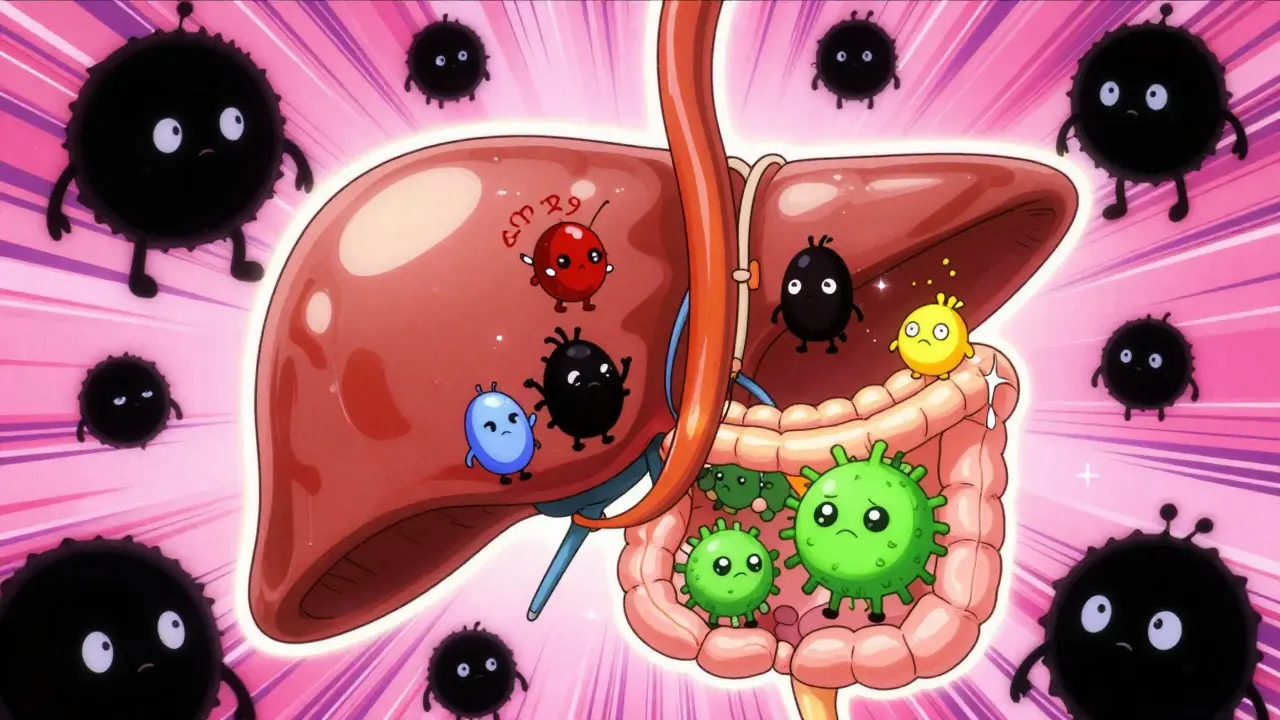
Second, antibiotics wipe out the good bacteria in your gut. Your intestinal flora produces about 10-15% of your body’s vitamin K supply. Vitamin K helps your blood clot, acting as a natural counterbalance to warfarin. Broad-spectrum antibiotics kill these bacteria, reducing vitamin K levels and making warfarin more effective. This is particularly true for cephalosporins like ceftriaxone, which can raise your INR by 0.5-1.5 units within just three to five days, even though they don’t affect liver enzymes directly.
Third, some antibiotics compete with warfarin for space on proteins in your blood. Warfarin is highly bound to albumin. If an antibiotic like TMP-SMX displaces it, more "free" warfarin circulates in your bloodstream, temporarily boosting its effect by 30-50% in the first 24-48 hours.
Risk Levels: Not All Antibiotics Are Created Equal
You might think all antibiotics are equally risky, but that’s not the case. Medical professionals categorize them based on how much they typically spike your INR. Knowing which category your prescription falls into helps you monitor yourself better.
| Risk Level | Common Examples | Expected INR Impact | Action Required |
|---|---|---|---|
| High Risk | Trimethoprim-sulfamethoxazole (Bactrim/Septra), Fluconazole (antifungal) | INR increase >1.5 units in >30% of patients | Expect 25-50% warfarin dose reduction. Check INR at 3-5 days. |
| Moderate Risk | Ciprofloxacin, Erythromycin, Amoxicillin, Cephalexin | INR increase 0.5-1.5 units in 20-30% of patients | Potential 10-25% dose reduction. Check INR at 5-7 days. |
| Low Risk | Azithromycin, Clindamycin | INR increase <0.5 units in <10% of patients | Standard monitoring usually suffices. |
| Exception (Decreases INR) | Rifampin | Significantly lowers INR by inducing liver enzymes | May require 50-100% warfarin dose increase. Complex management over 6-8 weeks. |
The high-risk group includes Trimethoprim-sulfamethoxazole (often known by brand names like Bactrim or Septra). A 2012 study published in the Journal of the American Geriatrics Society found that exposure to this specific antibiotic carried an adjusted odds ratio of 3.39 for bleeding requiring hospitalization. In contrast, azithromycin has minimal impact on liver enzymes and is often considered safer for dental prophylaxis in warfarin patients.
The Rifampin Exception: When INR Drops
Most interactions make your blood thinner, but Rifampin, an antibiotic used primarily for tuberculosis that acts as a potent CYP450 inducer does the opposite. It speeds up the breakdown of warfarin, causing your INR to plummet. This can lead to clotting risks rather than bleeding risks.
If you are prescribed rifampin, do not assume you are safe from interaction. You will likely need to increase your warfarin dose by 50-100% within the first two weeks. However, this adjustment isn't permanent. Once you stop rifampin, your liver enzymes return to normal, and your warfarin levels will rise again. This process takes six to eight weeks to stabilize, requiring frequent INR checks every one to two weeks during treatment and after discontinuation.
Practical Management: What Should You Do?
Panic is unnecessary, but vigilance is non-negotiable. Here is a step-by-step approach to managing this interaction safely.
- Get a Baseline INR: Before starting any new antibiotic, know your current INR. If it’s already at the top of your therapeutic range (e.g., 2.8 when your target is 2.0-3.0), you have less room for error.
- Ask About Alternatives: If you have a minor infection, ask your doctor if a low-risk antibiotic like azithromycin or clindamycin is appropriate. For example, in dental procedures, clindamycin is often preferred for warfarin patients because it has minimal interaction risk.
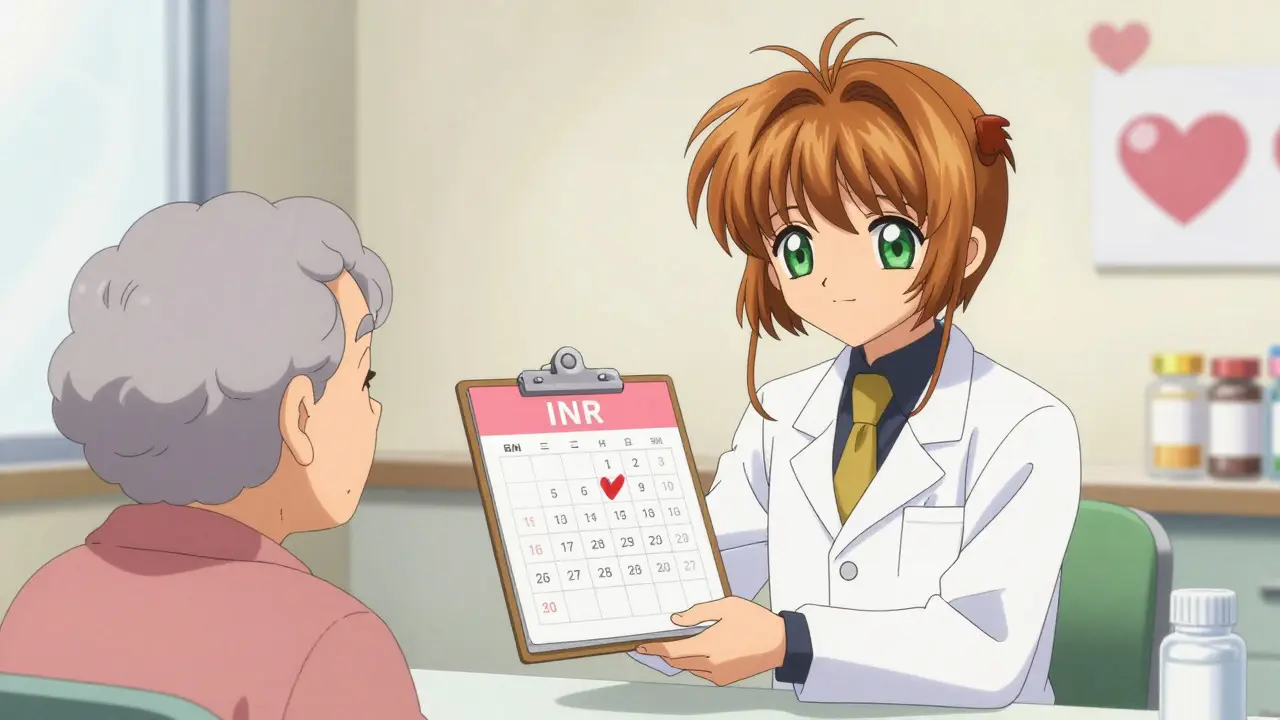
- Schedule Early Follow-Up: For high-risk antibiotics, check your INR within 3-5 days of starting the medication. For moderate-risk ones, aim for day 5-7. Don’t wait for your regular monthly test.
- Watch for Symptoms: Be hyper-aware of signs of bleeding: nosebleeds that won’t stop, pink or brown urine, black tarry stools, or unexplained bruises. Conversely, if on rifampin, watch for signs of clotting like sudden swelling or pain in limbs.
- Maintain Consistent Vitamin K Intake: While the antibiotic reduces gut-produced vitamin K, your dietary intake remains crucial. Don’t suddenly start eating massive amounts of leafy greens to "counteract" the antibiotic, as this can cause erratic swings. Keep your diet consistent.
Dr. Andrew Vega, lead author of a comprehensive 2023 review, emphasizes that "diligent monitoring proves pivotal in mitigating the risk of major bleeding complications." He suggests that for patients needing strong CYP450 inhibitors, considering a preemptive warfarin dose reduction may offer substantial benefits.
Contextualizing the Risk: Is It Really That Dangerous?
While the statistics look scary, it’s important to keep perspective. A 2014 study by Dr. Nancy Clark in JAMA Internal Medicine analyzed nearly 39,000 warfarin patients. She found that while antibiotic users did have higher INR elevations, the absolute risk of harm was lower than feared. Many patients did not require a dosage change despite the interaction.
This doesn’t mean you should ignore the warning labels. It means that with proper monitoring, most interactions are manageable without stopping either medication. Stopping warfarin abruptly can be just as dangerous, leading to thrombotic events like strokes or pulmonary embolisms. The goal is balance, not avoidance.
Special Considerations for Older Adults
Elderly patients face unique challenges. They often take multiple medications (polypharmacy), have reduced kidney function, and may be more sensitive to fluctuations in INR. The Baillargeon et al. study highlighted that elderly warfarin users exposed to any antibiotic had a two-fold increased risk of bleeding requiring hospitalization. If you are caring for an older adult on warfarin, ensure their pharmacist reviews all new prescriptions for interactions. Simplifying regimens and using low-risk antibiotics whenever possible is a key strategy in geriatric care.
FAQ
How long does the interaction between warfarin and antibiotics last?
For most antibiotics, the interaction lasts for the duration of the antibiotic course plus a few days after you finish it. As your gut microbiome recovers and liver enzyme inhibition wears off, your INR will gradually return to baseline. However, for drugs like rifampin, the effects can linger for 6-8 weeks after stopping due to prolonged enzyme induction.
Can I take probiotics to prevent this interaction?
Probiotics may help restore gut flora faster, potentially stabilizing vitamin K production. However, there is no definitive clinical evidence that probiotics completely neutralize the warfarin-antibiotic interaction. They should be seen as a supportive measure, not a replacement for INR monitoring.
What should I do if my INR spikes too high?
Contact your healthcare provider immediately. Depending on how high your INR is and whether you have active bleeding, they may advise skipping a warfarin dose, reducing your weekly dose, or administering vitamin K. Never adjust your dose without professional guidance, as this can lead to rebound clotting.
Are there any antibiotics that are completely safe with warfarin?
No antibiotic is 100% risk-free for everyone, but some are significantly safer. Azithromycin and clindamycin are generally considered low-risk options. However, individual responses vary, so monitoring is still recommended, especially if you are sensitive to warfarin changes.
Does food affect the warfarin-antibiotic interaction?
Food itself doesn’t change the chemical interaction, but your diet’s vitamin K content does. Since antibiotics reduce gut-produced vitamin K, maintaining a consistent intake of vitamin K-rich foods (like spinach, kale, and broccoli) is vital. Sudden increases or decreases in these foods can compound the instability caused by the antibiotic.
Should I switch to a DOAC instead of warfarin?
Direct Oral Anticoagulants (DOACs) like apixaban or rivaroxaban have fewer drug interactions and do not require routine INR monitoring. However, warfarin is still required for patients with mechanical heart valves or severe mitral stenosis. Discuss with your cardiologist if you are a candidate for switching, but do not make the change on your own.