
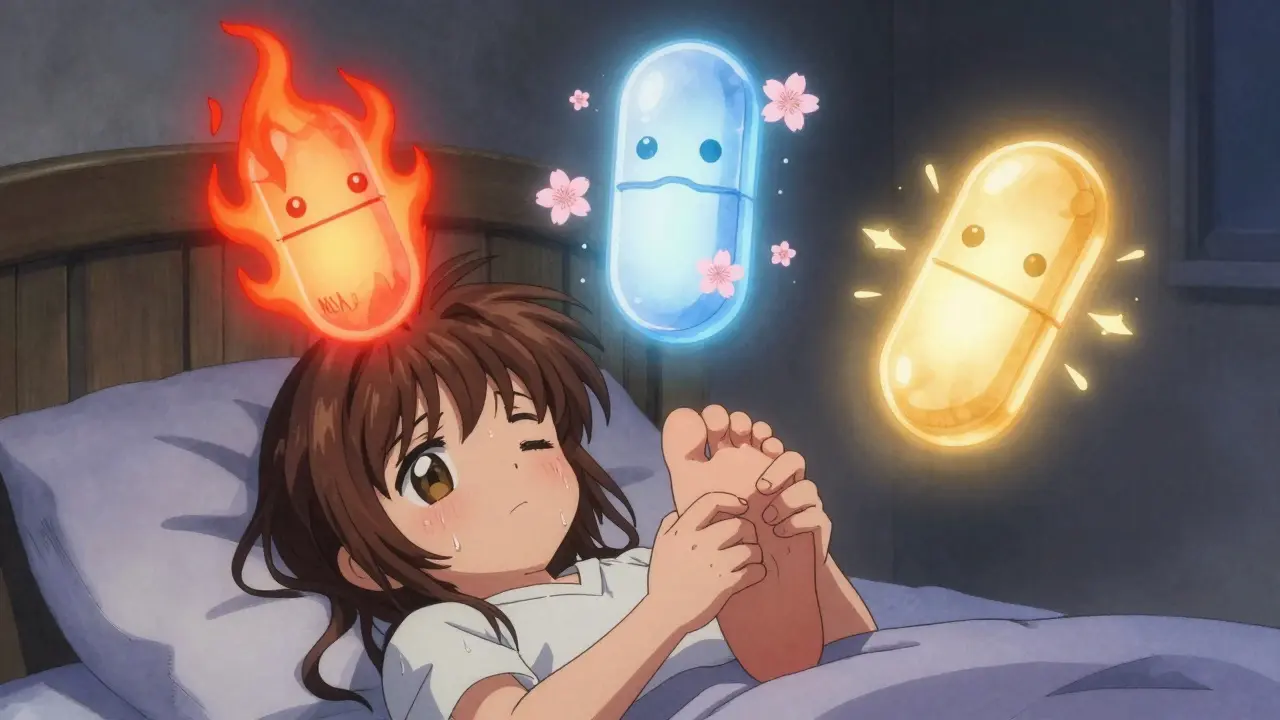
When a gout flare hits, it doesn’t ask for permission. The joint swells, turns red, and feels like it’s on fire-often waking you up in the middle of the night. You’re not alone. About 3.8% of U.S. adults deal with this kind of pain regularly, and for many, it’s the most painful form of arthritis they’ve ever experienced. The good news? You have options. Colchicine, NSAIDs, and steroids are the three main tools doctors reach for when a flare strikes. But which one is right for you? It’s not about which is strongest-it’s about which fits your body, your health history, and your lifestyle.
How Quickly Do You Need to Act?
Time matters. Every hour counts. Experts say if you start treatment within 24 hours of the first sign of pain, you’re far more likely to stop the flare from raging out of control. Some rheumatologists even joke: “Start it within 24 seconds.” That’s not hyperbole. The inflammation starts fast, and the sooner you block it, the less damage it does. Waiting even a day can mean more pain, longer recovery, and a higher chance of the flare coming back.
NSAIDs: The Go-To for Most People
NSAIDs-like naproxen, ibuprofen, and indomethacin-are the most common first choice. They work by cutting down inflammation and pain at the source. For gout, you need high doses: naproxen 500 mg twice a day, ibuprofen 800 mg three times a day, or indomethacin 50 mg three times a day for 3 to 5 days. Only three NSAIDs have FDA approval specifically for gout: indomethacin, naproxen, and sulindac. But in practice, doctors use almost any NSAID at full anti-inflammatory doses.
They work. Studies show about 73% of people get at least half their pain relief with NSAIDs, compared to just 27% on placebo. But here’s the catch: they’re hard on the body. If you have high blood pressure, kidney problems, heart disease, or a history of stomach ulcers, NSAIDs can make things worse. Older adults are especially at risk. One study found naproxen caused fewer side effects than low-dose colchicine, but still, GI bleeding and kidney strain are real concerns. If you’re on blood thinners like warfarin, NSAIDs are a no-go.
Colchicine: The Old Favorite, Now Done Right
Colchicine has been used for gout for centuries. But the way we use it has changed. Years ago, people took up to 4.8 mg over six hours. That often meant nausea, vomiting, and diarrhea-so bad that many stopped taking it. Now, the standard is 1.8 mg total over one hour. Same pain relief. Much fewer side effects.
It’s effective, but it’s tricky. Colchicine has a narrow window between helping and harming. Too much, especially if you have kidney issues, and you risk serious problems: muscle damage, nerve damage, even organ failure. It also interacts with common drugs like statins and some antibiotics. If you’re on any of those, your doctor needs to adjust the dose-or pick something else.
One study found colchicine and naproxen gave similar pain relief over seven days. But naproxen had fewer side effects. So why use colchicine at all? Because it’s safe for people who can’t take NSAIDs. And it’s cheap. Generic colchicine costs pennies a dose. But you need to be careful. Never take it if you’re on strong CYP3A4 inhibitors like clarithromycin or grapefruit juice-it can turn deadly.
Steroids: The Quiet Winner
Steroids-like prednisone-are often overlooked, but they’re powerful and underrated. A typical dose is 40-60 mg of prednisone daily for a few days, then slowly tapered over 10-14 days. Why taper? Because stopping suddenly can trigger another flare. That’s a big reason some doctors avoid them.
But here’s the twist: steroids may be safer than NSAIDs for many patients. A major analysis of six trials with over 800 people found steroids were just as good at reducing pain as NSAIDs. And they were easier on the stomach, kidneys, and heart. That’s huge for older patients or those with diabetes, high blood pressure, or kidney disease.
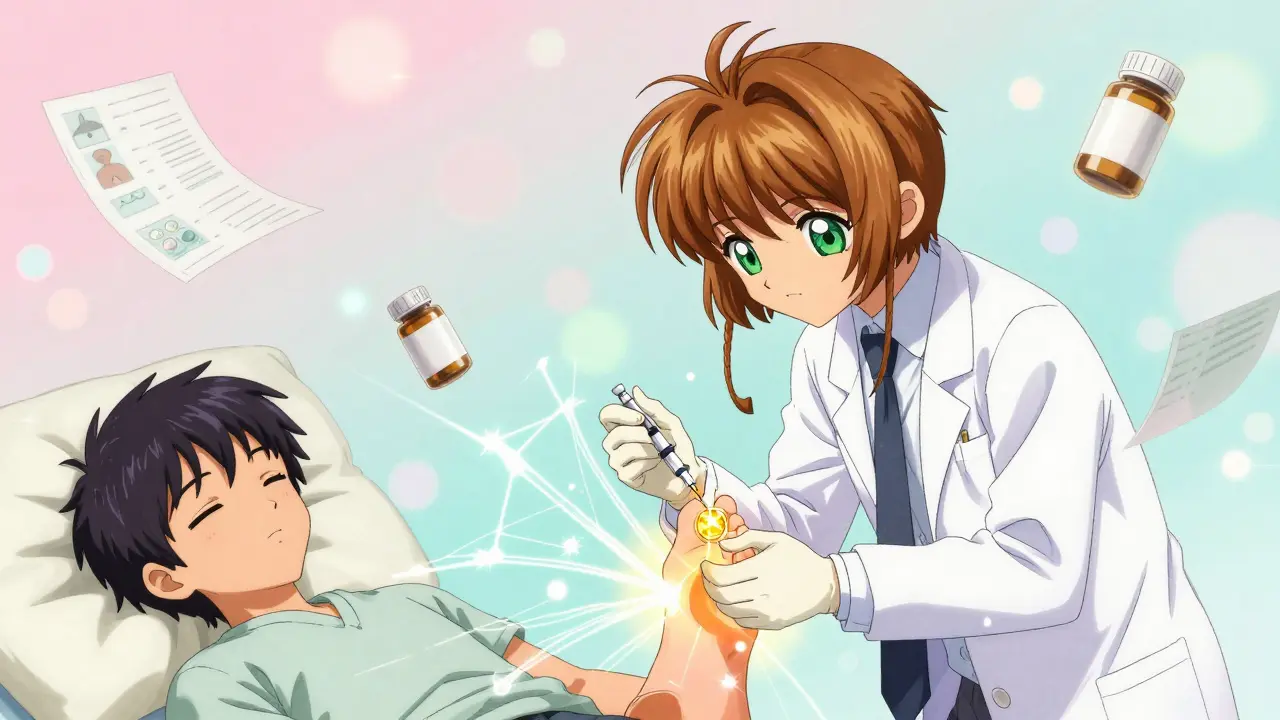
There’s another option: direct injection. If only one joint is flaring-say, your big toe-an injection of steroid right into the joint can shut down the inflammation in hours. No pills. No systemic side effects. Just targeted relief. It’s not for every case, but when it works, it’s magic.
Diabetics need monitoring-steroids can spike blood sugar. But a short course, with careful checks, is manageable. And unlike NSAIDs, steroids don’t interfere with blood thinners or cause ulcers. They’re not perfect, but for many, they’re the smartest first choice.
Which One Should You Pick?
There’s no single best drug. The right choice depends on your health profile:
- Choose NSAIDs if you’re young, healthy, no kidney or stomach issues, and no blood thinners.
- Choose colchicine if you can’t take NSAIDs and your kidneys are okay-but only if you take the low dose (1.8 mg total).
- Choose steroids if you have heart disease, kidney problems, high blood pressure, or a history of ulcers. Also the best for single-joint flares with an injection.
Some patients need more than one. If one drug doesn’t fully control the pain, doctors often combine them. Steroid + colchicine. NSAID + colchicine. That’s not unusual. It’s not risky if done right. In fact, it’s often the most effective approach.
What About Long-Term?
Gout isn’t just about flares. It’s a chronic condition. If you’re on medication to lower your uric acid long-term-like allopurinol or febuxostat-you need to protect yourself from new flares. That’s why doctors recommend prophylaxis for at least three months after your uric acid drops below target. For those with tophi (those lumps under the skin), it’s six months.
During this time, you’ll likely take a low daily dose of colchicine or a low-dose NSAID. Steroids aren’t used for long-term prevention because of side effects. But short-term? Perfect.
Real-Life Scenarios
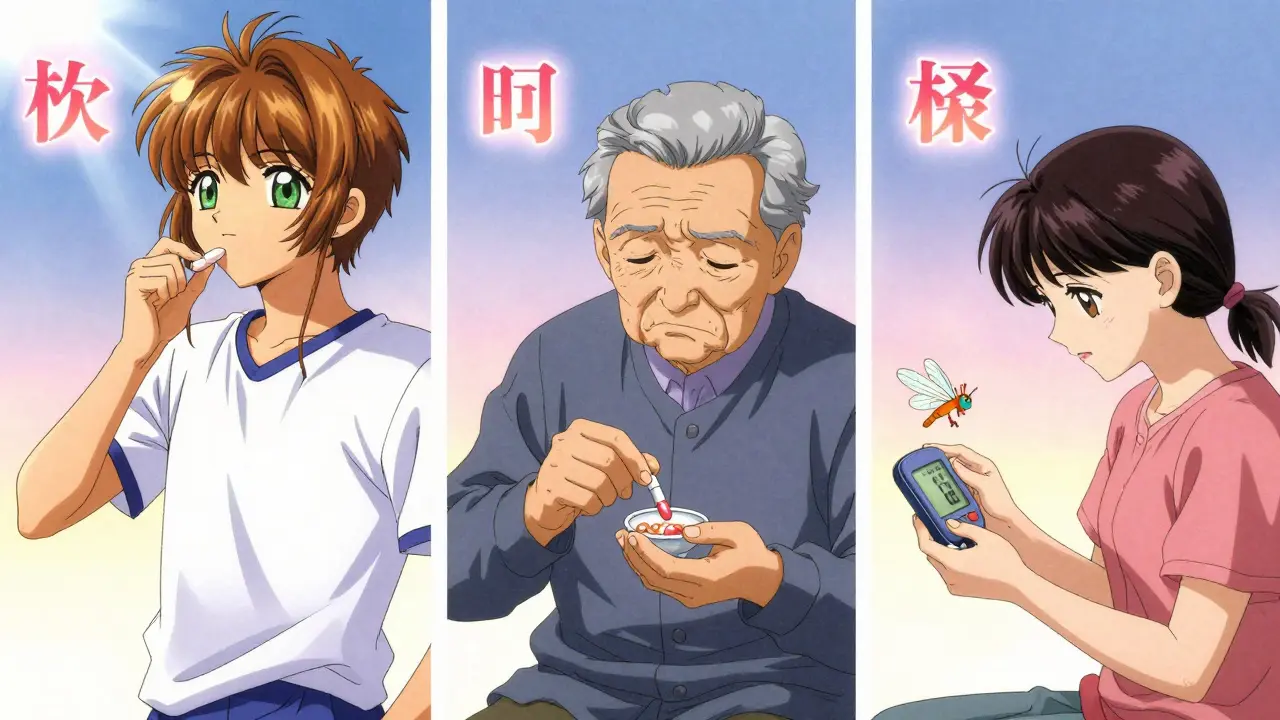
Let’s say you’re a 68-year-old with gout, high blood pressure, and mild kidney disease. NSAIDs? Too risky. Colchicine? Maybe, but your kidneys might not clear it well. Steroids? Yes. A short oral course, tapered slowly, with blood sugar checks. That’s the plan.
Or you’re a 45-year-old runner with no other health issues. First flare. You take naproxen 500 mg twice a day. Pain fades in 48 hours. You’re fine.
Or you’re diabetic and your big toe explodes. You go to your doctor. They inject steroid right into the joint. You’re walking again by day three. No pills. No stomach upset. Just relief.
There’s no one-size-fits-all. But there is a smart, personalized approach.
What to Watch Out For
- Rebound flares: Stopping steroids too fast can bring the pain back harder. Always taper.
- Drug interactions: Colchicine + statins or antibiotics = danger zone. Check with your pharmacist.
- Overdose risk: Never take more colchicine than prescribed. Even one extra pill can be serious.
- Delayed treatment: Waiting past 24 hours reduces effectiveness by half.
Also, don’t assume one flare means you’re done. Gout flares often come back. That’s why managing your diet, weight, and alcohol intake matters just as much as the pills.
Bottom Line
Colchicine, NSAIDs, and steroids all work. But they’re not interchangeable. NSAIDs are fast and familiar, but risky for many. Colchicine is cheap and effective, but needs precision. Steroids are underused, safer for complex cases, and work wonders with injections.
The best treatment isn’t the one with the strongest name. It’s the one that matches your body, your risks, and your life. Talk to your doctor-not just about what to take, but why. And start early. Because in gout, time isn’t just money. It’s pain.
Can I take colchicine and NSAIDs together for a gout flare?
Yes, many doctors combine them, especially if one drug alone isn’t enough. Studies show that using colchicine with an NSAID or steroid can improve pain control without significantly increasing side effects-when dosed properly. But this should only be done under medical supervision, especially if you have kidney issues or take other medications like statins.
Are steroids better than NSAIDs for gout?
For many patients, yes. A major analysis of six clinical trials found steroids and NSAIDs worked equally well for pain relief. But steroids were safer for people with kidney disease, high blood pressure, or stomach ulcers. NSAIDs carry higher risks of bleeding, heart problems, and kidney damage. Steroids are often the preferred choice for older adults or those with multiple health conditions.
Why is the dose of colchicine so much lower now?
Older high-dose regimens (4.8 mg over 6 hours) caused severe nausea and diarrhea in most people. Newer studies showed that a lower dose-1.8 mg total over one hour-works just as well to stop a flare but cuts side effects by more than half. This change made colchicine much more tolerable and safer, especially for older patients or those with kidney problems.
Can I use steroids if I have diabetes?
Yes, but with caution. Short courses of oral or injected steroids can raise blood sugar levels, sometimes significantly. If you have diabetes, your doctor will likely ask you to check your blood sugar more often during treatment and may adjust your diabetes meds temporarily. The key is keeping the course short (5-10 days) and tapering properly to avoid rebound flares.
How soon should I start treatment after a gout flare begins?
Within 24 hours. Studies show that starting treatment early leads to faster pain relief and shorter flare duration. Waiting longer than a day reduces effectiveness by nearly half. Some experts say start within 24 seconds-meaning don’t wait to call your doctor or fill your prescription. Get the medication ready before the pain hits full force.
Do I need to take medication forever after a gout flare?
No, not forever. But if you’re starting long-term uric acid-lowering therapy (like allopurinol), you’ll need to take a low-dose anti-inflammatory-usually colchicine or a low-dose NSAID-for at least three months after your uric acid drops below target. If you’ve had tophi, it’s six months. This prevents new flares while your body adjusts to lower uric acid levels.
Comments
Man, I thought I was the only one who waited too long and paid for it. First flare I ignored for 36 hours, thought it'd just chill out. Nope. Ended up in urgent care with my toe looking like a boiled lobster. Started colchicine the next day-1.8 mg total, like they said-and it actually worked. No vomiting. No drama. Just relief. Fuck, I wish I'd read this sooner.
This whole medical advice is a pharmaceutical scam. NSAIDs and steroids are designed to keep you dependent. Colchicine? A cheap ancient remedy. They suppress the symptoms but never fix the root cause-your body's acidic overload from processed foods, fluoride in water, and 5G radiation. Real healers use cherry juice, Epsom salt soaks, and fasting. The system doesn't want you to know this.
Y’all are the reason I still believe in Reddit. 😭 I’ve had gout for 8 years and this is the first time I’ve felt like someone actually gets it. Steroid injection in my big toe last month? Game changer. Walked out of the clinic like I’d never had pain. Also, low-dose colchicine? My new BFF. No more throwing up every time I take it. Thank you for writing this like a human, not a textbook.
My mom took prednisone and cried for three days because her blood sugar went through the roof. She didn’t even know it could do that. Don’t just take the pill. Ask questions. Always.
Big respect to the author for breaking this down without jargon. I’m a nurse and I still learned something. For anyone reading this who’s scared to talk to their doctor-just say, ‘I want to know which option is safest for my kidneys and heart.’ That’s all you need. No shame. No stigma. Just smart care.
The notion that steroids are safer than NSAIDs is a dangerous fallacy propagated by institutional medicine. The systemic immunosuppression induced by corticosteroids predisposes patients to opportunistic infections, metabolic derangements, and adrenal insufficiency. The data cited is cherry-picked. In a population with comorbidities, the risks outweigh the benefits. Evidence-based medicine demands caution, not convenience.
colchicin is bad for kidney ppl but they still reccomend it? what the fuck. also why no one talks about how the drug companies make you pay 200$ for a bottle when it cost 2$ to make? capitalism is cancer.
It is imperative to underscore that the administration of corticosteroids in the context of acute gout necessitates a structured tapering protocol. Abrupt discontinuation may precipitate rebound inflammation and compromise long-term disease control. Adherence to clinical guidelines is non-negotiable.
What struck me most is how we treat pain like it’s a puzzle to solve with one right answer. But it’s not. It’s a conversation between your body, your history, and your life. I used to think if I just took the right pill, I’d be fine. Turns out, I needed to listen. To my sleep. To my diet. To my fear. The meds help. But they don’t fix the silence between flares.
Oh my god, I just realized I’ve been treating my gout like it’s a guest who overstayed their welcome instead of a signal screaming for attention. I’ve been blaming the beer, the steak, the stress-but I never asked what my body was trying to tell me. I’m not just going to pop pills anymore. I’m going to start journaling: what I ate, how I slept, how my toe felt. Maybe if I listen, it’ll stop throwing tantrums. Also, I just booked my steroid injection. Fingers crossed.
Thanks for this. My cousin in Delhi had a flare last month and his doctor just gave him ibuprofen. He got worse. Now he’s seeing a rheumatologist. This kind of info needs to reach more people, especially where access is limited. Share it wide.