
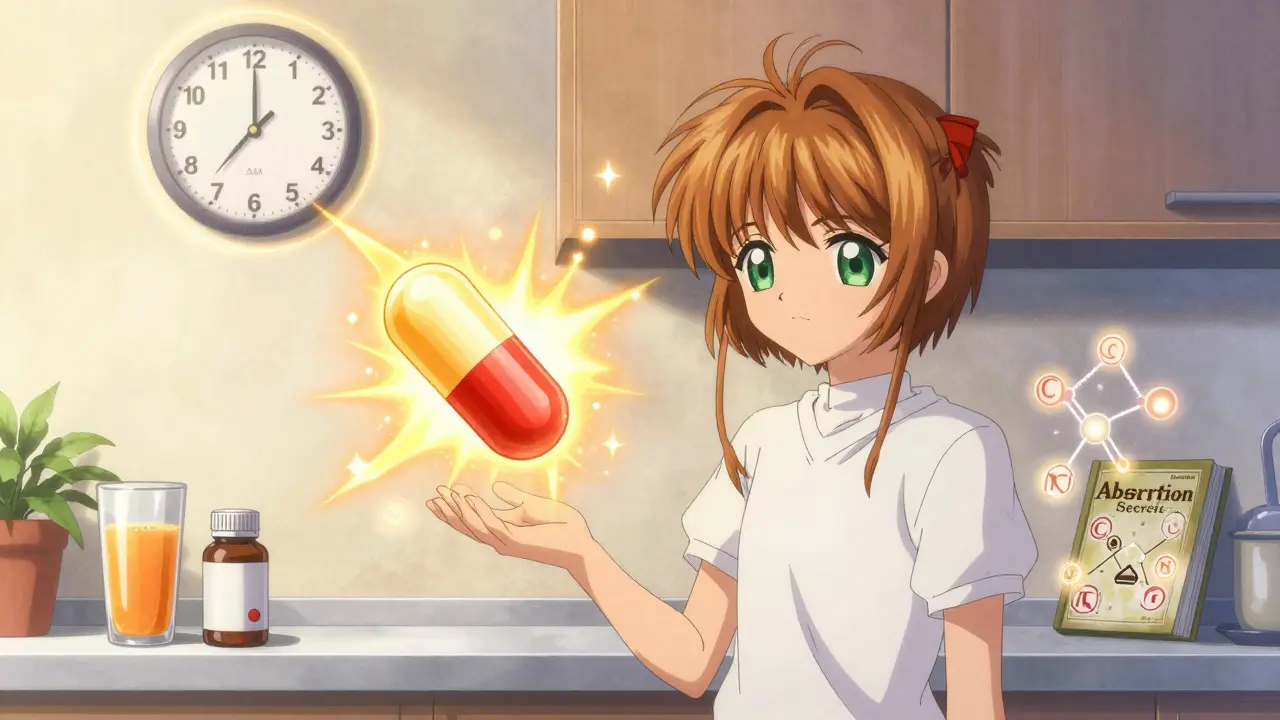
Calcium & Iron Timing Calculator
Many people take calcium and iron together without realizing they compete for absorption. This tool calculates the minimum safe time to wait between taking these supplements based on medical guidelines to ensure maximum effectiveness.
Enter your supplement times and click "Calculate Safe Timing" to see if you're spacing them correctly.
Many people take calcium and iron supplements without realizing they can seriously mess with how well their medications work. It’s not just about one pill interfering with another-it’s about your body’s ability to absorb what it needs. If you’re on antibiotics, thyroid medicine, or even heartburn pills, taking calcium or iron at the wrong time can turn your treatment into a waste of money and time.
Why Calcium and Iron Fight Each Other
Calcium and iron don’t just coexist poorly-they actively compete. Both are positively charged minerals, and your gut uses the same tiny doorways-called divalent metal transporters-to absorb them. When you take them together, they crowd each other out. One study from the American Journal of Clinical Nutrition found that 600 mg of calcium reduced iron absorption by up to 62%. That’s not a small drop. It’s enough to make it nearly impossible for women to hit their daily iron goal of 18 mg if they take calcium with meals. Even worse, calcium carbonate (the kind in Tums and many cheap supplements) raises stomach pH, making it harder for iron to dissolve. Iron needs acid to be absorbed, and calcium carbonate acts like an antacid. So even if you take them hours apart, if calcium is still in your stomach, it can block iron from getting in.How Calcium and Iron Block Antibiotics
If you’re on ciprofloxacin (Cipro), ofloxacin, or any tetracycline antibiotic like doxycycline, mixing them with calcium or iron can be dangerous. These antibiotics need to be absorbed quickly and completely to kill infections. But calcium, iron, and even aluminum in some antacids bind to them like glue, forming a compound your body can’t absorb. The result? The antibiotic doesn’t reach the bloodstream at all. Pharmacists report cases where patients on antibiotics for pneumonia or urinary infections didn’t get better-not because the bug was resistant, but because they took their calcium pill with the antibiotic. The drug just sat there, useless. The MedlinePlus guidelines say you need to wait at least 2 hours after taking iron before taking tetracycline antibiotics. For fluoroquinolones like Cipro, some experts recommend waiting 4 hours.Thyroid and Osteoporosis Medications Are Also at Risk
Levothyroxine, the go-to drug for hypothyroidism, is another big target. Calcium, magnesium, and iron all block its absorption. If you take your thyroid pill with your morning calcium, you might as well not have taken it at all. A 2025 blog from University Hospitals Cleveland Medical Center warns that this interaction can lead to uncontrolled hypothyroidism-fatigue, weight gain, depression-because your body isn’t getting the hormone it needs. Bisphosphonates, used to treat osteoporosis, are similarly affected. Drugs like alendronate (Fosamax) must be taken on an empty stomach with plain water. If you take them with calcium, the supplement binds to the drug and prevents it from reaching your bones. The bone density you’re trying to build? It won’t happen.Heartburn Medicines Make Iron Absorption Worse
You might not realize this, but the very drugs you take for heartburn can cause iron deficiency. Proton pump inhibitors (PPIs) like omeprazole (Prilosec) and pantoprazole (Protonix) reduce stomach acid. Iron needs acid to dissolve and become absorbable. Without it, even if you eat iron-rich foods or take a supplement, your body can’t use it. H2 blockers like famotidine (Pepcid) have the same effect. Long-term users of these drugs are at higher risk for iron-deficiency anemia-especially women, older adults, and vegetarians. It’s not just about missing your supplement. It’s about the environment your gut needs to absorb minerals.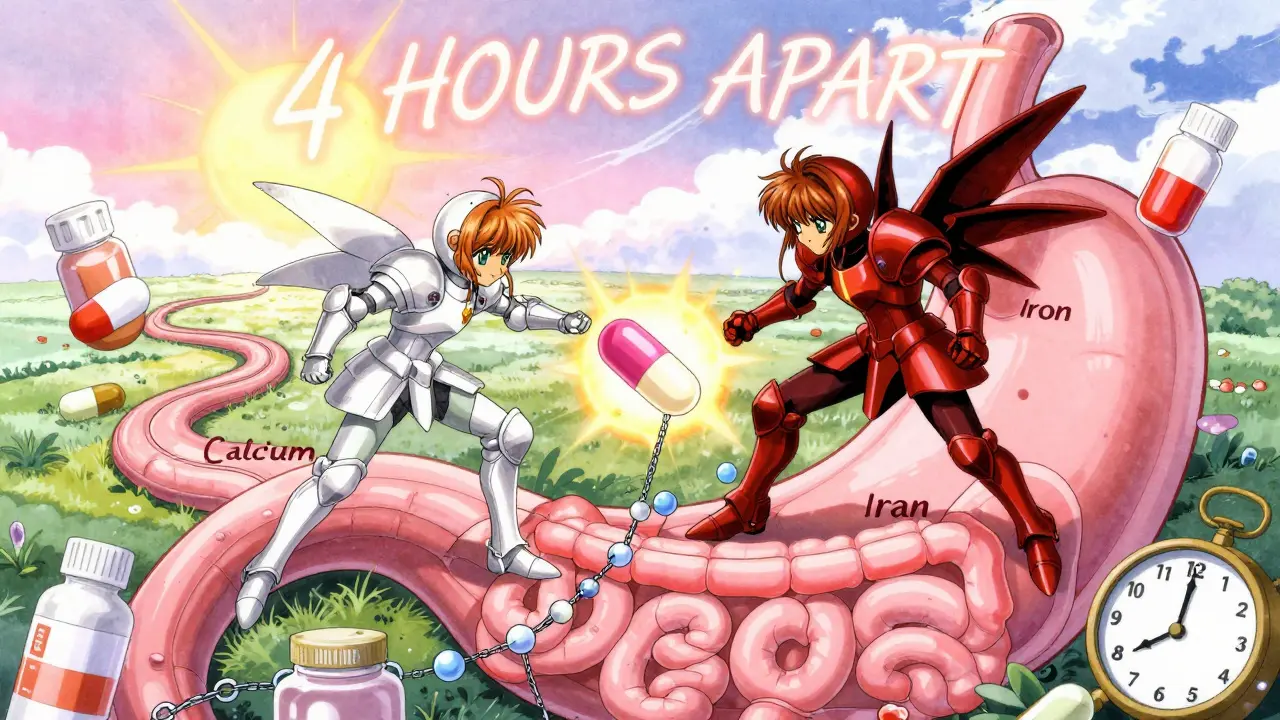
Timing Is Everything: When to Take What
There’s no one-size-fits-all rule, but there are clear best practices:- Iron: Take it on an empty stomach, at least 1 hour before or 2 hours after meals. This gives it the best shot at absorption.
- Calcium: Take it with food. It absorbs better this way, and it’s less likely to upset your stomach.
- Separate iron and calcium: Wait at least 4 hours between them. If you take iron in the morning, take calcium at dinner or bedtime.
- Antibiotics: Take tetracyclines 2 hours before or 4 hours after iron or calcium. For fluoroquinolones like Cipro, stick to the 4-hour rule.
- Thyroid meds: Take levothyroxine first thing in the morning with water, then wait 30-60 minutes before eating or taking any supplement.
- Bisphosphonates: Take on an empty stomach with a full glass of water. Wait at least 30 minutes before eating, drinking, or taking any other pills.
One simple trick? Set alarms. If you take iron at 7 a.m., set another alarm for 11 a.m. for calcium. It’s that easy-and that critical.
Boost Iron Absorption the Right Way
You can actually make iron work better-not by taking more, but by pairing it smartly. Vitamin C (ascorbic acid) turns non-heme iron (the kind in supplements and plants) into a form your body can absorb more easily. One study showed vitamin C can boost iron absorption by up to 300%. Instead of swallowing your iron pill with milk or coffee, drink a glass of orange juice or take a 250 mg vitamin C tablet with it. Even a small amount-like a quarter of a bell pepper or a few strawberries-can help. Don’t waste your supplement by pairing it with calcium-rich foods or tea (which contains tannins that block iron).Who’s Most at Risk?
Women of childbearing age are hit hardest. They need more iron (18 mg/day) due to menstrual loss, and many take calcium supplements for bone health. The American Journal of Clinical Nutrition study showed that women who took calcium with meals were far more likely to fall short on iron. Older adults, vegetarians, and people on long-term acid-reducing meds are also vulnerable. If you’re tired all the time, dizzy, or have cold hands and feet, it might not be stress-it could be low iron. And if you’re taking supplements without knowing the timing rules, you might be making it worse.
What to Watch Out For
Iron supplements can turn your stool black. That’s normal. But if they’re tarry, or have red streaks, call your doctor-it could mean bleeding. Liquid iron can stain your teeth. Use a straw to avoid it. If staining happens, baking soda or diluted hydrogen peroxide can help clean it. And never, ever leave iron pills where kids can reach them. Iron overdose is the #1 cause of fatal poisoning in children under 6 in the U.S. A single adult dose can kill a toddler. Always keep them locked up.Real-Life Fix: A Simple Routine
Here’s what a safe, effective daily schedule looks like:- 6:30 a.m. Take levothyroxine with water. Wait 60 minutes before eating.
- 7:30 a.m. Eat breakfast (oatmeal with berries and a glass of orange juice). Take your iron supplement with it.
- 12:00 p.m. Take antibiotics (if prescribed), with water, 2 hours before or after any calcium or iron.
- 6:00 p.m. Eat dinner with calcium-rich foods (yogurt, kale, fortified plant milk).
- 8:00 p.m. Take calcium supplement with dinner.
No overlap. No guesswork. Just clear timing.
Bottom Line
Calcium and iron supplements aren’t harmless. They’re powerful-and they can sabotage your medications if you don’t treat them with respect. The fix isn’t complicated. It’s about timing, spacing, and smart pairing. Take iron with vitamin C. Take calcium with food. Keep them at least 4 hours apart. And always check with your pharmacist before adding a new supplement to your routine. Your body will thank you.Can I take calcium and iron supplements together if I space them by 2 hours?
No. Even 2 hours isn’t enough. Studies show calcium can still interfere with iron absorption if taken within 4-6 hours. For the best absorption, aim for at least 4 hours between iron and calcium. Iron works best on an empty stomach, so taking it in the morning and calcium at night is the safest bet.
Does the type of calcium supplement matter?
Yes. Calcium carbonate is the most common and cheapest, but it’s also the biggest problem for iron absorption because it acts as an antacid. Calcium citrate is less likely to raise stomach pH and may be slightly better if you must take both, but it still competes with iron. The best solution is still to separate them by time, not just switch types.
Can I get enough iron from food if I’m taking calcium supplements?
It’s very hard. The same American Journal of Clinical Nutrition study found that a high-calcium breakfast reduced iron absorption from 10.2% to just 4.8%. Even foods rich in iron-like spinach, lentils, or red meat-won’t help if calcium is present. If you’re taking calcium daily with meals, you’re likely not absorbing enough iron from diet alone. That’s why many women need supplements-but timing matters more than dose.
Why do some doctors say to take iron with food?
Because iron can cause nausea, cramps, or diarrhea in 30-50% of people when taken on an empty stomach. If you can’t tolerate it, taking it with a small amount of food (like a slice of toast) is better than skipping it entirely. But avoid dairy, calcium-fortified foods, or coffee. Stick to low-calcium, vitamin C-rich foods like fruit or bell peppers.
What should I do if I accidentally took iron with my antibiotic?
Don’t panic. One mistake won’t ruin your treatment-but don’t repeat it. Take the next dose of your antibiotic at least 4 hours after your iron supplement. If you’re on a short course (like 7 days), you may want to check with your doctor about whether you need a refill or a different antibiotic. The key is consistency going forward.
Can I take iron with vitamin C and calcium at the same time?
No. Vitamin C helps iron, but calcium blocks it. If you mix all three, the calcium will win. Take iron with vitamin C on an empty stomach. Take calcium later, with food. Don’t combine them. Even if the label says "calcium with vitamin D and iron," avoid those combo pills-they’re designed for convenience, not effectiveness.
Comments
Iron and calcium competing for absorption isn't just theory-it's biochemistry. The divalent metal transporter DMT1 is a single-lane highway, and both minerals show up at rush hour. No wonder so many people are still anemic despite popping supplements. The real issue? Most don't realize their multivitamin or fortified oatmeal is sabotaging them. Timing isn't optional-it's non-negotiable.
I took calcium with my iron for years and wondered why I was always exhausted. Then I read this and switched to morning iron with orange juice and nighttime calcium. My energy came back in two weeks. No joke. My doctor was shocked. Why isn't this common knowledge?
Oh wow, so the pharmaceutical industry doesn't want us to know that supplements are basically useless unless you're following a military-grade schedule? Shocking. Next you'll tell me that taking aspirin with milk makes it less effective. Oh wait-it does. Why do we let corporations sell combo pills that are designed to fail?
THIS. IS. A. TRAP. Every single supplement aisle in every Walmart, Target, CVS-every single one-is selling you poison disguised as wellness. Calcium + iron combo pills? That’s like handing someone a loaded gun and saying ‘here, take two!’ And don’t even get me started on the ‘bone health’ marketing that ignores the fact that your gut isn’t a vending machine. We’ve been gaslighted into believing that more pills = more health. Nope. Timing. Is. Everything. And no, your ‘natural’ gummy vitamin with calcium won’t save you.
Take iron on empty stomach. Wait 4 hours. Take calcium with food. That’s it. No magic. No science degree needed. Just do it.
In India, we’ve always known this-our grandmothers never mixed milk with iron-rich foods. They’d have dal and spinach in the morning, then yogurt at night. It wasn’t science-it was tradition. Maybe modern medicine just needs to catch up to what our ancestors did naturally.
Love how this post doesn’t just list facts-it gives you a full schedule. I printed this out and taped it to my fridge. My wife finally stopped asking why I’m so moody at 10 a.m. Turns out, it’s not her. It’s the calcium she takes with her coffee. We’re switching to nighttime calcium now. Thanks.
wait… are u telling me the government and big pharma are hiding this?? like… why?? is it because they make more money if we keep taking pills that dont work?? and then we go back for more?? i think this is part of the great supplement scam. i saw a video once where a guy said they pump fluoride into the water so we need more calcium?? idk but i think this is all connected. someone’s making bank off our confusion.
Thank you for this. 🙏 I’ve been taking iron with my morning smoothie (spinach, banana, almond milk) and wondering why I’m still tired. Now I know. I’m switching to orange juice + iron on empty stomach. Also, I’m hiding my iron pills from my toddler. 😅
Let me guess-this is what happens when you let science be dictated by convenience. People want to take ONE pill at ONE time. So manufacturers slap iron, calcium, vitamin D, zinc, and magnesium into one capsule. And then wonder why people are still deficient. It’s not ignorance-it’s greed. And the worst part? Doctors don’t even ask about supplement timing. They just write more prescriptions. This system is broken.
There’s a quiet dignity in timing. In waiting. In respecting the body’s rhythm rather than forcing it into a pill-popping routine. This isn’t about optimization-it’s about harmony. We’ve forgotten that healing doesn’t always require more. Sometimes, it requires less-and better placement.
This changed my life. I was on 65mg iron daily and still anemic. Then I started taking it at 7 a.m. with OJ, waited 60 min, then took my thyroid med. Calcium at 8 p.m. with dinner. Three months later-my ferritin is normal. I’m not tired. I’m not dizzy. I’m just… alive. Thank you.
It’s fascinating how a single physiological mechanism-DMT1 transporters-can unravel so much of modern nutritional advice. We treat supplements like candy, but biology doesn’t care about convenience. The body operates on gradients, pH, and kinetics. This post reminds us that health isn’t a product. It’s a process.
I didn’t believe this until I tried it. Took iron at night with calcium. Felt like a zombie. Switched to morning iron + OJ. Now I can run without gasping. I’m telling everyone. Seriously. Do this.
Reply to 8084: I’m glad it worked for you. But please-don’t just tell everyone. Tell them *why*. Because understanding beats repetition. And understanding saves lives.