
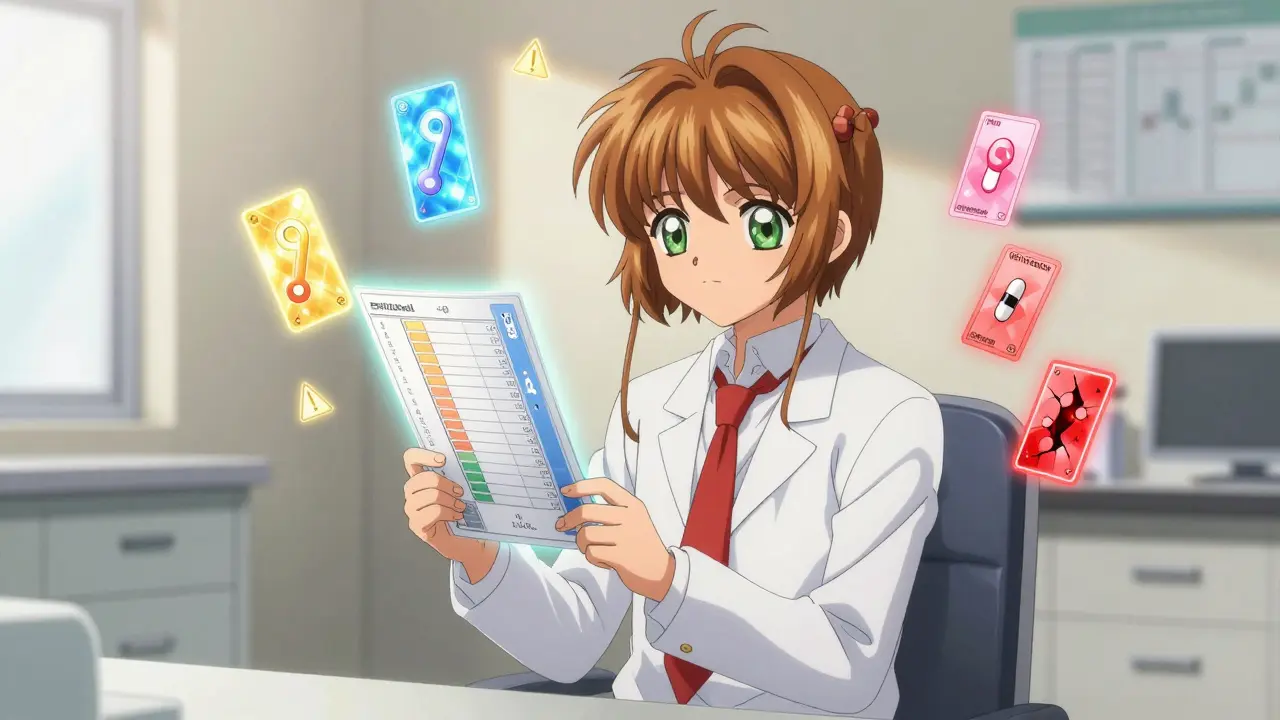
GAHT Medication Interaction Checker
How to use: Select a medication from the dropdown, then click "Check Interactions". This tool provides general information about potential interactions with GAHT based on current medical knowledge.
Important: This tool is for informational purposes only. Always consult with your healthcare provider before making any changes to your medications or hormone therapy.
When someone starts gender-affirming hormone therapy (GAHT), they’re not just beginning a new chapter in their life-they’re also starting a complex medical process that involves careful coordination with other medications they may be taking. Whether you’re on antiretrovirals for HIV, antidepressants for depression, or PrEP for prevention, your hormones can interact with those drugs in ways that change how well they work-or increase your risk of side effects. This isn’t about fear. It’s about knowing what to watch for so your treatment stays safe and effective.
How GAHT Works: Estradiol, Testosterone, and What They Do in Your Body
Gender-affirming hormone therapy comes in two main forms: feminizing and masculinizing. Feminizing therapy typically uses estradiol-often taken as a patch, pill, or gel-to raise estrogen levels and reduce testosterone. Anti-androgens like spironolactone or cyproterone acetate are added to block testosterone’s effects. Masculinizing therapy uses testosterone, delivered via gel, injection, or pellet, to raise androgen levels and suppress natural estrogen production. Some people also use GnRH agonists like leuprolide to pause puberty or fully shut down hormone production before starting GAHT.
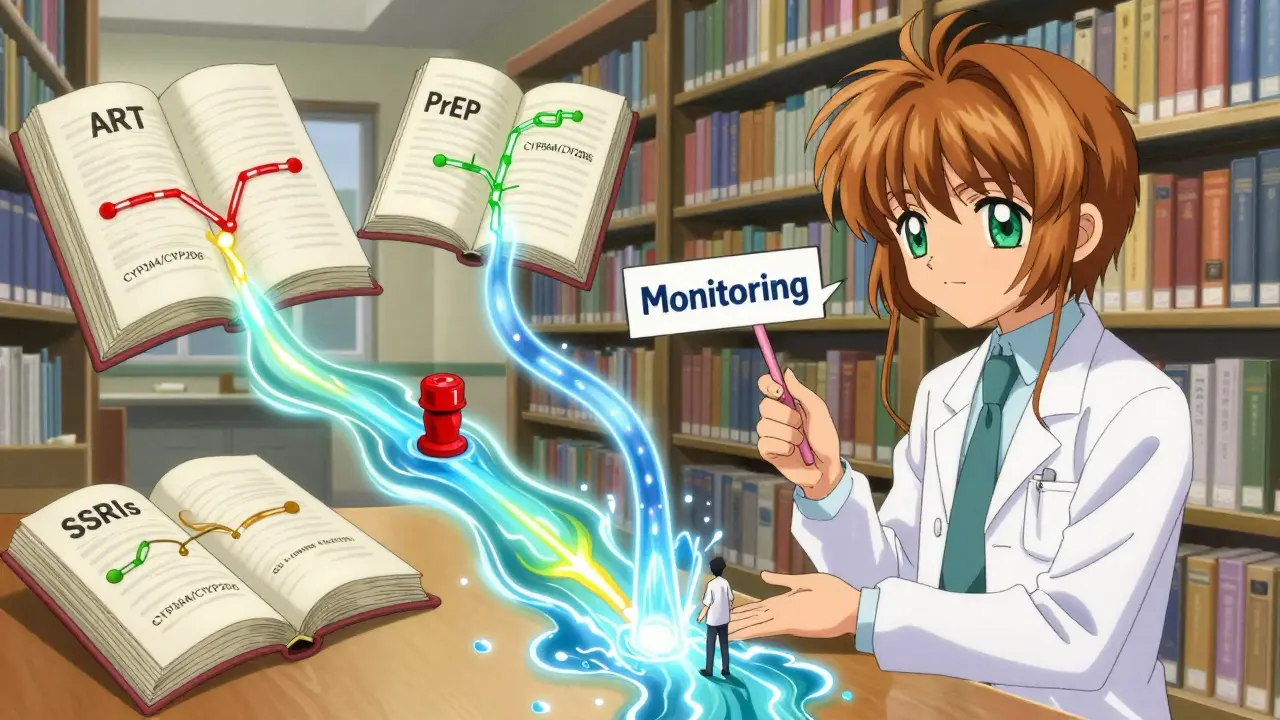
These hormones don’t float around in your blood alone. They’re processed by liver enzymes, especially CYP3A4 and CYP2D6. That’s where things get tricky. If another drug you’re taking affects these same enzymes, it can speed up or slow down how fast your hormones are broken down. A faster breakdown means less hormone in your system. A slower breakdown means too much-potentially leading to side effects like blood clots, mood swings, or liver stress.
Biggest Interaction Risks: Antiretrovirals and GAHT
Transgender people are 3.4 times more likely to live with HIV than cisgender people. That means many are on antiretroviral therapy (ART). And here’s the catch: some HIV drugs dramatically alter hormone levels.
Enzyme-inducing ARTs like efavirenz (600 mg daily) can slash estradiol concentrations by 30-50%. That’s not just a minor drop-it can mean your feminizing therapy stops working. You might notice your body isn’t changing as expected, or your mood worsens. On the flip side, cobicistat-boosted regimens (like darunavir/cobicistat) can spike estradiol levels by 40-60%. This raises the risk of blood clots, high blood pressure, or even stroke. In one study, estradiol levels climbed within just two weeks of starting this combo.
The good news? Not all HIV meds cause problems. Integrase inhibitors like dolutegravir (50 mg daily) only slightly raise estradiol-by 25-35%-and don’t require dose changes. For testosterone users, most ARTs show no significant interaction at all. If you’re on ART and starting GAHT, the safest move is to get your hormone levels checked before and after starting the new medication. Don’t wait for symptoms to appear.
PrEP and GAHT: No Need to Worry
PrEP-daily pills like tenofovir disoproxil fumarate/emtricitabine (TDF/FTC)-is widely used to prevent HIV. A 2022 study of 172 transgender people on PrEP and GAHT found almost no change in hormone levels. Estradiol and testosterone stayed within normal ranges. Even the PrEP drug itself didn’t move much: tenofovir levels changed by less than 3.2%. That’s statistically meaningless.
So if you’re on PrEP, you can keep taking it. No need to adjust your dose. No need to delay GAHT. This is one of the clearest, most reassuring findings in recent years. The same study even showed that 92% of participants maintained protective levels of the PrEP drug throughout the 12-week trial. This isn’t theoretical-it’s proven in real people.
Psychiatric Medications: The Gray Zone
Transgender individuals experience anxiety, depression, and PTSD at rates two to three times higher than cisgender people. Many are on SSRIs like fluoxetine or sertraline, or mood stabilizers like carbamazepine. But here’s the problem: we don’t have solid data.
Some SSRIs, especially fluoxetine, can block the CYP2D6 enzyme, which helps break down estradiol. That could lead to higher estrogen levels-again, raising clot risk. On the other hand, carbamazepine strongly activates CYP3A4. That means it can drop your estradiol levels by 40% or more, making feminizing therapy less effective.
Testosterone users aren’t off the hook either. One study found that 17 out of 12,000 patients (0.14%) saw their antidepressants stop working after starting testosterone. Their doses had to be increased by 25-50% within six weeks. No one knows why. Maybe testosterone changes brain chemistry. Maybe it affects how the liver processes the drug. Either way, if you’re on antidepressants and start testosterone, watch closely. If your mood dips, don’t assume it’s just adjustment. Talk to your provider. Check your meds.
What About Other Common Drugs?
Let’s clear up a few myths. Blood thinners like warfarin? No strong evidence of interaction with GAHT. Thyroid meds like levothyroxine? Safe. Birth control pills? Not needed for transgender men on testosterone-but if you’re on them for other reasons, they won’t interfere with GAHT. Insulin? No known interaction. Statins? No issue.
The real danger zones are drugs that strongly affect CYP3A4 or CYP2D6. That includes:
- Antifungals like ketoconazole (inhibits CYP3A4 → higher estradiol)
- Antibiotics like clarithromycin (also inhibits CYP3A4)
- Seizure drugs like phenytoin (induces CYP3A4 → lower estradiol)
- St. John’s Wort (strongly induces CYP3A4 → can make GAHT fail)
If you’re taking any of these, tell your provider. Even if you’ve been on them for years, adding GAHT changes the game. Don’t assume your old prescription is still safe.

What Should You Do? A Practical Checklist
You don’t need to be a pharmacist to stay safe. Here’s what to do:
- Make a full list of every medication, supplement, and herb you take-including over-the-counter stuff.
- Bring it to your provider before starting GAHT. Don’t wait until you feel weird.
- Ask for hormone level tests before starting GAHT, then again at 4 and 12 weeks after adding any new medication.
- Watch for changes: unusual fatigue, mood shifts, swelling, headaches, or lack of expected physical changes.
- Don’t stop or change doses on your own. Even if you think a drug isn’t working, talk to your provider first.
And if you’re unsure? Ask: "Could this drug affect my hormone levels?" It’s a simple question that can save you from serious complications.
What’s Missing? The Research Gaps
Even with all we know, there are big blind spots. We don’t know how GAHT interacts with newer PrEP options like cabotegravir (a long-acting injection). We don’t have data on how it affects newer antidepressants like brexanolone. And while 12,000 patient records have been reviewed, fewer than 3% of antidepressant trials include transgender people. That’s not just a gap-it’s a failure of inclusion.
The NIH’s Tangerine Study, running through 2025, is trying to fix that. It’s tracking 300 transgender adults on 12 common psychiatric drugs alongside GAHT. Results will be game-changing. Until then, we rely on case reports and cautious clinical judgment.
One thing’s clear: GAHT is safe. But safety doesn’t mean "no risk." It means "know the risks and manage them." And that starts with honest conversations, regular monitoring, and asking the right questions.
Can I take birth control pills while on feminizing hormone therapy?
Birth control pills aren’t needed for transgender women on estrogen therapy because testosterone suppression prevents ovulation. However, if you’re taking them for acne, menstrual regulation, or other reasons, they won’t interfere with GAHT. The estrogen in birth control pills is similar to what’s used in GAHT, so combining them may slightly raise overall estrogen levels. Your provider may adjust your dose if you’re on high-dose estrogen pills. Always disclose all medications.
Does testosterone interact with diabetes medications?
Testosterone can improve insulin sensitivity in some people, which might lower blood sugar levels. If you have type 2 diabetes and start testosterone, you may need less insulin or oral diabetes meds. That’s not dangerous-but it can lead to low blood sugar if you don’t adjust your dose. Monitor your glucose closely in the first few months. Talk to your endocrinologist about rechecking your diabetes meds 4-6 weeks after starting testosterone.
Can I use herbal supplements like black cohosh or evening primrose oil with GAHT?
Some herbal supplements contain plant estrogens or affect liver enzymes. Black cohosh, for example, may act like estrogen in the body. Evening primrose oil might affect blood clotting. While there’s no strong evidence of harm, combining them with GAHT increases uncertainty. It’s safer to avoid them unless approved by your provider. If you’re already using them, don’t quit cold turkey-talk to your doctor about tapering off safely.
Why do some providers say GAHT is "completely safe" with any medication?
Some clinics, especially those using bioidentical hormones, claim that because these hormones are chemically identical to what your body makes, they can’t interact with other drugs. That’s misleading. Even natural estrogen is processed by liver enzymes. If a drug like St. John’s Wort speeds up how fast your body breaks down estrogen, it doesn’t matter if it’s "bioidentical"-you’ll still have too little in your system. Safety doesn’t come from the source of the hormone. It comes from monitoring and knowledge.
How often should I get my hormone levels checked when starting a new medication?
Get tested before starting the new drug, then again at 4 weeks and 12 weeks after. Hormone levels can shift quickly-sometimes within days. If you’re on a strong enzyme inducer like carbamazepine or an inhibitor like cobicistat, your provider may want to check at 2 weeks. Don’t wait for symptoms. Changes in mood, energy, or physical transition may not appear until levels are already too high or too low.
What’s Next?
If you’re on GAHT and another medication, the best thing you can do is stay informed. Ask for a medication review with your provider every six months. Keep a written log of everything you take. If you’re prescribed a new drug, ask: "Will this affect my hormones?" If the answer is unclear, request a blood test. You’re not overreacting. You’re being smart.
The science is moving fast. In 2025, we’ll have better data. Until then, the safest approach is simple: know your meds, track your body, and never assume safety without evidence.


Comments
I started GAHT last year and was on efavirenz for HIV. My doc didn't mention the interaction until I brought it up. We switched to dolutegravir and my estrogen levels stabilized within weeks. Seriously, just ask your provider. It's not scary, it's just info you need. Don't wait until you feel off.
Also, PrEP? Totally fine. No changes needed. I've been on TDF/FTC for 3 years and my hormones haven't budged. Relief.
If you're on testosterone and antidepressants, watch your mood like a hawk. I didn't think my SSRIs were working anymore after 6 weeks on T. Thought I was just 'adjusting.' Turns out my body wasn't processing sertraline the same way. Dose had to be bumped up. Don't ignore it. It's not 'being dramatic'-it's biology.
I used to take St. John’s Wort for anxiety. My provider didn’t even blink when I mentioned it. Then I started estradiol. Two weeks later I felt like I was falling apart-mood swings, headaches, no progress on breast development. Turned out the herb was flushing my hormones out. I quit cold turkey and my body stabilized in a month. Lesson: even 'natural' stuff can mess with you.
Hormone levels shift fast. I got tested before starting GAHT, then at 4 weeks and 12 weeks after adding cobicistat. Estradiol jumped 50%. My doc adjusted my dose immediately. No symptoms, no drama-just science. Get the labs. Don’t guess. Your body will thank you.
I can't believe people still think 'bioidentical' means 'safe with everything.' My cousin was on 'natural' estrogen and took turmeric supplements. Ended up in the ER with a clot. She thought it was 'just herbs.' It wasn't. Stop romanticizing supplements. They're not harmless. They're chemicals. Treat them like medication.
PrEP and GAHT? No interaction. Done.
For anyone on carbamazepine and feminizing therapy: your estradiol will drop. I lost 40% of my levels in 3 weeks. No one warned me. I thought I was just 'not responding.' It wasn't me. It was the drug. Test before and after any new med. Seriously. Don't assume.
I'm from Indonesia and we don't have much access to this kind of info. But I read this whole thing and it's the clearest guide I've seen. Thank you. My friend is starting GAHT next month. I'm printing this out for her. This is life-saving stuff.
I'm on fluoxetine and estradiol. My doc said 'no problem.' But I read the CYP2D6 thing and got nervous. I asked for a blood test anyway. Estradiol was 30% higher than baseline. We lowered my estrogen dose slightly. No mood crashes. No clot risks. Just asking the question saved me. Don't be afraid to push for data.