

Dysgeusia Management Plan Builder
Your Medication Profile
How This Works
Based on clinical evidence, this tool creates a personalized plan using strategies proven to reduce metallic taste side effects. All recommendations align with the article's evidence-based approaches.
Your Personalized Plan
Many people start a new medication expecting relief - not a mouth full of pennies. If you’ve ever taken a pill and suddenly everything tastes like a rusty coin, you’re not alone. This strange, unpleasant sensation is called dysgeusia, and it’s one of the most common yet overlooked side effects of prescription drugs. It’s not just annoying - it can make you lose your appetite, skip meals, or even stop taking your medicine altogether. The good news? There are real, science-backed ways to manage it without quitting your treatment.
Why Does Medication Make Your Mouth Taste Like Metal?
It’s not your imagination. Medications don’t just work in your bloodstream - they end up in your saliva. When certain drugs are absorbed by your body, they’re secreted into your mouth, where they directly interfere with your taste buds. Some drugs, like metronidazole (Flagyl) or amoxicillin, lower zinc levels, which your taste buds need to function properly. Others, like ACE inhibitors or lithium, interact with nerve signals that carry taste information to your brain. Even SSRIs like Prozac or Zoloft can cause dry mouth, which reduces saliva and leaves your taste buds exposed and confused.
Chemotherapy drugs - especially platinum-based ones like carboplatin - are notorious for this. Up to 80% of patients report metallic or bitter tastes during treatment. But it’s not just cancer meds. Antibiotics, antidepressants, blood pressure pills, thyroid meds, and even the COVID-19 antiviral Paxlovid can trigger it. In fact, Pfizer’s own safety data shows that 58% of Paxlovid users experience this side effect. The taste usually starts within 24 to 72 hours of starting the drug and sticks around until you stop taking it - or until you take action.
How to Tell If It’s the Medication - Not Something Else
Not all bad tastes come from pills. Gum disease, sinus infections, or even zinc deficiency can cause similar symptoms. But there’s a clear signal: timing. If your metallic taste showed up right after you started a new medication, that’s the biggest clue. It doesn’t happen overnight with infections or dental issues - those usually come with other signs like swelling, pain, or congestion. Drug-induced dysgeusia is predictable. It follows your dosing schedule. You take the pill, and within hours, your coffee tastes like a battery.
Also, if the taste goes away after you stop the drug - or gets worse when you take another dose - it’s almost certainly the medication. A 2014 study in Pharmacy Times called this the “temporal proximity” rule. If the timing matches, the cause is likely drug-related.
Top 5 Evidence-Based Ways to Fight Metallic Taste
Don’t just suffer through it. Here’s what actually works, based on clinical studies and patient reports.
- Try zinc supplements - This is the most effective strategy for many. Zinc is essential for taste bud regeneration. For chemotherapy patients, 50 mg of zinc gluconate daily has helped 65% of users in trials at MD Anderson Cancer Center. For general medication-induced dysgeusia, 25-50 mg daily for 2-4 weeks is recommended. Watch for signs of copper deficiency (like fatigue or numbness) if you take it long-term. Always talk to your doctor first - too much zinc can cause problems.
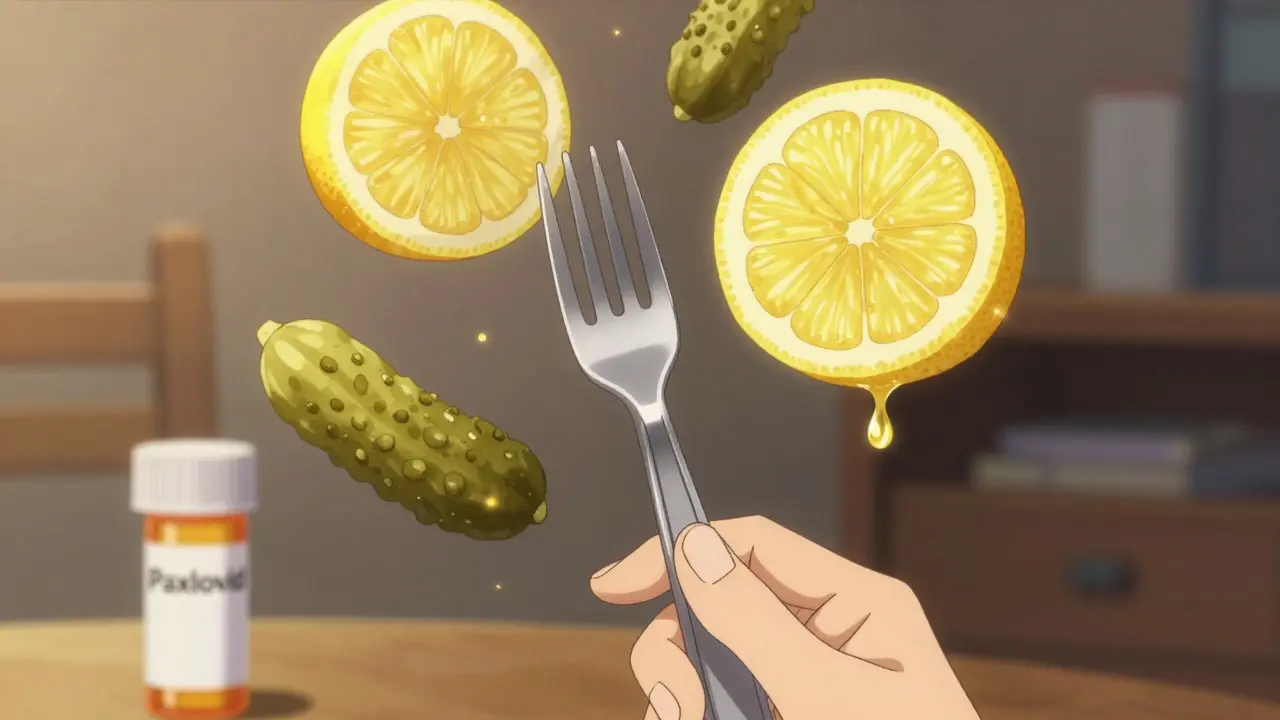
- Use plastic or glass utensils - Metal cutlery can react with the metallic compounds in your saliva and make the taste worse. Switching to plastic forks and glass cups cuts down on that extra metallic kick. It sounds simple, but patients on Inspire.com reported noticeable improvement just from this change.
- Chew tart or sour foods before meals - Lemon wedges, pickles, or sugar-free sour candies stimulate saliva. More saliva = better taste signal. A 2021 study in the Journal of Supportive Oncology found that patients who ate a lemon slice 10 minutes before eating reported better food enjoyment and ate more calories.
- Marinate proteins in strong flavors - If chicken tastes like tin, try soaking it in teriyaki sauce, barbecue rub, or a mix of garlic, soy, and ginger. Strong flavors can overpower the metallic taste. Avoid bland foods - they’re the hardest to tolerate when your taste is off.
- Take meds with food - Especially for Paxlovid. The FDA says taking it with a high-fat meal reduces metallic taste by 27%. Same goes for iron pills - taking them with a small snack can cut the aftertaste. Avoid taking meds on an empty stomach unless your doctor says otherwise.
Oral Care Matters More Than You Think
Bad taste isn’t just about the drug - it’s also about your mouth. Plaque buildup can trap metallic compounds and make the problem worse. Brush twice a day with baking soda toothpaste - it neutralizes acids and helps wash away residue. Floss daily. And get professional cleanings every 3-4 months if you’re on long-term meds. A 2020 study in the American Journal of Dentistry found that patients who kept up with dental cleanings had significantly less persistent dysgeusia than those who didn’t.
Avoid alcohol-based mouthwashes. They dry out your mouth, which makes taste worse. Instead, rinse with water or a saltwater solution. Some people find relief with sugar-free gum or lozenges that stimulate saliva without adding sugar.
What Doesn’t Work (And Why)
Don’t waste time on myths. Swishing with mouthwash won’t fix the root cause. Drinking more water helps with dry mouth but won’t remove the drug from your saliva. Chewing mint gum might mask the taste briefly, but it doesn’t reduce the actual metallic signal your brain is receiving.
And please - don’t stop your medication just because of the taste. A 2022 survey from the Dysgeusia Research Foundation found that 63% of patients felt their doctors dismissed their complaints. But quitting your drug can lead to worse health outcomes. One cancer patient lost 12 pounds during treatment because she couldn’t eat meat. That’s not just discomfort - it’s malnutrition.
New Hope: What’s on the Horizon
Pharma companies are finally listening. In January 2023, the FDA approved a new formulation of lithium carbonate with a polymer coating that cut metallic taste complaints from 68% to 23%. Aptar Pharma’s Geomelt® technology reduced metallic taste in iron supplements by 89% in trials. Lipocure’s lipid delivery system lowered the taste from doxorubicin by 73%.
Research is also moving into genetics. Scientists have found that people with certain variants of the TAS2R38 gene are more likely to experience metallic taste from drugs. In the future, doctors might test your DNA before prescribing certain meds to avoid triggering this side effect.
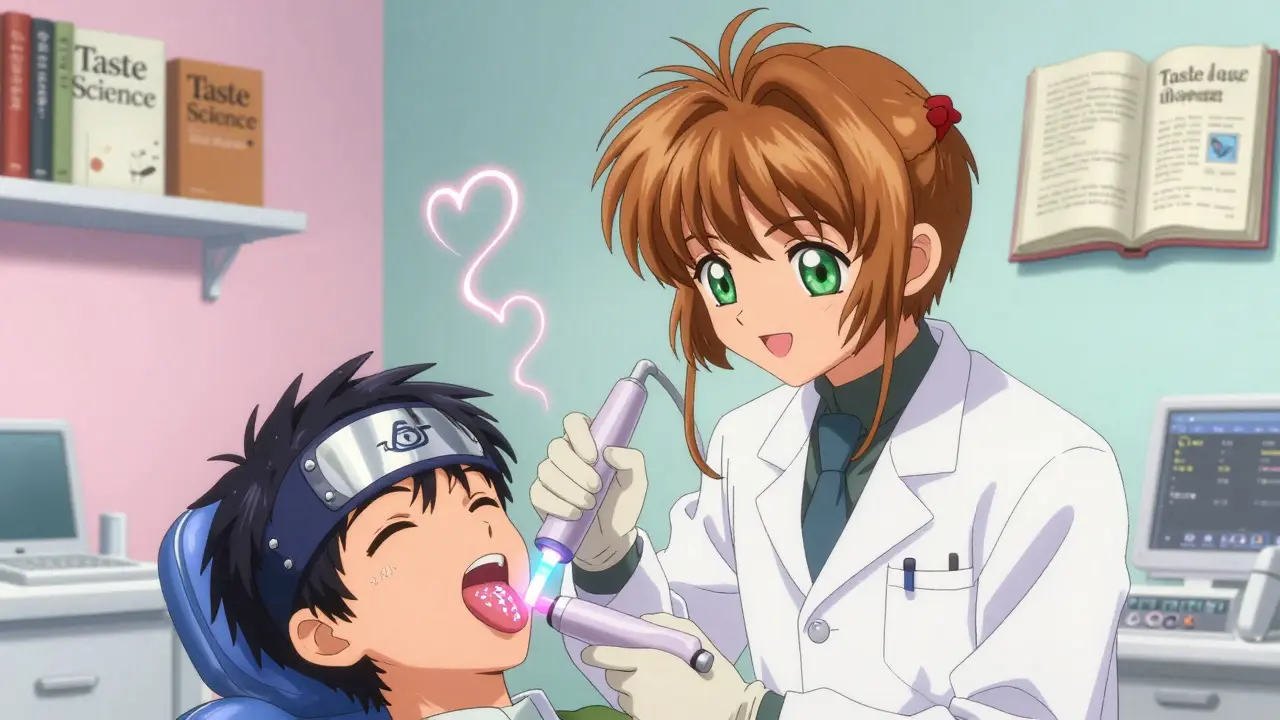
Low-level laser therapy (LLLT) is another emerging option. A pilot study at the 2023 ADA meeting showed 55% of patients improved after 10 sessions of 808nm laser treatment on the tongue. And a new zinc-carnosine compound called Polaprezinc showed 40% better results than plain zinc in a 2023 European trial.
When to Call Your Doctor
Don’t wait until you’re losing weight or skipping doses. If metallic taste lasts more than two weeks after starting a new medication, talk to your provider. Ask:
- Is there an alternative drug without this side effect?
- Can we adjust the dose?
- Should I get my zinc and copper levels checked?
- Can you refer me to a dentist familiar with medication-related taste issues?
Many doctors still think taste changes are “just a side effect” and not worth addressing. But with 17% of patients over 65 quitting chronic meds because of bad taste - costing the system $3.2 billion a year - it’s time to treat this seriously.
Final Thought: You’re Not Broken
Having a metallic taste doesn’t mean your taste buds are ruined. It doesn’t mean you’re overreacting. It means a drug is doing its job - and side effects are part of the deal. But you don’t have to live with it. With the right strategies, you can eat again, enjoy your food, and stick to your treatment plan. Start with zinc, switch your utensils, eat tart foods, and talk to your doctor. Small steps make a big difference.



Comments
Just started Paxlovid last week and yeah, my coffee tastes like a battery. I thought I was going crazy. Switched to plastic utensils and started chewing sour candy before meals - holy shit, it actually helped. Not gone, but bearable now. Thanks for the tips.
I can’t believe how many people just accept this like it’s normal. I’ve been on metronidazole for 10 days and everything tastes like rust and regret. I tried zinc, I tried lemon, I tried gargling with salt water - nothing worked until I asked my doctor for a different antibiotic. Why do doctors act like this is just ‘part of the journey’? It’s not, it’s a quality of life issue. I lost 8 pounds because I couldn’t eat anything without gagging. This isn’t ‘mild’ - it’s torture. And now I’m stuck with this awful taste even after stopping the drug. I’m still waiting for it to go away. Three weeks later. I’m not okay.
Let’s contextualize this with pharmacokinetics: drug metabolites excreted via salivary glands bind to T2R bitter receptors, particularly TAS2R38 polymorphisms - which explains inter-individual variability. The zinc supplementation mechanism is well-documented in J Clin Pharmacol 2019, but the 50mg dose is borderline toxic without monitoring serum copper. Also, plastic utensils? That’s a placebo effect amplified by confirmation bias. The real win is timing meds with high-fat meals - FDA data shows 27% reduction in Cmax of drug metabolites in saliva. Don’t waste money on ‘taste masks’ - fix the bioavailability. And yes, LLLT is promising - 808nm wavelength modulates TRPM5 ion channels. But it’s still Phase II. Don’t get your hopes up.
MY TONGUE IS A METAL TUNNEL AND NOBODY CARES 😭 I cried over scrambled eggs because they tasted like my old laptop. I tried everything. Lemon. Zinc. Plastic forks. Nothing. My mom told me to ‘just breathe through my nose’ like that’s a solution. I’m not overreacting. This isn’t ‘just a side effect.’ It’s a crime against food. And now I’m scared to take any new med because I know I’ll lose my joy again. Someone please tell me I’m not alone.
I’ve been on lisinopril for 5 years. Metallic taste started 3 months ago. I didn’t connect it until I read this. I stopped taking it cold turkey because I couldn’t stand it anymore. Now my blood pressure is through the roof. I should’ve called my doctor. I’m not proud of it. But I also didn’t think anyone would take me seriously. I’m back on it now - using the sour candy trick. It’s not perfect, but I’m eating again. Don’t quit without talking to someone first.
To everyone suffering through this - you are seen. You are not broken. You are not weak for struggling to eat. This is a real, documented, and devastating side effect that’s been ignored for too long. The fact that 17% of older adults quit life-saving meds because of this? That’s a systemic failure. But you’re not alone. Try the zinc. Try the lemon. Try the plastic fork. And then go back to your doctor armed with this post. You deserve to taste your food again. You deserve to feel human. Keep going. I believe in you.
Just wanted to say - I’m a nurse and I’ve seen this over and over. Patients cry in clinic because they can’t eat their grandkids’ birthday cake. It’s heartbreaking. The zinc trick works. The tart stuff works. And please, please don’t stop your meds without talking to someone. I’ve had patients end up in the ER because they quit their blood pressure med over a weird taste. You’re not being dramatic. You’re being human. And you’re not alone. I’ve got your back.
OMG I tried the plastic fork thing and it’s like a miracle 😭 I was about to throw out all my silverware. Now I feel like a weirdo eating with a plastic fork at dinner parties but WORTH IT. Also, lemon slices before pizza? Chef’s kiss. 🍋✨
Of course the solution is ‘take more zinc.’ Because the pharmaceutical industry clearly doesn’t profit from side effects - they profit from patients suffering silently so they can sell more pills. Meanwhile, the FDA approves lithium with a ‘taste coating’ after 40 years of ignoring this. And we’re supposed to be grateful for plastic forks? This isn’t management. This is corporate negligence dressed up as ‘self-care.’ You’re not broken - the system is.