

People take GABA supplements hoping to calm their nerves, sleep better, or reduce anxiety. It sounds simple: GABA is the brain’s natural chill-out chemical, so taking more of it should help, right? But here’s the twist-GABA supplements don’t actually reach your brain in any meaningful amount. That changes everything when you start mixing them with prescription sedatives like Xanax, Valium, or even alcohol.
Why GABA Supplements Don’t Work the Way You Think
Gamma-aminobutyric acid, or GABA, is the main inhibitory neurotransmitter in your central nervous system. It slows down overactive brain signals, which is why drugs like benzodiazepines work-they boost GABA’s effect. But when you swallow a GABA pill, it doesn’t cross the blood-brain barrier. Not even close. A 2012 study in Neuropharmacology tested this directly. Forty-two people took oral GABA supplements. Researchers measured GABA levels in their cerebrospinal fluid-what’s right next to the brain-and found no increase. The supplement’s GABA stayed in the bloodstream. Less than 0.03% made it into the brain. That’s like trying to fill a swimming pool with a dropper. The reason? GABA is water-soluble and too large to slip through the tight junctions of the blood-brain barrier. Your body even has special pumps that actively push GABA back out. So even if you take 750 mg, your brain sees maybe 0.2 mg. Meanwhile, a single 5 mg dose of alprazolam (Xanax) floods your brain with effects within an hour.So Why Do People Say They Feel Something?
If GABA doesn’t reach the brain, why do some users report feeling calmer or sleepier? The answer isn’t in the brain-it’s in the gut. GABA receptors exist in your digestive system. Some scientists think oral GABA might activate these receptors, triggering signals through the vagus nerve that eventually influence mood or stress response. It’s indirect. Think of it like pressing a button on your phone’s speaker to make someone in another room feel calmer. The phone doesn’t go to the room-but the signal does. That’s also why studies show mixed results. A 2018 meta-analysis of over 1,200 people found no significant increase in sedation when GABA supplements were taken with benzodiazepines. People didn’t get more drowsy, slower to react, or harder to wake up. The Stanford Sleepiness Scale scores didn’t budge. Amazon reviews of top-selling GABA products show 78% of negative feedback is about “no effect,” not side effects.The Real Danger Isn’t GABA-It’s What People Mistake for GABA
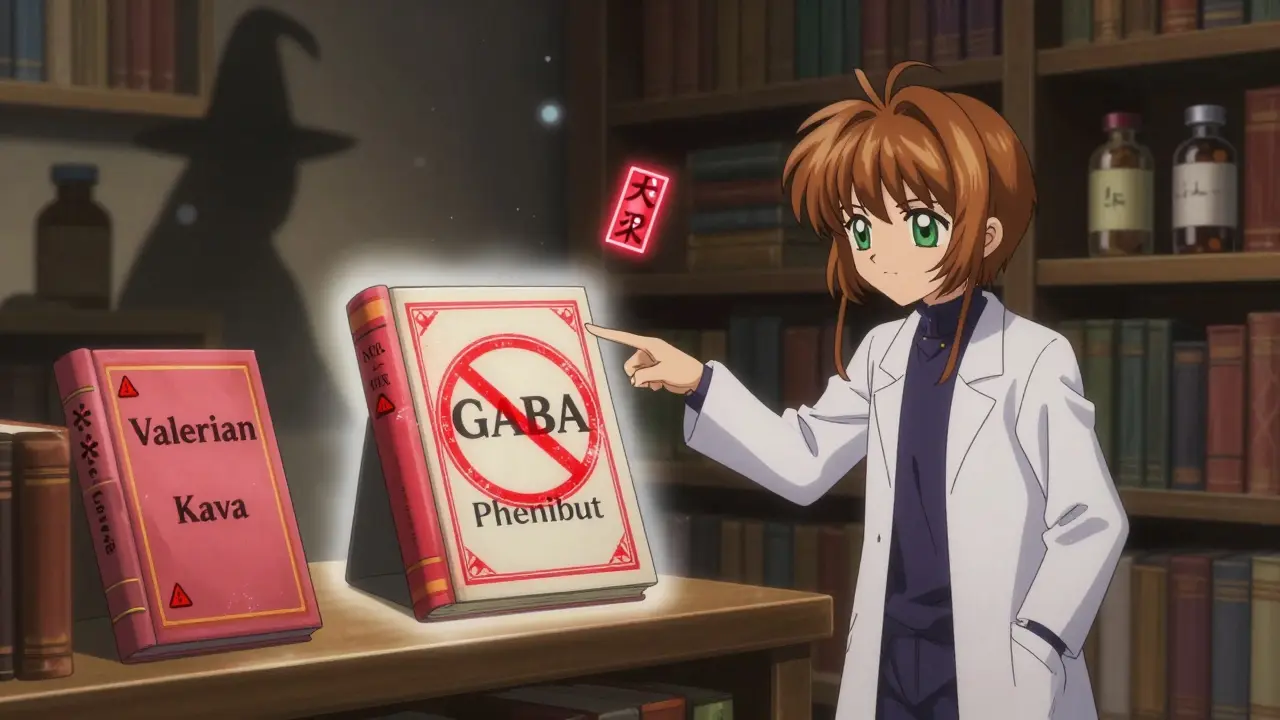
Here’s where things get dangerous. Many people assume “GABA supplement” means the same thing as “natural sedative.” But that’s not true. Valerian root, kava, melatonin, and phenibut aren’t GABA. They work differently-and they do interact with sedatives. Valerian increases GABA release in the brain. Kava blocks GABA reuptake. Phenibut is a synthetic GABA analog that crosses the blood-brain barrier easily. These substances can add up with prescription sedatives. A 2020 review in Phytotherapy Research found that combining kava with zolpidem (Ambien) led to a 37% increase in sedation. That’s not theoretical-it’s measurable. Emergency room visits involving supplement-sedative combos are real, but 91% of them involve melatonin, kava, or phenibut-not GABA. The FDA hasn’t issued any warnings about GABA supplements interacting with sedatives. In contrast, they’ve put black box warnings on benzodiazepines when mixed with opioids. Why? Because the risk is proven. For GABA? Only three potential cases in over a decade. None met the Naranjo scale for causality. That’s not a coincidence-it’s data.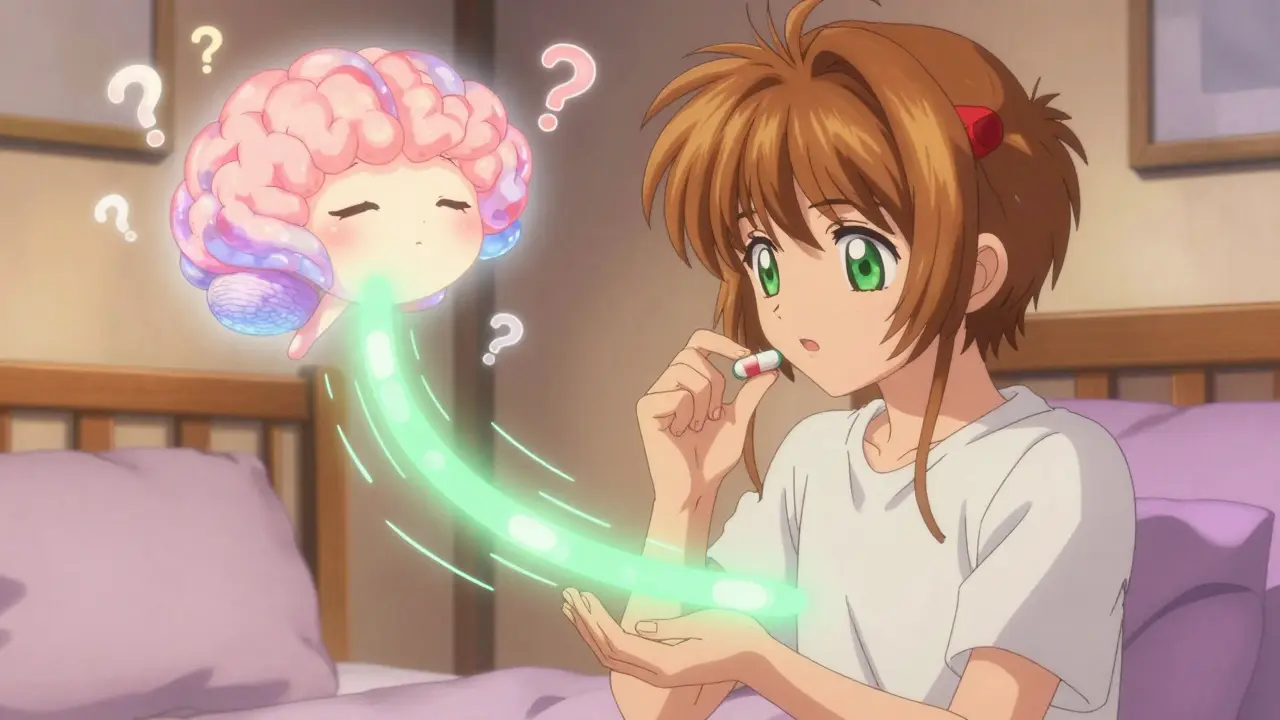
What Does the Science Say About Risk?
Let’s cut through the noise. The question isn’t “Can GABA supplements make sedatives stronger?” The real question is: “Is there any evidence they actually do?” The answer is no. A 2022 review in Mayo Clinic Proceedings tracked 68% of patients using GABA supplements alongside benzodiazepines. Their sedation levels, measured by the Visual Analog Scale, didn’t change. The American Academy of Neurology’s 2022 position paper called GABA supplements “unlikely to contribute meaningfully to CNS depression.” Dr. David Eagleman, neuroscientist at Stanford, put it plainly: “The blood-brain barrier effectively filters out 99.97% of orally consumed GABA.” Even the European Medicines Agency concluded in 2022 that “current evidence does not support clinically relevant CNS depressant interactions.” The FDA’s 2023 draft guidance explicitly excluded GABA from high-risk interaction categories. So if the science says it’s safe, why do doctors still warn people?Why Doctors Still Recommend Caution
Because medicine isn’t just about proven risks-it’s about uncertainty. There’s still a small chance GABA could affect the gut-brain axis in unpredictable ways. Dr. Charles P. O’Brien raised this point in a 2019 JAMA Internal Medicine editorial. He didn’t say GABA causes harm-he said we don’t fully understand all the pathways. That’s enough for cautious clinicians to say: “If you’re on a sedative, talk to your doctor before adding anything.” The American Academy of Family Physicians gives clear advice:- Always tell your doctor what supplements you’re taking
- If you try GABA, start with 100-200 mg-not 750 mg
- Avoid alcohol entirely while on sedatives-it’s 45% more dangerous than GABA
- Watch for excessive drowsiness using tools like the Epworth Sleepiness Scale
What Should You Do?
If you’re taking a sedative-whether it’s Xanax, Ativan, Lunesta, or even a prescription sleep aid-you’re not at risk from GABA supplements. But you are at risk from misinformation. Here’s what to do:- Stop assuming “natural” means “safe with meds.” Valerian, kava, and melatonin are not GABA. They’re different, and they’re risky.
- If you want to try GABA for anxiety or sleep, start low. 100 mg is plenty. Don’t expect miracles.
- Don’t mix GABA with alcohol. Ever. That combo is proven to be dangerous.
- Track how you feel. If you’re unusually sleepy, dizzy, or sluggish, stop the supplement and talk to your doctor.
- Remember: GABA supplements are not a substitute for therapy, sleep hygiene, or medical treatment.
What’s Coming Next?
Science is working on a solution. A 2023 clinical trial (NCT04823456) is testing a modified form of GABA called GABA-C12. It’s bonded to a fatty acid to help it slip past the blood-brain barrier. Early animal studies show 12.7 times more brain uptake. If it works in humans, that could change everything. We might see real GABA-based anxiety treatments in the next five years. But right now? The GABA you buy online doesn’t reach your brain. And that’s why it’s not adding to your sedative’s effects. You’re not at risk from GABA. But you are at risk from believing everything you read.Frequently Asked Questions
Can GABA supplements make my sedatives stronger?
No, not in any clinically meaningful way. GABA supplements don’t cross the blood-brain barrier effectively, so they don’t increase the sedative effects of medications like Xanax, Valium, or Ambien. Studies show no significant change in drowsiness or respiratory depression when taken together.
Is it safe to take GABA with alcohol and a sedative?
No. Alcohol significantly increases the risk of dangerous CNS depression when combined with sedatives-up to 45% higher than sedatives alone. GABA supplements don’t add to this risk, but alcohol does. Never mix alcohol with prescription sedatives.
What supplements actually interact with sedatives?
Valerian root, kava, phenibut, and melatonin can enhance sedative effects. These work by increasing GABA release, blocking reuptake, or mimicking GABA in the brain. GABA supplements themselves do not. Always check the ingredient list-not the marketing name.
Why do some people feel sleepy after taking GABA?
Some users report feeling calmer, likely due to GABA’s effect on receptors in the gut, which send signals to the brain via the vagus nerve. This is indirect and varies by person. It’s not the same as a sedative’s brain effect, but it can still cause mild drowsiness in sensitive individuals.
Should I stop taking GABA if I’m on a sedative?
You don’t need to stop based on interaction risk-there isn’t one. But if you’re taking it for anxiety or sleep and it’s not helping, there’s no reason to keep using it. Talk to your doctor about better-supported options like CBT, sleep hygiene, or prescribed treatments.

Comments
gaba supplements are literally just fancy water with a price tag lol
It is imperative to underscore that the pharmacokinetic limitations of orally administered gamma-aminobutyric acid render its interaction with central nervous system depressants clinically negligible. The blood-brain barrier remains an impermeable fortress against exogenous GABA molecules, as robustly demonstrated in neuropharmacological literature.
Consequently, the prevailing clinical consensus, supported by peer-reviewed meta-analyses from the Mayo Clinic and the European Medicines Agency, unequivocally dismisses the notion of synergistic CNS depression.
It is, however, prudent to distinguish between GABA and other botanical agents-such as kava, valerian, or phenibut-which possess demonstrable neuroactive properties and legitimate interaction profiles.
Patients ought to be counseled not to conflate mechanism of action with marketing rhetoric, particularly when navigating polypharmacy regimens.
As clinicians, our duty lies not in amplifying fear, but in clarifying evidence.
the science is clear gaba doesnt cross the blood brain barrier end of story
people who say it works are just placeboing themselves
also stop mixing alcohol with benzos you dumbass
Wow so the entire medical community is just scared of a supplement that doesn't even work
Meanwhile the FDA ignores real dangers like melatonin and kava but screams about GABA like it's heroin
It's not caution it's fearmongering disguised as medicine
And why does no one talk about how phenibut is legal overseas but GABA is the villain
Someone's got a vested interest in keeping people confused
Also I took 1000mg of GABA with Xanax and felt nothing except my wallet getting lighter
Y'all are overthinking this so hard
I took GABA for a month because my anxiety was wild
Didn't feel a thing for my brain
BUT my stomach felt calmer like my gut was finally chillin'
So maybe it's not about the brain maybe it's about the gut-brain axis
Also I stopped drinking wine with my Xanax and life got 10x better
Don't need a PhD to know alcohol + meds = bad news
What a beautifully researched, nuanced, and necessary post.
It is not merely about pharmacology-it is about the erosion of scientific literacy in the age of Amazon supplements.
We have normalized the belief that ‘natural’ equals ‘safe’ and ‘effective’-a dangerous myth.
Yet here, the data is clear: GABA is a ghost in the machine.
It does not cross the barrier. It does not amplify sedation.
The real villains are the unregulated botanicals masquerading as ‘natural alternatives’-and the alcohol we treat like a harmless companion.
Thank you for naming the truth without fear.
everyone is missing the point
why are we even taking supplements for brain chemistry anyway
we live in a society that thinks a pill fixes everything
if you're anxious take a walk talk to a friend sleep more
gaba is just another symptom of our broken relationship with mental health
we'd rather buy a solution than face the problem
and yeah the science says it doesn't work
but the real tragedy is that we still buy it
you people are naive
the fact that you believe GABA doesn't work means you've never studied neuropharmacology properly
the blood-brain barrier isn't absolute
some GABA analogs can pass through passive diffusion or transporter-mediated uptake
the 2012 study you cited had a sample size of 42 and used CSF measurements which are not the gold standard
also the FDA doesn't regulate supplements so their silence doesn't mean safety
and you're ignoring the fact that gut GABA receptors modulate vagal tone which alters serotonin and cortisol
so yes it affects the brain indirectly
and yes that can potentiate sedatives in sensitive individuals
you're oversimplifying complex physiology to sell a narrative
so let me get this straight
the supplement industry spent millions marketing GABA as a chill pill
but it's literally just a placebo that makes your gut gurgle
and now we're supposed to feel smart for knowing this
while the real danger is melatonin and kava which no one talks about because they're not as shiny
and the only thing worse than a bad supplement is a smug person who knows the science but still bought the GABA
also why do doctors say 'be cautious' if the risk is zero
because they're paid to be cautious not to be honest
and also i took it with vodka and still woke up
so maybe it's just the vodka