
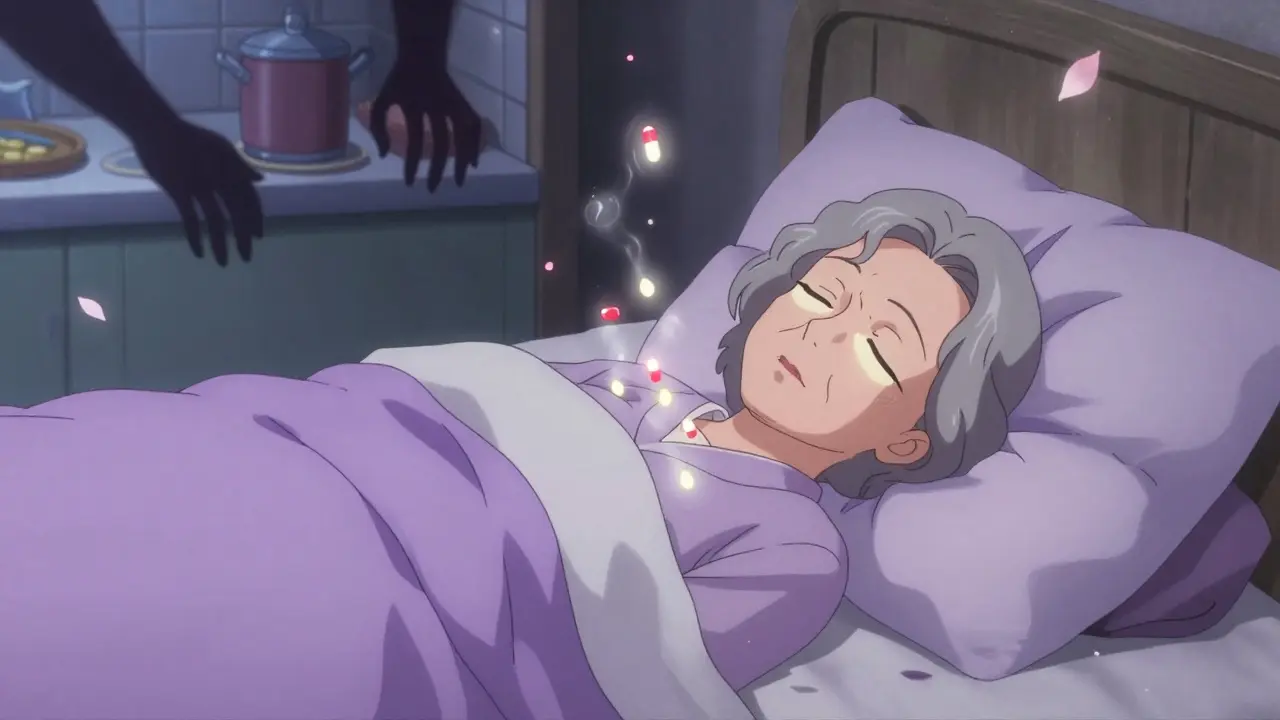
More than 1 in 10 adults over 80 take prescription sleep pills every month. That’s not just a number-it’s a reality for millions who’ve been told, "Just take this to help you sleep." But what happens when the pill stops working? Or when you wake up groggy, confused, or worse-sleepwalking through your kitchen at 3 a.m.? Sleep medications might seem like a quick fix, but they come with hidden costs that most people don’t see until it’s too late.
How Sleep Medications Actually Work
Sleep meds don’t make you tired. They slow down your brain. Most work by boosting GABA, a chemical that calms nerve activity. This is why benzodiazepines like lorazepam and non-benzodiazepine "Z-drugs" like zolpidem (Ambien) and eszopiclone (Lunesta) can knock you out fast. But here’s the catch: your brain adapts. Over time, it needs more of the drug to get the same effect. That’s dependence-and it can happen in as little as two weeks.
These drugs were designed for short-term use, but the reality is different. A 2018 CDC survey found that 4% of U.S. adults used prescription sleep aids in the past 30 days. Among those over 80, it jumped to 13.2%. Many take them for months, even years, because they don’t know what else to do.
The Hidden Dangers You’re Not Being Told
Next-day drowsiness affects nearly one in three users. That’s not just feeling a little tired-it’s impaired reaction time, poor focus, and memory lapses. Research shows this mental fog can be as bad as having a blood alcohol level of 0.05% to 0.08%. That’s legally impaired in most places.
Then there are the scary side effects. The FDA has received hundreds of reports of people driving, eating, or even having sex while asleep-after taking zolpidem. These aren’t dreams. They’re real events, and users often have no memory of them. Since 2019, the FDA required lower starting doses for women because they metabolize zolpidem slower, leading to higher next-morning impairment.
Older adults are at even greater risk. The American Geriatrics Society warns that sleep meds increase fall risk by 50-60% and fracture risk by 20-30%. That’s why they’re on the Beers Criteria list of drugs to avoid in seniors. Even over-the-counter options like diphenhydramine (Benadryl) carry long-term risks: a 2015 JAMA study found a 54% higher chance of dementia after just three years of regular use.
Dependence Isn’t Just "Getting Used to It"
Dependence doesn’t mean you’re addicted like someone on opioids. It means your body expects the drug to fall asleep. When you stop, your brain goes into overdrive. Rebound insomnia hits hard-worse than before you started. One Reddit user wrote: "After six months of nightly Ambien, I quit and couldn’t sleep for three nights straight. I went back on it." That’s not weakness. That’s biology.
Dependence rates vary by drug. Benzodiazepines have up to a 33% risk after 4-6 weeks. Z-drugs are lower-around 5-10%-but still real. And because they’re often prescribed without warning, many people don’t realize they’re hooked until they try to quit.
Doctors rarely tell you how to stop. The American Academy of Family Physicians recommends tapering by 25% every two weeks. But a 2021 JAMA study found 40% of patients need extra help-like counseling or temporary use of a different medication-to get off safely.
What’s Actually Better? The Science-Backed Alternatives
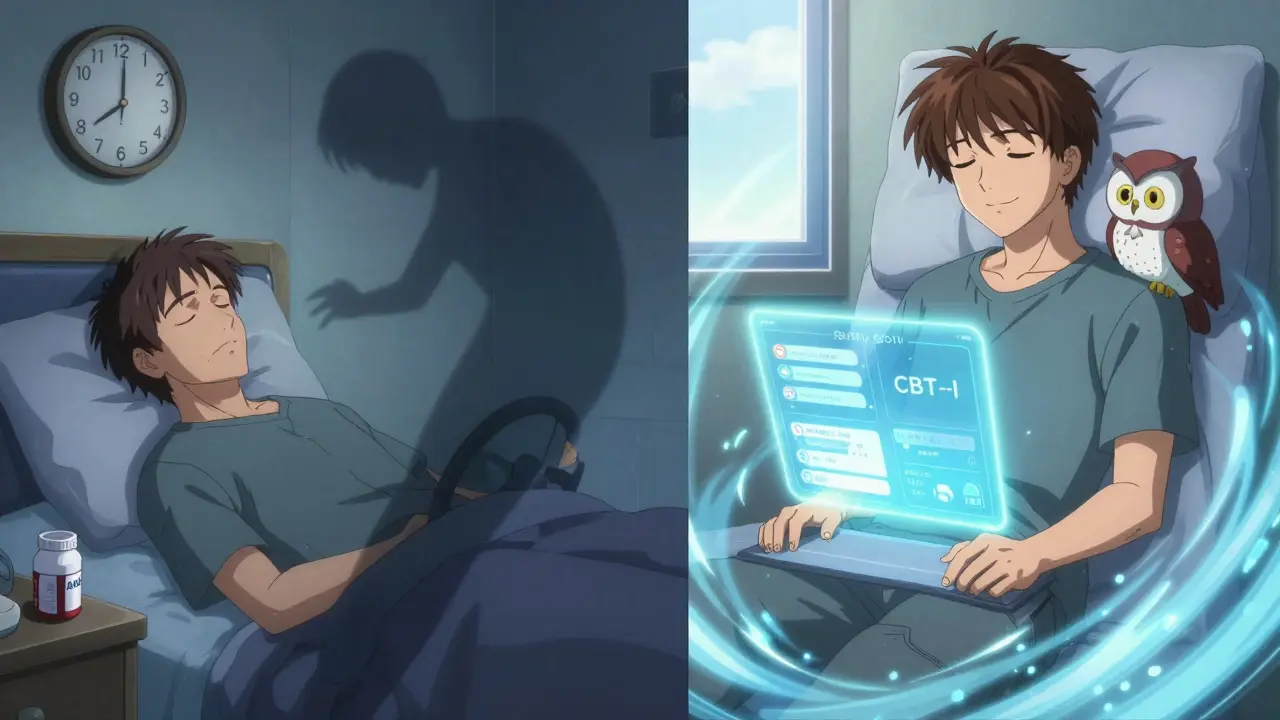
There’s one treatment that outperforms every pill: Cognitive Behavioral Therapy for Insomnia (CBT-I). It’s not a magic trick. It’s a structured program that teaches you how to fix the thoughts and habits keeping you awake. Studies show 70-80% of people see lasting improvement-without drugs.
Unlike pills, CBT-I doesn’t wear off. It doesn’t cause next-day grogginess. And it doesn’t lead to dependence. The American Academy of Sleep Medicine says it should be the first-line treatment for chronic insomnia. Yet most patients never hear about it.
Now, you don’t have to sit through weeks of in-person therapy. The FDA approved Somryst in 2020-the first digital CBT-I app. Clinical trials showed a 60% remission rate after 12 weeks. Many insurance plans now cover it. Some employers offer it for free.
Other Alternatives That Actually Work
Not everyone wants therapy or apps. Here are other evidence-based options:
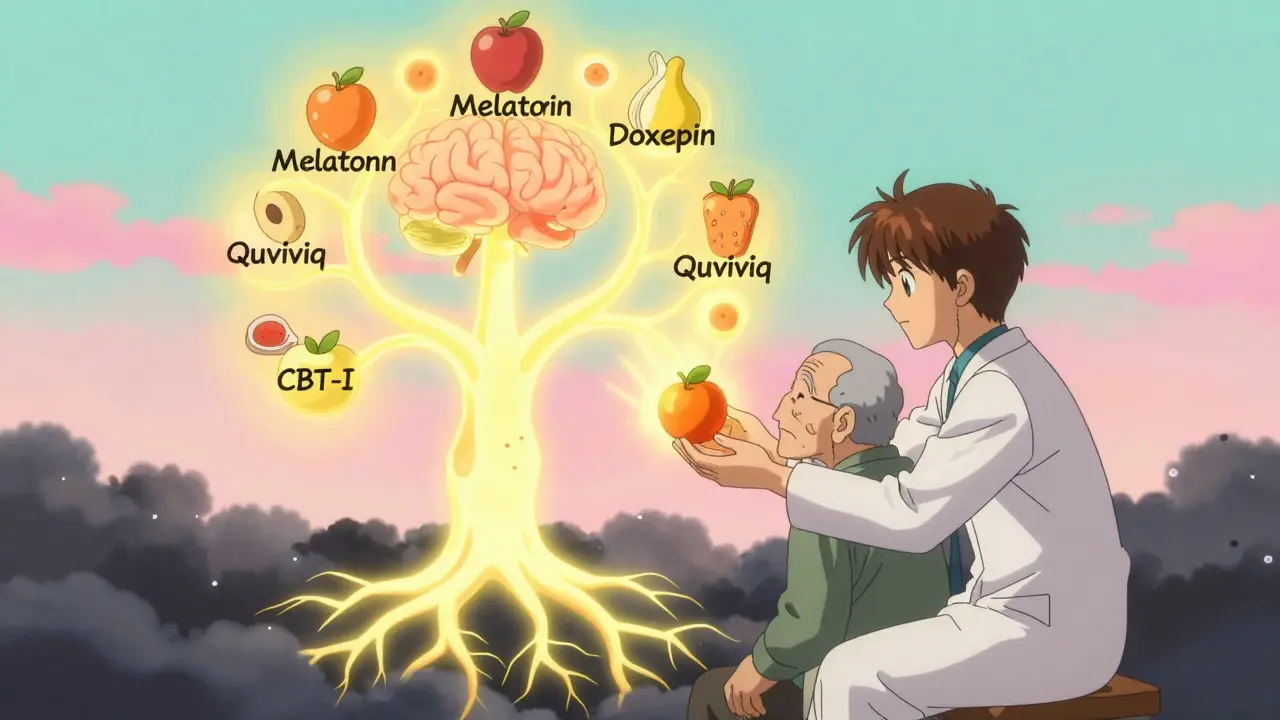
- Melatonin: Works best for circadian rhythm issues, like jet lag or shift work. Not a strong sleep inducer, but safe for long-term use. Most users report no grogginess.
- Doxepin (Silenor): A low-dose antidepressant approved for sleep maintenance. Less risk of dependence than Z-drugs, but can cause dry mouth and dizziness.
- Pregabalin: Sometimes used off-label for anxiety-related insomnia. Expensive and can cause weight gain or swelling.
- Quviviq (daridorexant): A new orexin receptor antagonist approved in 2022. It targets wakefulness signals instead of calming the whole brain. Early data shows less next-day impairment than Ambien.
OTC sleep aids? Avoid them. Diphenhydramine and doxylamine are anticholinergics-chemicals linked to memory loss and confusion in older adults. They’re not safer just because they’re on the shelf.
When Might Medication Still Make Sense?
Not everyone can do CBT-I right away. If you’re severely sleep-deprived, in crisis, or dealing with acute stress, a short course of medication might help you get back on your feet. Some people with severe depression or PTSD benefit from combining therapy with a low-dose, short-term sleep aid.
The key is intention. If you’re taking it for more than 4-6 weeks, you’re not treating insomnia-you’re masking it. And masking doesn’t fix the root cause: racing thoughts, poor sleep habits, anxiety, or irregular schedules.
How to Use Sleep Medication Safely (If You Must)
If your doctor prescribes a sleep med, here’s how to minimize risk:
- Start low. Zolpidem: 5mg for women, 10mg for men. Eszopiclone: 1mg. Never take more than prescribed.
- Time it right. Take it only when you can sleep 7-8 hours. No driving, cooking, or answering emails after.
- Avoid alcohol. Mixing alcohol with sleep meds triples your risk of overdose.
- Set a quit date. Plan to stop after 2-4 weeks. Write it down.
- Track your sleep. Use a journal or app. Note how you feel the next day. If you’re still tired, the med isn’t working-it’s just hiding the problem.
The Bigger Picture: Why We’re Overusing Sleep Pills
Doctors prescribe these drugs because they’re fast, easy, and covered by insurance. CBT-I takes time. It requires effort. It’s not billed like a pill. The system rewards quick fixes, not long-term healing.
But the data is clear: pills help you sleep tonight. CBT-I helps you sleep for life.
And the market is shifting. Digital CBT-I apps are growing at 17.2% per year. Prescription sleep aid sales? Only 4.1%. More hospitals now require proof that you tried behavioral therapy before approving long-term prescriptions.
This isn’t about giving up pills. It’s about choosing the right tool for the job. For a broken leg, you need a cast. For insomnia, you need to fix the wiring-not just turn off the lights.
Can I get addicted to Ambien or Lunesta?
Yes. While Z-drugs like Ambien and Lunesta have lower dependence rates than benzodiazepines, they still carry risk. Studies show 5-10% of regular users develop dependence within a few months. The FDA warns that stopping suddenly can cause rebound insomnia, anxiety, and even seizures in rare cases. Never quit cold turkey-work with your doctor on a taper plan.
Is melatonin safer than prescription sleep aids?
Generally, yes. Melatonin is a hormone your body naturally makes to signal sleep. Supplemental doses (0.5-5mg) are safe for most people and don’t cause dependence or next-day grogginess. But it doesn’t work for everyone-it’s best for circadian rhythm issues, not chronic insomnia. Avoid high doses (10mg+); they can disrupt your natural rhythm.
Why do doctors still prescribe sleep meds if they’re risky?
Because they’re fast and patients want quick results. Many doctors aren’t trained in CBT-I, and insurance doesn’t always pay for it. Also, for short-term use-like after surgery or during extreme stress-sleep meds can be appropriate. The problem is when they become the default solution for chronic insomnia, which they’re not designed to treat.
What’s the best way to stop taking sleep medication?
Gradual tapering is key. Reduce your dose by 25% every 1-2 weeks. For example, if you take 10mg of zolpidem, go to 7.5mg for two weeks, then 5mg, then 2.5mg. Pair this with CBT-I or sleep hygiene practices. If withdrawal symptoms hit-like anxiety or rebound insomnia-talk to your doctor. Some people need a short-term switch to a longer-acting medication to ease the transition.
Can I use CBT-I if I’m already on sleep meds?
Absolutely. In fact, combining CBT-I with medication often leads to better outcomes. Many people use CBT-I to learn how to reduce or stop meds safely. Programs like Somryst are designed to work alongside medication. The goal isn’t to ditch the pill overnight-it’s to build skills so you don’t need it long-term.
What to Do Next
If you’re on sleep meds and want to get off, start by talking to your doctor. Ask: "Is this the right long-term solution?" and "Can you refer me to CBT-I?"
If you’re not on meds but struggling to sleep, try this: keep a sleep diary for two weeks. Note what you do before bed, how long it takes to fall asleep, and how you feel in the morning. You might spot patterns-screen time, caffeine after 2 p.m., inconsistent wake times-that are worse than any pill.
Sleep isn’t broken. Your habits are. Fix those, and the pills become optional-not necessary.
Comments
i just want to sleep without feeling like a zombie the next day 😅 why is this so hard? i took ambien for 8 months and woke up making toast at 2am. no memory of it. just a half-eaten loaf and a weird sense of betrayal from my kitchen.
people like you make me sick. you think you're so smart with your 'science-backed alternatives' but the truth is you're just another woke guru who thinks sleep is a mindset. my grandma takes her pill and sleeps like a baby. you don't get to judge her because you have a fancy app.
i've been off sleep meds for 2 years now and i can't believe how much better i feel. it wasn't easy. i cried a lot. i panicked. but cbt-i changed everything. the app was free through my employer. i didn't even know it existed until my therapist mentioned it. if you're on meds and scared to quit-you're not alone. but you can do this.
start small. track your sleep. one night at a time. you don't need to be perfect. just consistent.
the real issue here is that the medical system is broken and everyone is just trying to survive not thrive. doctors are overworked and underpaid and they have 7 minutes with you so they give you a script because that's what they know. cbt-i is amazing but it requires time and money and emotional labor and most people don't have any of those things. the system doesn't care if you sleepwalk through your kitchen it just wants you to show up for work tomorrow. this isn't about willpower it's about capitalism and how it treats our bodies like machines that need oiling not healing
the jama study you cited has a 54% increased risk of dementia with diphenhydramine but the absolute risk is still under 2% over 3 years. correlation is not causation. also melatonin is not a hormone replacement therapy it's a chronobiotic and you're conflating mechanisms. and cbt-i has a 70% success rate only in controlled trials with highly motivated subjects. real world adherence is closer to 30%. stop overselling this like it's a panacea
i tried cbt-i and it was kinda boring but it worked?? i mean i still wake up sometimes but now i dont panic and reach for the pill. also i stopped checking my phone at night and my brain is finally chillin. ty for the post. i feel less alone now 💙
they're hiding the truth. the pharmaceutical industry funds every study that says cbt-i is effective. they want you dependent on apps and therapy so they can sell you subscriptions. the real solution is magnesium and a weighted blanket. i've been using them for 11 years. no pills. no apps. just nature and discipline. you're being manipulated.
did you know the fda approved somryst because a lobbyist from a tech company donated $3 million to the senate health committee? this is all a scam. sleep meds are safer than you think. the sleepwalking? that's just bad sleep hygiene. the dementia link? coincidence. the real enemy is the government pushing woke sleep ideology to control the population. they don't want you sleeping well. they want you tired and distracted so you don't question the system.
STOP WHINING. IF YOU CAN'T SLEEP WITHOUT A PILLS YOU'RE WEAK. GET UP. DO PUSH UPS. COLD SHOWER. GO FOR A RUN. SLEEP IS A HABIT NOT A MEDICAL CONDITION. YOU WANT TO BE HEALTHY? BE DISCIPLINED. NO MORE EXCUSES. THIS ISN'T A TED TALK IT'S REAL LIFE. YOU THINK YOUR BRAIN IS TOO TIRED? THEN BEAT IT. YOU'RE NOT A BABY. YOU'RE AN ADULT. ACT LIKE ONE.
in india we call this 'jugaad'-the art of fixing things with duct tape and hope. here, people take melatonin with a cup of warm turmeric milk and a prayer. no doctor needed. no app. just tradition and patience. i know a guy who slept for 18 months straight after switching to a bamboo mattress and chanting mantras before bed. maybe the answer isn't in the lab but in the quiet. the pill is a crutch. the soul? it knows how to rest. you just forgot how to listen.