
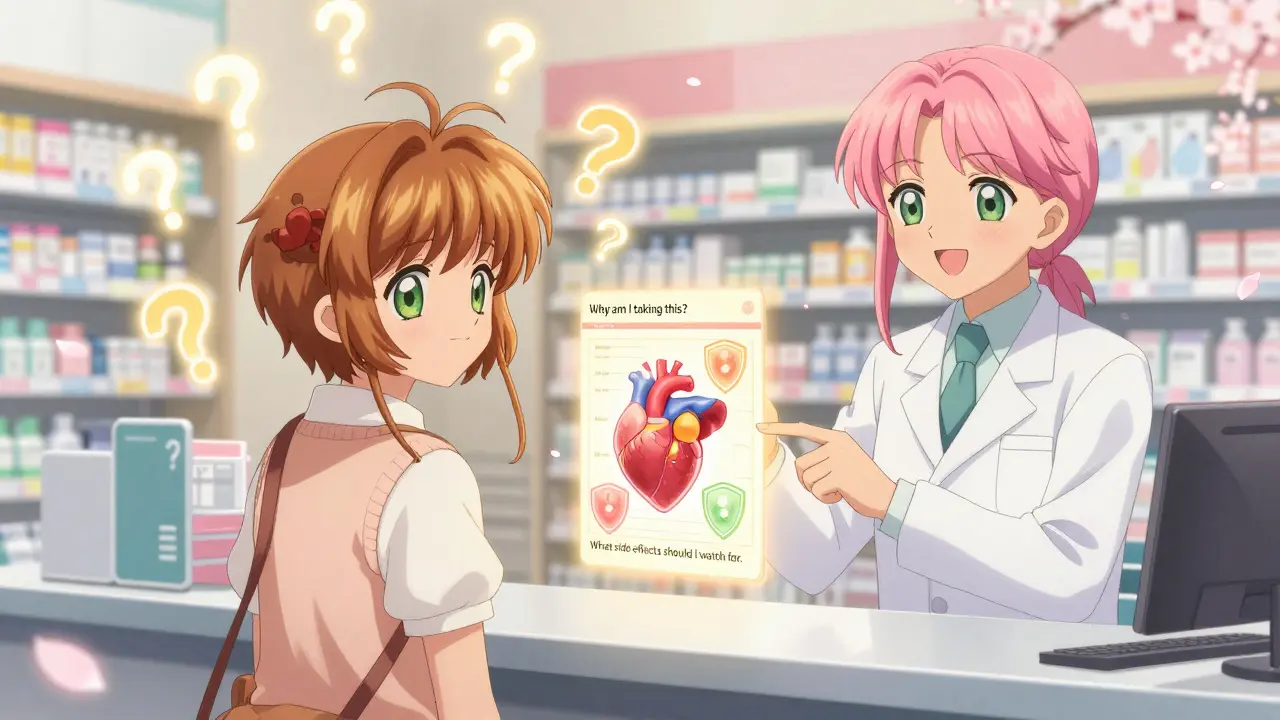
When you pick up a new prescription, most people grab the bag and head out the door. But what if you didn’t? What if you took just five extra minutes to ask your pharmacist a few simple questions? That small step could prevent a hospital visit, save you hundreds of dollars, or even save your life.
What is this medicine actually for?
Many people don’t know why they’re taking a medication. A Brown University Health study found that 30% of medication errors happen because patients don’t understand their drug’s purpose. You might be on blood pressure medicine, but if you think it’s for headaches, you’ll stop taking it when your head stops hurting. That’s dangerous. Ask directly: "What is this medication for, and how will it help me?" Don’t settle for "it’s for your condition." Ask them to explain it in plain terms. If you have high cholesterol, they should say: "This lowers your LDL, the bad kind, to reduce your risk of a heart attack." If it’s for anxiety, they can tell you how long it takes to build up in your system. Understanding the "why" makes you more likely to stick with it.When and how should I take it?
Dosing instructions aren’t always clear on the label. Some pills need to be taken on an empty stomach. Others work better with food. Some must be taken at the same time every day. A Gundersen Health study showed 45% of patients mess up their dosing schedule, leading to ineffective treatment or worse side effects. Ask: "Should I take this with or without food?" "What time of day is best?" "Can I take it with my morning coffee or grapefruit juice?" Some medications interact with caffeine, alcohol, or even citrus. If you take it at night, will it keep you awake? If it’s a once-daily pill, is there a preferred time? Your pharmacist knows the science behind timing - and it matters.What side effects should I watch for?
Side effects scare people. But not all of them are dangerous. Some are normal, temporary, and manageable. Others are red flags. Ask: "What are the most common side effects?" "Which ones mean I need to call my doctor right away?" "How can I manage the ones I can expect?" For example, if you’re on a statin, muscle aches are common - but severe pain or dark urine means possible liver damage. If you’re on an antidepressant, nausea might fade after a week. But if you feel suicidal thoughts spike in the first two weeks, that’s urgent. Seasonal factors matter too - some drugs make your skin burn faster in the sun. Your pharmacist can warn you about these hidden risks.Could this interact with anything else I’m taking?
This is one of the most overlooked questions. People forget to mention their vitamins, herbal supplements, or even over-the-counter painkillers. The FDA says 15% of hospital admissions are caused by drug interactions that could’ve been avoided. Ask: "Does this interact with my other medications, supplements, or foods?" Bring your entire list - not just prescriptions. That ginkgo biloba you take for memory? That turmeric capsule? That OTC antacid? All of it matters. Real story: A Reddit user asked about interactions with hawthorn berry - a common supplement for heart health. Their pharmacist discovered it dangerously lowered their blood pressure too far when combined with their prescription beta-blocker. Their doctor had missed it. That’s the kind of safety net pharmacists provide.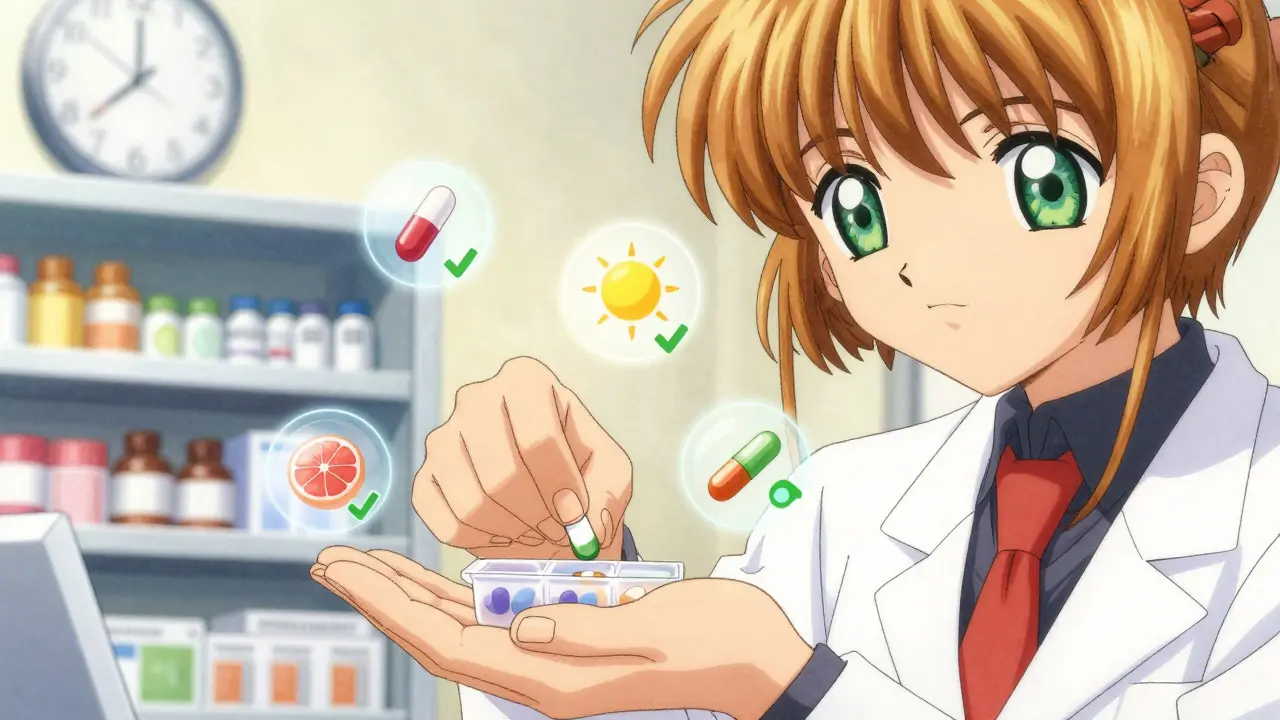
What if I miss a dose?
Life happens. You forget. You’re traveling. You run out. What do you do? Ask: "What should I do if I miss a dose?" "Should I double up next time?" "Is it safe to skip one?" Some meds, like antibiotics, need perfect timing. Skip one, and the infection might come back stronger. Others, like blood pressure pills, are more forgiving - but doubling up can crash your numbers. Your pharmacist can give you a clear, safe rule: "If you miss it by less than 4 hours, take it. If it’s been longer, skip it. Don’t double up."Are there cheaper or generic options?
Brand-name drugs can cost 80-85% more than generics - and they work exactly the same. Federal law requires generics to have the same active ingredient, strength, and effect. Yet many people pay extra because they don’t know better. Ask: "Is there a generic version available?" "Are there cost-saving programs or coupons?" "Can I switch to a 90-day supply to save money?" Pharmacists know about manufacturer discounts, pharmacy loyalty programs, and even mail-order options. One patient in a Brown University case saved $400 a month just by switching from brand-name to generic. That’s not a small thing.When will I know if it’s working?
Many people stop taking meds because they don’t feel immediate results. Blood pressure pills don’t make you feel different. Antidepressants take weeks. Thyroid meds? Slow and steady. Ask: "When should I expect to notice improvement?" "Will I need blood tests or other monitoring?" "How will we know if this is working?" My HealtheVet found that 68% of patients can’t tell when their medication should start working. That leads to unnecessary discontinuation. Your pharmacist can tell you: "You might see lower readings in two weeks, but we’ll check your levels at your six-week appointment."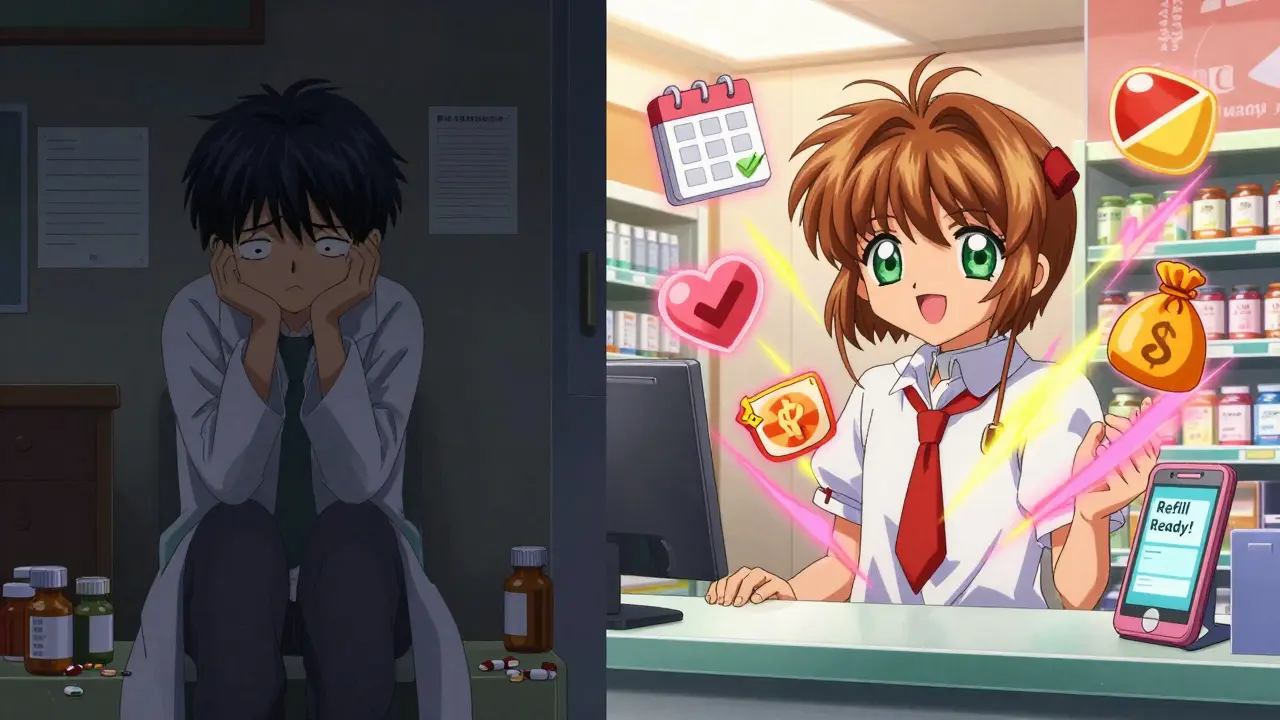
Are there alternatives - non-drug options?
Sometimes, medication isn’t the only path. Lifestyle changes, physical therapy, or even dietary shifts can help - especially for conditions like mild high blood pressure, prediabetes, or anxiety. Ask: "Are there non-drug alternatives that might help?" "Would exercise, diet, or sleep improvements make a difference?" Your pharmacist isn’t just a pill dispenser. They’re trained in behavioral health and nutrition. They might suggest walking 30 minutes a day to help lower blood pressure, or cutting back on salt if you’re on diuretics. They’ll point you to reliable resources - not random blogs.How do I remember to take it?
Medication non-adherence costs the U.S. healthcare system $300 billion a year. That’s because people forget. Or they’re overwhelmed. Or they’re afraid of side effects. Ask: "What are helpful reminders for taking my medication?" "Do you have pill organizers or apps you recommend?" Many pharmacies offer blister packs, automated phone reminders, or free apps that sync with your phone calendar. Some even mail you refill alerts. The "teach-back" method works wonders - ask the pharmacist to explain how to take the med, then repeat it back in your own words. Research shows this boosts adherence by 40%.What if I have more questions later?
You shouldn’t feel like you’re bothering them. Pharmacists are trained to answer questions - and they’re more accessible than your doctor. Most community pharmacies are within five miles of your home. Ask: "Can I call or stop by if I think of more questions?" "Is there a good website or pamphlet I can take home?" The American Pharmacists Association launched the "Ask Me 3" campaign: What is my main problem? What do I need to do? Why is it important? If you can answer those three, you’re ahead of 70% of patients.Why this matters more than you think
Pharmacists prevent 1.5 medication errors per hospital admission, according to the American Society of Health-System Pharmacists. Community pharmacists reduce ER visits by 33% and hospital admissions by 27% when they’re actively involved in care. Yet, a 2022 Consumer Reports survey found 63% of patients felt rushed during pharmacy visits - average time: just 2.7 minutes. Pharmacies are busy. But if you come prepared, you’ll get the attention you deserve. Bring your full list of meds. Write down your questions. Don’t be shy. The pharmacist isn’t judging you. They’re there to protect you. And in a system where doctors have 10-minute appointments and insurance forms pile up, your pharmacist might be the only person who actually listens - and understands your meds inside and out.Can I ask my pharmacist about side effects even if I’m not having them yet?
Yes, absolutely. Pharmacists expect this. Knowing what side effects to watch for - even before they happen - helps you act fast if something serious develops. It’s better to be prepared than to panic later.
Do pharmacists know about my other doctors’ prescriptions?
They can, if you give them your full list. Most pharmacies use electronic records that pull in prescriptions filled at their location. But they don’t automatically see prescriptions from other pharmacies or doctors unless you tell them. Always bring or send a complete list - including supplements and OTC drugs.
Is it worth asking about generics if my doctor prescribed a brand name?
Always ask. Brand-name drugs cost up to 85% more than generics - and they’re chemically identical. Your pharmacist can check if a generic is available and approved. If your doctor wrote "dispense as written," they can still call the doctor to ask if substitution is okay. Many doctors are open to it if it saves you money.
What if I don’t understand what the pharmacist is saying?
Say so. Ask them to explain it again, slower. Use the teach-back method: "So if I understand right, I take this after breakfast, and if I feel dizzy, I should lie down and call my doctor?" If they get frustrated, find another pharmacy. Good pharmacists welcome questions - they’re trained to make sure you understand.
Can pharmacists help with refill reminders or delivery?
Yes. Many pharmacies offer automatic refill programs, text reminders, or home delivery - especially for chronic conditions like diabetes or high blood pressure. Ask if they have these services. It’s free and reduces the chance you’ll run out.


Comments
People don't ask questions because they think pharmacists are too busy. But if you don't ask, you're just gambling with your health. Simple as that.
I always bring a list of everything I take-prescriptions, supplements, even that gummy vitamin I sneak in before bed. My pharmacist remembers me now. She even remembers I hate grapefruit.
It’s weird how much trust you build when you show up prepared.
OMG YES!! 🙌 I asked my pharmacist if my new blood pressure med would make me dizzy and she gave me a whole pamphlet + a free pill organizer! Now I take it with my coffee every morning and I haven’t missed a day 😍
Pharmacists are unsung heroes. We need more of them!
The epistemological framework underlying pharmaceutical adherence is fundamentally compromised by cognitive dissonance between patient agency and institutionalized medical authority. The pharmacist, as a liminal node in the pharmacovigilance network, functions as a de facto epistemic mediator-yet structural constraints (e.g., time, reimbursement models) inhibit their capacity to actualize this role.
I came from India where we just take whatever the doctor gives us. Here in the US, I learned to ask questions. My pharmacist told me my cholesterol pill was generic and saved me $300/month. I cried. Not because I was sad-because I finally felt seen.
Let’s be honest-most people asking these questions are just lazy. If you can’t read a medication leaflet, you shouldn’t be trusted with a prescription. The fact that we’ve turned pharmacists into babysitters for adult patients is a symptom of societal decay.
You know what’s wild? The guy at the pharmacy counter knows more about your meds than your doctor does sometimes. I’ve had doctors forget I was on three different things. Pharmacist remembered every single one. Including the turmeric. 🤯
I used to think this was just common sense until I saw my aunt stop her diabetes meds because she "felt fine." Then she ended up in the ER with a HbA1c of 14.5.
And now? Everyone says "oh, I didn’t know"-but you knew. You just didn’t care. You didn’t ask. You didn’t read. You just assumed. And now you’re mad the system failed you? Nah. You failed yourself.
And don’t even get me started on people who take OTC stuff with their prescriptions like it’s a salad bar. You think ibuprofen and warfarin are besties? They’re not. They’re mortal enemies. And you? You’re the collateral damage.
This is the kind of stuff that changes lives. Seriously. I used to be the guy who just grabbed the bag and left. Then I asked about my new antidepressant and found out it could take 6 weeks to kick in. I almost quit after 2 weeks. But because I asked, I stuck with it. Now I’m sleeping through the night.
Pharmacists are magic. Treat them like gold.
I’ve been asking questions for years now. I bring a printed list, I write down the answers, and I use the teach-back method. I even ask if there’s a cheaper alternative. My pharmacist started saving me coupons without me asking.
It’s not about being difficult. It’s about being responsible. And honestly? It’s kind of empowering. You’re not just a patient-you’re a partner in your own care.
Most of these questions are basic hygiene. If you’re on meds you don’t understand why you’re taking them you shouldn’t be allowed to leave the pharmacy. And don’t even get me started on people who think "natural" means safe. Turmeric is not a magic bullet. It’s a blood thinner. You’re not a wellness influencer. You’re a human being with a prescription. Act like it.
I asked my pharmacist about interactions and she said my birth control might not work with my new antibiotic. I didn’t believe her. So I went to my doctor. He said she was right. Then he told me he didn’t even know about the interaction.
So now I only trust the pharmacist. Not the doctor. Not the website. Not the ad. The person who actually handles the pills. That’s who knows what’s really going on.