
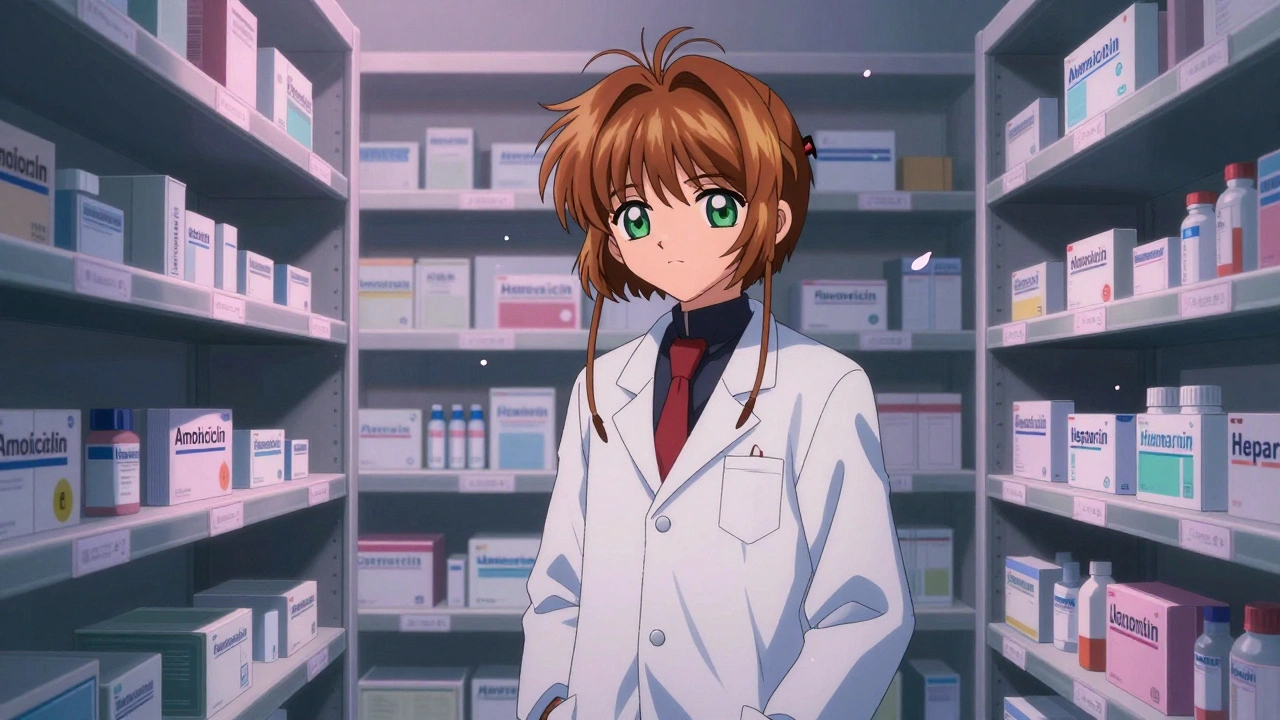
By mid-2025, drug shortages have hit levels not seen since the pandemic. But this isn’t about supply chain hiccups or factory fires. It’s about money. Manufacturers are caught in a squeeze: costs keep climbing, prices can’t follow, and profits are vanishing. When a pill costs more to make than it can legally be sold for, companies stop making it. And that’s exactly what’s happening across the generic drug market.
Why Generic Drugs Are Disappearing
Generic drugs make up 90% of prescriptions in the U.S. and Europe. They’re cheap, effective, and essential. But that’s also their downfall. When a drug’s patent expires, dozens of manufacturers jump in. Competition drives prices down-sometimes to pennies per tablet. In 2025, the average price for a 30-day supply of a generic antibiotic like amoxicillin is under $2. Some are sold for less than 50 cents. Meanwhile, the cost to produce it? Up 27% since 2022.
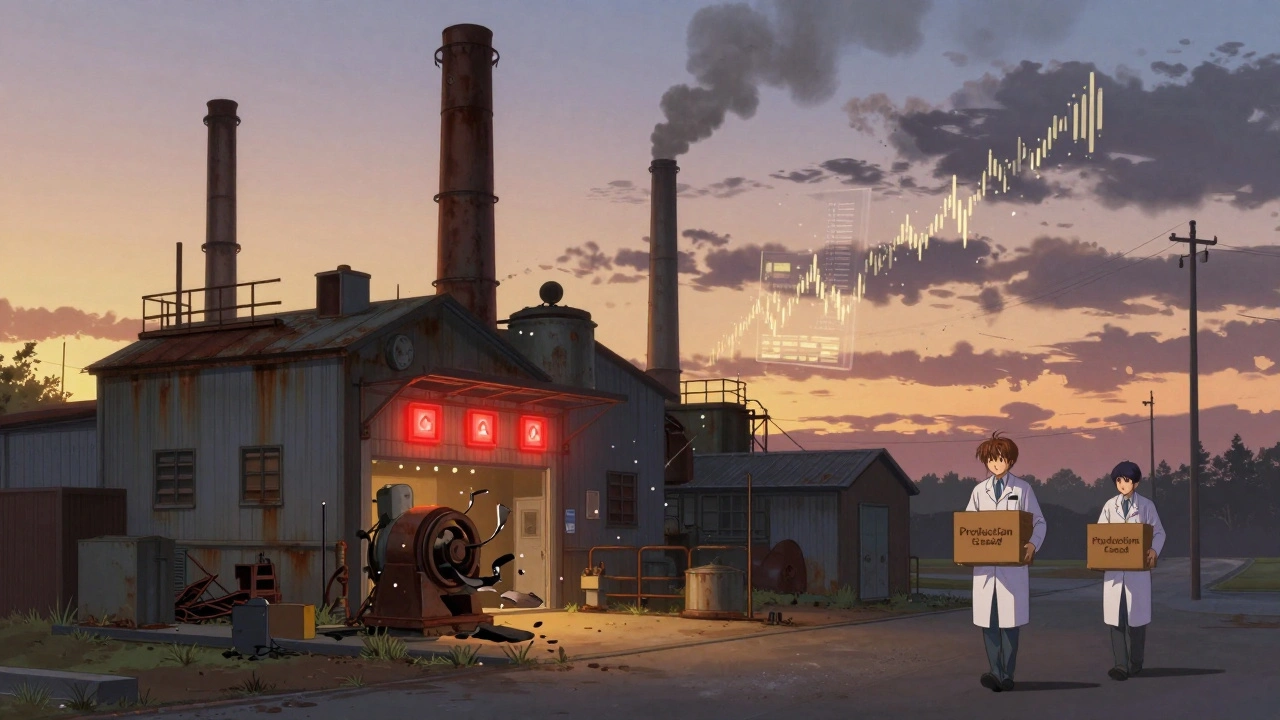
Raw materials like active pharmaceutical ingredients (APIs) are harder to get and more expensive. Most APIs come from India and China. Trade restrictions, export bans, and climate-related factory shutdowns have disrupted supply. Tariffs added another layer: in 2025, the U.S. imposed new duties on over 120 pharmaceutical inputs, raising input costs by 8-15% for many manufacturers. But they can’t just raise prices. Pharmacies, insurers, and government programs like Medicare have fixed reimbursement rates. If you charge more, you lose the contract.
Result? Manufacturers walk away. In Q2 2025, the FDA recorded 312 active drug shortages. Of those, 78% were generics. Insulin, heparin, IV fluids, and antibiotics were among the most affected. One company producing a common blood thinner saw its profit margin shrink from 12% to 1.4% in 18 months. They shut down the line.
The Financial Tightrope
It’s not just about the cost of chemicals. It’s everything. Labor is more expensive. Compliance with FDA and EMA regulations takes more time and money. Packaging materials? Up 19%. Energy for sterile production? Up 22%. A small manufacturer in Ohio told a trade journal they spent $1.2 million more in 2025 to make the same volume of pills as in 2023. Their revenue? Down 5%.
Meanwhile, the big players are pulling back too. Companies that once made dozens of generics now focus on just the top 10 most profitable ones. The rest? Left to smaller firms with thinner margins and less financial cushion. When one of those small makers fails, there’s no backup. No redundancy. No safety net.
And it’s not just about money. It’s about risk. Building a new production line for a generic drug takes 18-36 months and $20-50 million. No investor wants to put that kind of money into a product that might be priced into oblivion next year. So no new capacity is being built. The system is aging out.
Who Pays the Price?
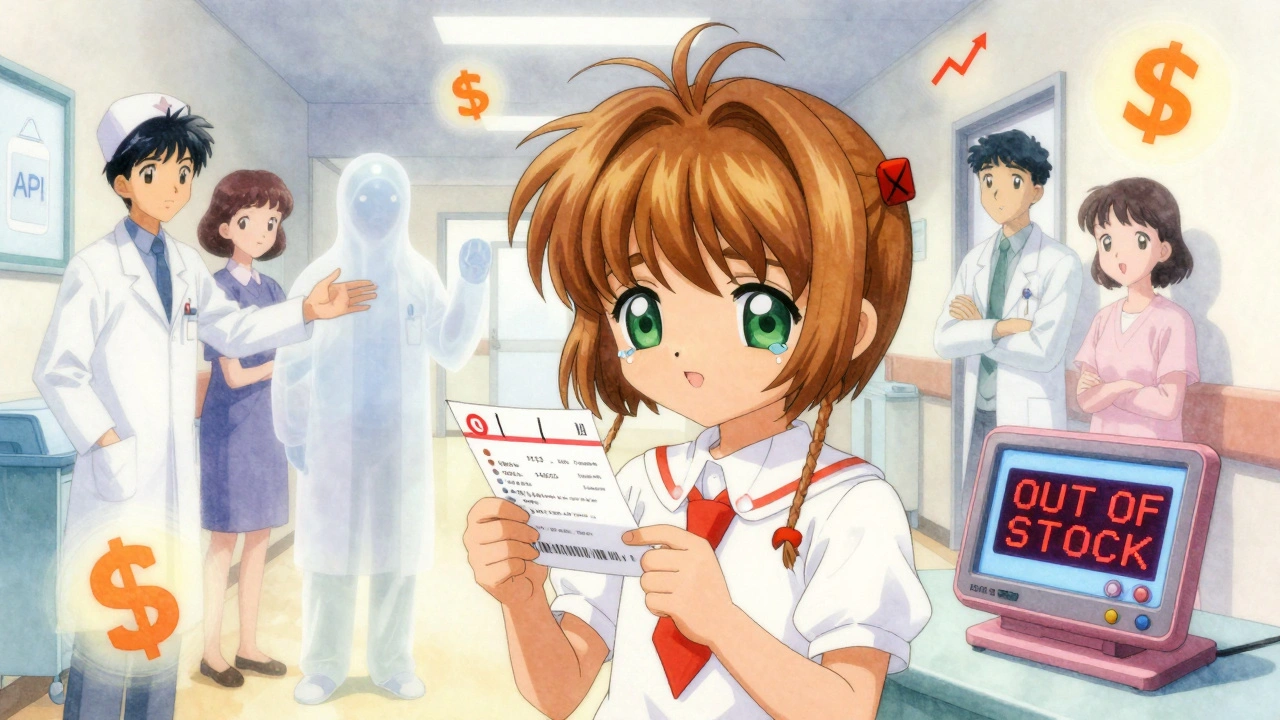
Hospitals are scrambling. Emergency rooms are rationing IV saline. Oncologists are delaying treatments because the chemo drugs aren’t in stock. Nurses are spending hours tracking down alternatives. One nurse in Chicago told a reporter she spent three days trying to find a substitute for a generic sedative used during intubation. She found one-but it required a different dosing protocol, increasing the risk of error.
Patients are paying too. When a drug is unavailable, doctors prescribe something more expensive. A generic antibiotic that cost $1.50 might be replaced by a branded version costing $85. Insurance doesn’t always cover the difference. Patients end up paying out of pocket-or going without.
And it’s not just the U.S. The EU, Canada, and the UK are seeing the same pattern. In the UK, the NHS reported a 40% increase in drug shortages between 2023 and 2025. Many of the same manufacturers supply both markets. When they cut production, it’s global.
Why Solutions Are Hard to Find
Some suggest government price controls. But that’s a trap. If you force prices higher, you risk inflation and public backlash. If you keep them low, manufacturers leave. Others push for domestic production. But building a new API plant in the U.S. or Germany costs $300 million and takes five years. Even then, it’s not guaranteed to be profitable.
There are smarter moves being tried. A few manufacturers are forming alliances-sharing supply chains, pooling orders for raw materials, or co-investing in backup suppliers. One group of six generic makers in Germany pooled their API purchases and cut costs by 21% in 2024. Another started using AI to predict which drugs are most likely to run out, so they can ramp up production before shortages hit.
But these are exceptions. Most companies are too small, too isolated, or too financially strained to innovate. And regulators? They’re still focused on safety, not sustainability. The FDA approves drugs based on purity and efficacy-not whether the maker can stay in business.
What’s Next?
The trend isn’t reversing. Raw material costs are projected to rise another 3% in 2026. Tariffs aren’t going away. And consumer demand for cheap drugs isn’t fading. The system is built on a lie: that generics will always be cheap because they’re simple to make. But they’re not simple anymore. They’re complex, regulated, and tied to global politics.
Without intervention, shortages will get worse. More drugs will disappear. More patients will suffer. And the cycle will continue: low prices → no profit → no production → shortage → higher prices → public outrage → political pressure → temporary fixes → back to low prices.
The answer isn’t just more money. It’s a new model. One where generic drugs are valued not just by their cost, but by their necessity. Where manufacturers aren’t punished for making essential medicines. Where governments pay a fair price-not the lowest possible price-for drugs that keep people alive.
Otherwise, the next drug you need might not be available. Not because it’s hard to make. But because no one can afford to make it anymore.
Comments
This is the quiet crisis no one talks about until someone’s grandma can’t get her heart meds. I’ve seen nurses cry because they can’t find a simple IV bag. We treat drugs like commodities, but they’re lifelines. We need to stop pretending cheap = good. Sometimes, paying more is the only moral choice we’ve got.
And yeah, I’m crying typing this. I’m not ashamed.
💔
my heart goes out to all the nurses and patients… this is so messed up. i just bought amoxicillin for $1.20 last week and thought ‘wow, america still has some good things’… then i read this. 😭 we’re literally choosing who lives based on profit margins. how did we get here??
CHINA AND INDIA ARE SABOTAGING US. PERIOD. They flood the market with cheap poison pills, then cut supply when we get dependent. Then they laugh while our hospitals beg for saline. This isn’t capitalism-it’s economic warfare. And the FDA? They’re just paper pushers who approve pills made in basements with no oversight. We need to ban ALL foreign pharma imports. Build it here. Or die waiting.
🇺🇸🔥
Let’s be real: the system is designed to fail. Capitalism doesn’t care about your life. It cares about shareholder dividends. The moment a drug becomes ‘too essential to fail,’ it gets priced into oblivion. It’s not an accident. It’s a feature. We’ve turned healthcare into a casino, and the house always wins.
Meanwhile, Big Pharma CEOs are on vacation in the Caymans while nurses ration saline. The only thing more terrifying than a drug shortage? The fact that we accept this as normal.
They call it ‘market efficiency.’ I call it moral bankruptcy.
There are people trying to fix this. I know a small lab in Ohio that started a co-op with three other manufacturers to bulk-buy APIs. Cut their costs by 18%. They’re still barely breaking even, but they’re still making the drug. It’s not sexy. It’s not viral. But it’s working.
We need to celebrate these quiet heroes-not just scream at the system. Change starts small.
Also, if you’re reading this and work in pharma logistics? Thank you. You’re doing God’s work.
It’s wild how we treat antibiotics like toilet paper. You don’t need a prescription? Cool, let’s make it 47 cents. But when you need it? Suddenly it’s a black market item. We’ve normalized scarcity. And now we’re surprised when people die because the system didn’t value their life enough to pay $1.50 for a pill.
It’s not a shortage of drugs. It’s a shortage of conscience.
Wow. A 27% cost increase? And you’re shocked? Did you think magic elves were making these pills in a basement with free labor? The real story is that we’ve been lying to ourselves for 20 years: ‘Oh, generics are cheap!’ Yeah, because we made them cheap. Now we’re mad they’re not magically cheaper than air.
Next time you want a $1 antibiotic, try asking your pharmacist to print one out on a 3D printer.
My aunt in rural Kansas couldn’t get her insulin for 11 days. She used half-doses. She’s fine now. But she shouldn’t have had to choose between her health and her grocery bill.
Let’s stop pretending this is about economics. It’s about love. Who do we love enough to save?
💖
Oh please. You think this is new? I worked at a compounding pharmacy in 2010. We were already rationing heparin. The only difference now is that the media finally noticed. The problem isn’t pricing-it’s that nobody has the guts to admit we need to nationalize generic production. Or at least create a public trust. But nope. Let’s keep letting hedge funds decide who lives and dies.
And don’t even get me started on the ‘domestic production’ fantasy. You think building a plant in Ohio magically fixes supply chains? LOL. The supply chain is global. Denial is not a strategy.
Stop blaming China. Stop blaming regulators. Stop pretending this is a political issue. This is a systemic failure of incentive structures. The FDA doesn’t care if you go out of business. Insurers don’t care if you go out of business. The market rewards the lowest bidder, not the most reliable supplier.
Fix the payment model. Pay for reliability. Pay for redundancy. Pay for continuity. Not just the lowest price. If you want medicine to be available, you have to value it. Not just in words. In dollars.
This isn’t activism. It’s basic business logic.
I work in a community pharmacy. Last week, a 7-year-old came in for amoxicillin. We had zero. The mom cried. I called five distributors. Two said ‘maybe next week.’ One said ‘we have it, but only if you pay triple.’
I don’t know what to say anymore. I just hand people tissues and tell them I’m sorry.
It’s not about politics. It’s about humanity.
my cousin is a nurse in texas and she said they had to use salt water for IVs because the real ones were gone. i thought she was joking. she wasn’t. this is real. we’re all gonna die from pennies.
THIS IS THE MOMENT. Not the next election. Not the next protest. RIGHT NOW. We have to force Congress to create a ‘Essential Medicines Reserve Fund.’ Tax Big Pharma 2% of profits. Use it to subsidize manufacturers of critical generics. Guarantee minimum profit margins. Create a public backup supplier. Build redundancy. It’s not expensive. It’s cheaper than ER visits from preventable deaths.
Stop waiting for someone else to fix it. This is your life. This is your family’s life. Fight for it.
WE CAN DO THIS. 💪