Every year, millions of unused or expired medications end up in medicine cabinets, drawers, or worse - flushed down the toilet or tossed in the trash. It’s easy to think, "It’s just one pill," but the truth is, these small choices add up. Water systems across the U.S. have traces of antidepressants, antibiotics, and painkillers because of improper disposal. And while you might not be able to see it, the environmental and safety risks are real. That’s where prepaid drug mail-back envelopes come in - a simple, secure, and EPA-aligned way to get unwanted medications out of your home and into proper destruction.
What Are Prepaid Drug Mail-Back Envelopes?
These are pre-addressed, prepaid envelopes designed to let you safely return unused or expired medications to a licensed disposal facility. Think of them like a return label for your old pills. You fill the envelope with your medications, seal it, drop it in any U.S. Postal Service mailbox, and it goes directly to a DEA-registered incineration site. No trips to the pharmacy. No waiting for a take-back day. Just seal, mail, and forget.
The concept was born from the Secure and Responsible Drug Disposal Act of 2010, which gave pharmacies and manufacturers the legal green light to offer these services. Since then, the FDA has repeatedly called mail-back envelopes "one of the best ways" to dispose of medications - especially compared to flushing or throwing them out. The agency warns that flushing can contaminate water supplies, and leaving pills in the trash risks theft, accidental ingestion, or misuse.
What Can You Put in These Envelopes?
Not everything goes in. These envelopes are meant for medications - not medical waste. Here’s what’s accepted:
- Prescription drugs (including controlled substances like opioids, stimulants, and sedatives - Schedule II to V)
- Over-the-counter medicines (pain relievers, antihistamines, cough syrups)
- Pet medications
- Medication samples from doctors
- Liquids and lotions (up to 4 ounces total)
And here’s what you can’t put in:
- Needles, syringes, or sharps
- Aerosols or inhalers (they need special handling)
- Illicit drugs or Schedule I substances
- Thermometers, bandages, or non-medical items
- Business-generated pharmaceutical waste (like from clinics or pharmacies)
Most providers cap the envelope at 8 ounces - roughly the weight of 10-15 standard pill bottles. If you have more than that, you’ll need a second envelope. And don’t forget: remove or scratch out your name, prescription number, and address from the original bottles before putting them in. It’s not required, but it’s a smart privacy step.
How the Process Works (Step by Step)
Using a mail-back envelope is straightforward. Here’s how it breaks down:
- Order the envelope - You can get them from pharmacies, online retailers like Mail Back Meds or American Rx Group, or through your doctor’s office. Some programs even give them out for free.
- Fill it up - Place your unused pills, liquids, or creams inside. Don’t crush tablets or pour liquids into other containers. Just drop them in as-is.
- Seal it - Use the adhesive strip or tamper-evident seal provided. Once sealed, it’s locked. No one can open it without leaving clear signs.
- Mail it - Drop it in any USPS mailbox. No stamp needed. No special handling. It goes straight to a secure disposal facility.
Some services even let you track your envelope online. Mail Back Meds, for example, shows you when it was mailed, received, and incinerated. That peace of mind matters - especially if you’re disposing of high-risk medications like opioids.
Why This Is Better Than Other Methods
You might wonder: "Why not just throw them in the trash?" Here’s why mail-back is the clear winner:
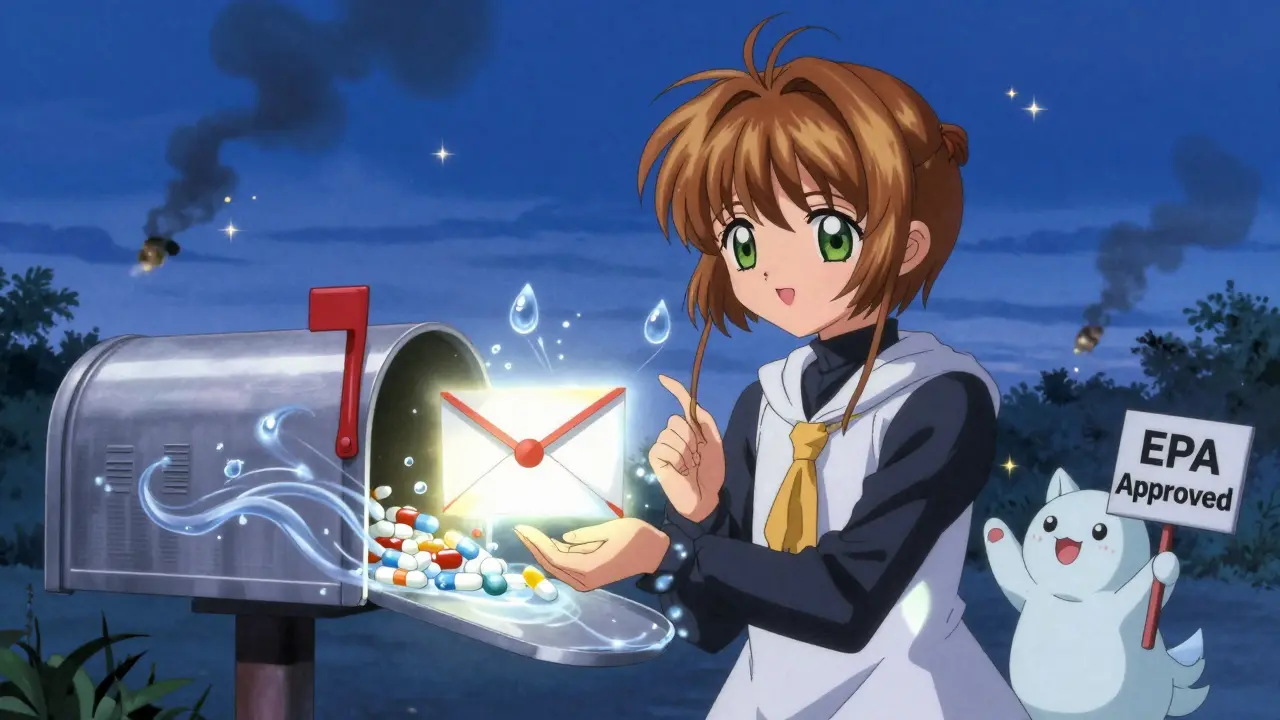
- Environmentally safe - Incineration at regulated facilities prevents chemicals from leaching into soil and water. Unlike landfills, these sites are designed to contain emissions.
- Prevents misuse - Unused opioids, stimulants, or benzodiazepines in your medicine cabinet are a major source of teen and adult drug abuse. Mail-back removes them from your home permanently.
- No waiting - Take-back events happen twice a year. Mail-back works anytime.
- No cost - The postage is prepaid. No hidden fees. No subscription.
Flushing? The EPA says it’s harmful. Throwing in trash? The DEA says it’s risky. Mail-back? It’s the only method approved by both.
Who’s Offering These Envelopes?
There are several major providers, each with a slightly different focus:
- Mail Back Meds - Popular with individuals. Offers 3-pack, 50-pack, and 250-pack options. Tracks envelopes online. Focuses on EPA-aligned disposal.
- Stericycle’s Seal&Send - Built for clinics, schools, and pharmacies. Offers reporting tools for organizations. Helps businesses show environmental leadership.
- American Rx Group - Uses waste-to-energy incineration. Claims their process turns meds into clean energy. Available in all 50 states with no contracts.
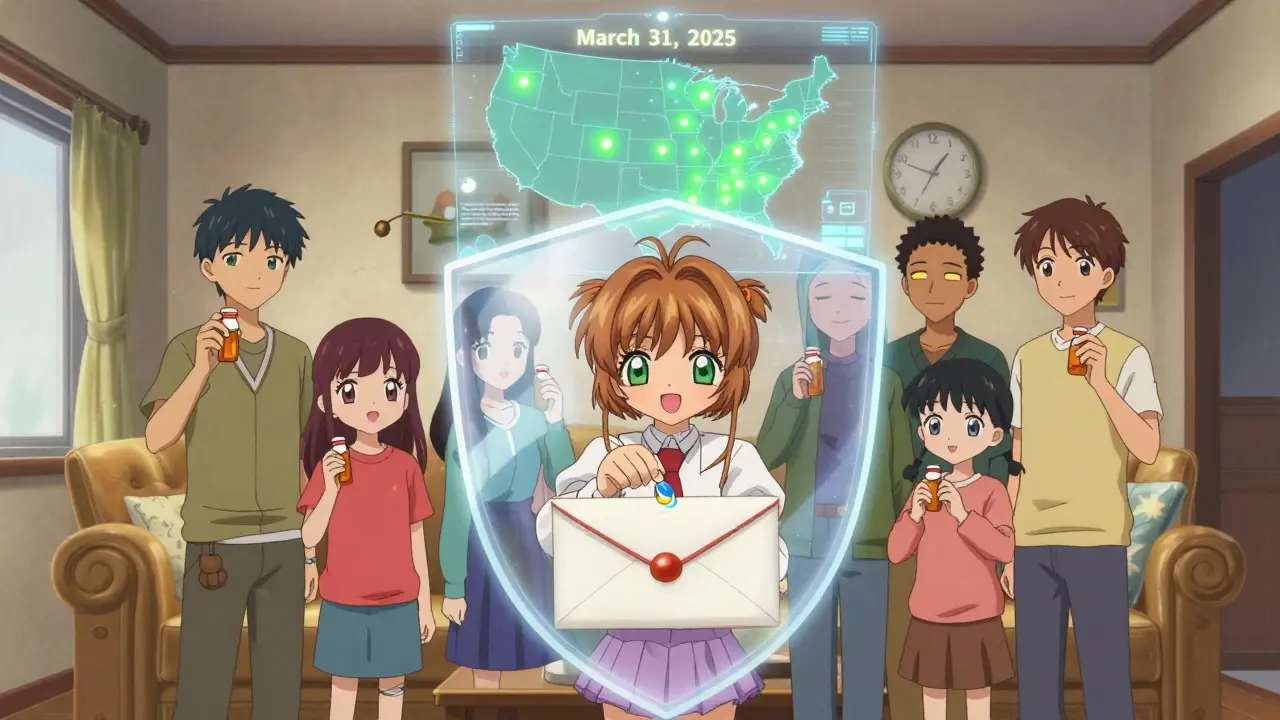
- Opioid Analgesic REMS Program - Starting March 31, 2025, manufacturers of opioid painkillers will provide free mail-back envelopes through pharmacies. This is a government-mandated program aimed at cutting opioid misuse.
Some states have their own programs too. For example, Med Take Back California offers special envelopes for inhalers and injectables. Always check what’s available in your area.
What You Need to Watch Out For
Even with a simple process, mistakes happen. Here are the most common pitfalls:
- Putting sharps in the envelope - Needles, lancets, or syringes must go in a sharps container. Don’t risk injury or contamination.
- Trying to drop it off at a pharmacy - These envelopes are designed for USPS only. Don’t leave them at your pharmacy, police station, or hospital. They’re not equipped to receive them.
- Overfilling - Stick to the 8-ounce limit. Too much and the envelope won’t be accepted.
- Forgetting to remove personal info - Even though the envelope is sealed, scrubbing off your name and Rx number adds a layer of privacy.
Also, availability isn’t universal. The FDA admits that take-back options "may be unavailable in your community." If you can’t find a mail-back envelope locally, check the Drug Takeback Solutions Foundation’s searchable map - it lists all authorized drop sites and free envelope programs.
The Bigger Picture: Why This Matters
In 2022 alone, the DEA collected over 1 million pounds of unused medications during national take-back events. That’s not just a number - it’s 1 million pounds of drugs that didn’t end up in our water, our children’s medicine cabinets, or our landfills.
Mail-back envelopes are part of a larger shift toward responsible medication use. They’re not just about disposal - they’re about prevention. Preventing accidental overdoses. Preventing addiction. Preventing pollution. And with the new opioid-focused program launching in March 2025, this tool is becoming even more critical.
It’s not glamorous. It’s not flashy. But it’s one of the most effective things you can do to protect your family, your community, and the environment. And it takes less than five minutes.
Can I use a mail-back envelope for my pet’s medications?
Yes. Most mail-back programs accept pet medications, including pills, liquids, and topical treatments. Just make sure they’re in their original containers or sealed in a plastic bag. Don’t mix human and pet meds in the same envelope unless the provider allows it - check their guidelines.
Do I need to remove pills from their bottles before putting them in the envelope?
No, you don’t have to. You can leave pills in their bottles. But it’s a good idea to remove or scratch out your personal information - name, prescription number, pharmacy - to protect your privacy. Some people prefer to empty pills into a sealed plastic bag inside the envelope to save space.
Are mail-back envelopes available for free?
Yes. Many pharmacies, hospitals, and government programs offer free envelopes - especially for opioids. The upcoming Opioid Analgesic REMS Program (launching March 31, 2025) will provide free envelopes through participating pharmacies. Some nonprofits and community health centers also give them out at no cost. Always ask your pharmacist.
Can I mail back expired insulin or other refrigerated medications?
Yes. Refrigerated medications like insulin, liquid antibiotics, or eye drops are accepted. Just make sure they’re sealed in their original containers. Don’t try to freeze them or pack them with ice - the envelope isn’t designed for temperature control. Just seal and mail as-is.
What happens to the medications after I mail them?
They’re taken to a DEA-registered incineration facility and destroyed using high-temperature combustion. This method ensures complete destruction without releasing harmful chemicals into the air. Some providers partner with waste-to-energy plants that use the heat from incineration to generate electricity - turning old meds into clean power.