
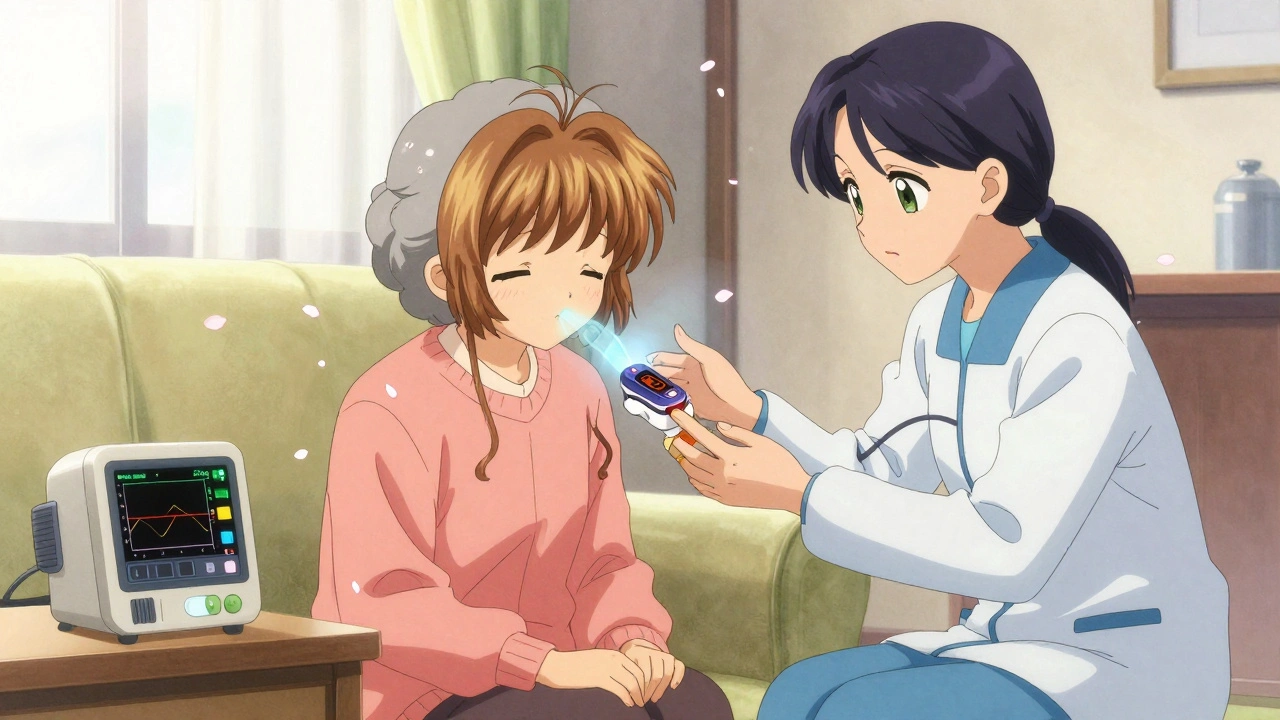
When seniors take pain meds, sleep aids, or anxiety drugs, their bodies don’t process them the same way they did at 30. Metabolism slows. Kidneys filter less. The brain becomes more sensitive. That’s why over-sedation and overdose don’t always look like a person passing out-they can start with quiet breathing, confusion, or a drop in alertness. And if you’re caring for an older adult at home or in a clinic, missing these signs can be deadly.
Why Seniors Are at Higher Risk
People over 65 are 3.5 times more likely to have a dangerous reaction to sedatives than younger adults. It’s not just about taking too much-it’s about how their bodies change. Liver function drops by 30-50% between ages 20 and 80. Kidneys clear drugs slower, by about 0.8 mL per minute every year after 40. And because the blood-brain barrier gets leakier with age, even small doses can hit harder.That’s why a 5mg dose of midazolam that’s fine for a 40-year-old might send an 80-year-old into respiratory arrest. In fact, 42% of healthcare facilities still use standard adult dosing for seniors, despite clear evidence that older patients need 30-50% less.
Early Signs of Over-Sedation
You don’t need a machine to spot trouble early. Watch for these changes:- Slower, shallower breathing-fewer than 8 breaths per minute
- Unusual drowsiness that doesn’t improve with gentle stimulation
- Confusion or slurred speech that’s new or worsening
- Skin that feels cool or clammy, especially around the lips and fingertips
- Difficulty waking up, even when called by name
- A drop in oxygen levels-even if they’re on supplemental oxygen
One of the most dangerous myths is that if someone’s oxygen level looks fine on a pulse oximeter, they’re safe. That’s not true. Seniors on oxygen can have dangerously low breathing rates while their SpO2 stays above 94%. This is called “silent hypoxia,” and it’s behind many preventable deaths.
What to Monitor: The Four Vital Signs That Matter Most
Monitoring isn’t just checking a box. It’s watching trends over time. Here’s what you need to track, and what numbers mean danger:- Pulse oximetry (SpO2): Must stay above 92%. Alarms should trigger at 90%. But remember-this can lie if oxygen is being supplied.
- Respiratory rate: Below 8 breaths per minute is an emergency. Between 8-12 is a warning sign.
- Heart rate: Below 50 or above 100 beats per minute can signal distress.
- Blood pressure: Systolic below 90 mmHg means the body is struggling to keep oxygen flowing.
Don’t rely on one number. Look at all four together. A person with normal SpO2 but a respiratory rate of 6 and a heart rate of 48 is in trouble-even if the oximeter says “good.”
The Gold Standard: Continuous Multimodal Monitoring
Intermittent checks every 5 or 10 minutes miss 78% of dangerous events. The only reliable method is continuous monitoring using multiple tools at once.Here’s what works best for seniors:
- Capnography: Measures carbon dioxide in exhaled breath. Detects apnea 92% of the time-compared to 67% for pulse oximetry alone. End-tidal CO2 (EtCO2) should be between 35-45 mmHg. If it drops below 30, act immediately.
- Integrated Pulmonary Index (IPI): A single score from 1-10 that combines breathing rate, SpO2, heart rate, and EtCO2. Below 7 means intervention is needed. Studies show it warns 12.7 minutes before oxygen drops.
- Richmond Agitation-Sedation Scale (RASS): A simple 10-point scale. Score of -2 means moderate sedation. -3 to -5 means deep or unarousable. Any score below -2 requires immediate action.
One nurse in a Mayo Clinic study said: “IPI dropped to 5.2 during a colonoscopy on an 82-year-old. We stopped the procedure and reversed the sedation-11 minutes before their oxygen would’ve crashed.” That’s the difference between a scare and a tragedy.

What Not to Rely On
Some tools are useful-but not enough on their own.- Pulse oximetry alone: Can be misleading with supplemental oxygen. A senior can be breathing too slowly and still show 95% SpO2.
- Intermittent checks: Every 5 minutes isn’t enough. Events happen in between.
- Just asking “Are you okay?”: Seniors with over-sedation often can’t respond clearly, even if they’re awake.
And don’t ignore false alarms. Capnography can trigger false positives in seniors with COPD or irregular breathing. That’s why you need to combine it with RASS and heart rate trends-not just react to every beep.
How to Adjust Medication for Seniors
Dosing isn’t one-size-fits-all. Use this simple formula for opioids and sedatives in patients over 60:Adjusted dose = Standard dose × (1 - 0.005 × (age - 20))
Example: A standard dose of fentanyl is 50 mcg. For an 80-year-old:
50 × (1 - 0.005 × 60) = 50 × (1 - 0.3) = 50 × 0.7 = 35 mcg
Start low. Go slow. Wait at least 15 minutes between doses. Never give a second dose just because the person doesn’t seem sedated yet-delayed effects are common.
Real-World Pitfalls and How to Avoid Them
Here’s what goes wrong-and how to fix it:- Alarm fatigue: Nurses get used to beeping machines. Solution: Use IPI to reduce false alarms. Set alarms only for critical thresholds.
- Skin damage: Continuous electrodes can tear fragile skin. Solution: Use hydrocolloid dressings under sensors-reduces injury by 67%.
- Misreading COPD patterns: Chronic lung disease changes CO2 waveforms. Solution: Train staff to recognize “shark fin” waveforms and use RASS as a backup.
- Assuming home monitoring is enough: Most families don’t have capnography. Solution: Teach caregivers to count breaths for 15 seconds, multiply by 4. If it’s under 8, call 999.
What’s New in 2025
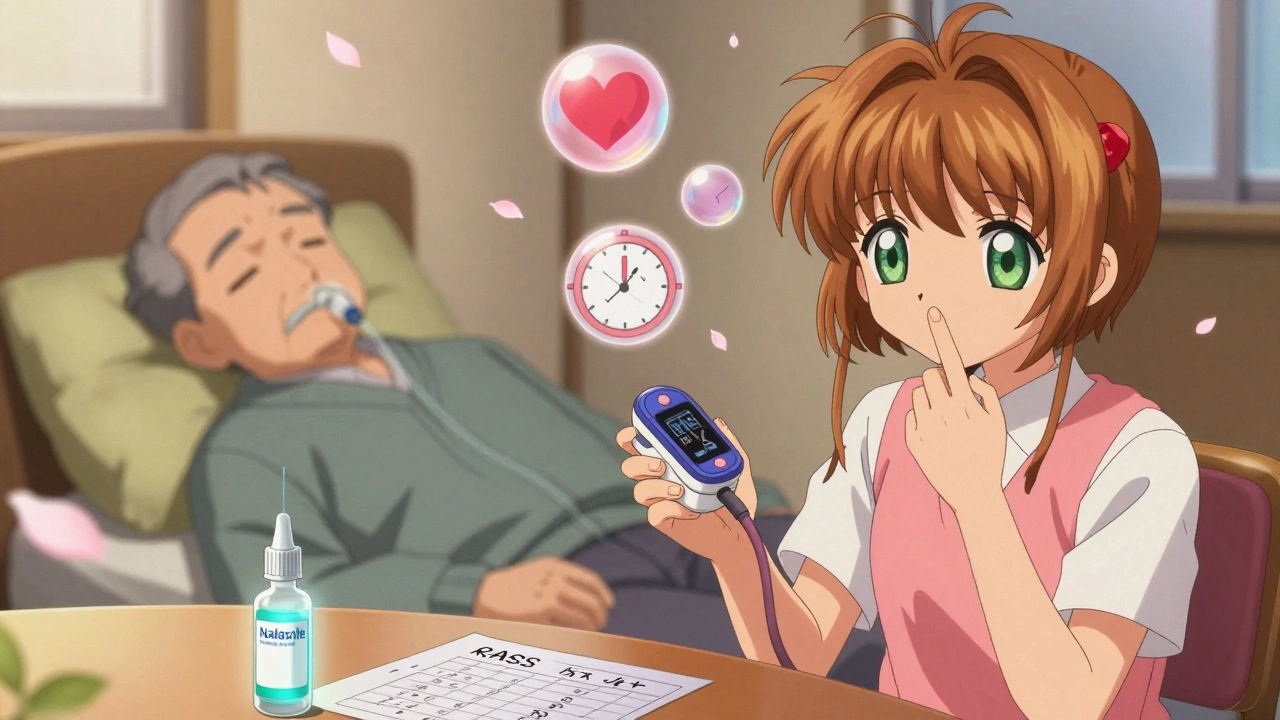
Technology is catching up. The FDA cleared the Opioid Risk Monitoring System (ORMS) in 2023. It’s a device that links IV pain pumps with capnography and SpO2. If breathing drops below 8 breaths per minute, it automatically pauses the opioid flow. In trials, it cut respiratory depression in seniors by 58%.Next up: AI-powered systems that predict trouble 20 minutes before it happens by analyzing trends in all vital signs. But here’s the catch-no machine replaces a trained person. The 2023 NCEPOD report says: “1:1 nurse-to-patient ratios remain essential.”
What Families Should Do
If you’re caring for a senior at home:- Know what meds they’re on-and why.
- Ask the doctor: “Is this dose right for their age?”
- Check breathing every hour, especially after a new dose.
- Use a pulse oximeter-but don’t trust it alone.
- Learn RASS: -1 is drowsy but alert, -2 is sleepy but wakes to voice, -3 is asleep but wakes to shake. Below -3 = call for help.
- Have naloxone on hand if they’re on opioids. Know how to use it.
One caregiver in Manchester told me: “I started counting breaths after my mum’s hip surgery. She was breathing 6 times a minute. I called the nurse. They reversed the meds. She’s fine now.”
Final Rule: When in Doubt, Act
Over-sedation doesn’t wait. If you see two or more warning signs-slow breathing, confusion, cool skin, low oxygen, or unresponsiveness-don’t wait for a doctor. Call emergency services. Give naloxone if available. Sit with them. Keep them awake. Time is oxygen.The goal isn’t to prevent all sedation. It’s to prevent preventable death. With the right tools, the right training, and the right attention, seniors can get the care they need-without risking their lives.
Can a pulse oximeter alone detect an overdose in seniors?
No. A pulse oximeter only measures oxygen in the blood. Seniors on supplemental oxygen can have dangerously slow breathing while still showing normal SpO2 levels. This is called silent hypoxia. Capnography, which measures carbon dioxide, is needed to detect breathing problems before oxygen drops.
What’s the safest sedative for elderly patients?
There’s no single “safest” sedative. But drugs like midazolam and fentanyl require lower doses in seniors-often 30-50% less than standard adult doses. Non-opioid options like acetaminophen or gabapentin may be safer for pain. Always start with the lowest possible dose and monitor closely.
How often should vital signs be checked during sedation?
Continuous monitoring is required for seniors during any sedated procedure. Intermittent checks every 5 minutes miss over 75% of respiratory events. At minimum, heart rate, oxygen saturation, and respiratory rate must be tracked continuously using devices like capnography and pulse oximetry.
What is the RASS scale and how do I use it?
The Richmond Agitation-Sedation Scale (RASS) rates consciousness from +4 (agitated) to -5 (unarousable). For seniors, a score of -2 means moderate sedation (sleepy but wakes to voice). -3 or lower means deep sedation and requires immediate action. To use it: call the person’s name. If they don’t respond, gently shake their shoulder. If they open eyes and look at you, they’re -2. If they don’t respond, they’re -3 or worse.
Can I use a home pulse oximeter to monitor for overdose?
Yes, but only as a secondary tool. A home pulse oximeter can show if oxygen drops below 90%, but it won’t catch slow breathing before that happens. Always combine it with counting breaths for 15 seconds. If the count is under 8, seek help immediately-don’t wait for the oximeter to alarm.
Is naloxone safe to keep at home for seniors on opioids?
Yes. Naloxone is safe and can reverse opioid overdose in seconds. It has no effect if opioids aren’t present. Keep it in your medicine cabinet with clear instructions. Train at least one family member or caregiver on how to use it. Many pharmacies in the UK now offer it without a prescription.

Comments
Who the hell is still using adult dosing for seniors? This isn't 1998! I've seen grandmas on 5mg midazolam and their lungs just... stopped. No alarm. No warning. Just silence. We need to burn the old protocols and start treating the elderly like humans-not failed experiments in geriatric medicine. India's hospitals are still doing this. Shameful.
Oh my goodness, this is *so* important!! 💔 I just had my sweet 84-year-old aunt nearly die after her 'routine' colonoscopy-SpO2 looked perfect, but she stopped breathing for 17 minutes! The nurse said 'she's fine' because the machine said so. 😭 I cried for three days. Please, please, please share this with every doctor you know. We need to save our elders before they vanish in plain sight.
This is exactly the kind of practical, compassionate guidance we need more of. I work in home care in Oregon and I've seen too many families panic because they don't know how to read the signs. Counting breaths for 15 seconds? That's genius. Simple. Effective. No fancy gear needed. Thank you for writing this like a human, not a textbook. 💙
Why is everyone so obsessed with machines? My dad took 10mg of oxycodone after knee surgery and slept for 36 hours. No machine beeped. I just watched him. Breathing slow. Skin cold. I shook him. He woke up. That's all it took. Technology is for lazy people. Real care is eyeballs and hands. Stop trusting gadgets. Trust your gut.
Let’s be brutally honest: 87% of these ‘solutions’ are unaffordable for 90% of the population. Capnography? IPI? RASS training? Who’s paying for this? Hospitals? Families? The system is designed to keep seniors alive only if they’re insured, educated, and have a nurse in the family. This is performative medicine for the privileged. The rest of us? We count breaths and pray.
Actually, I think this is overblown. My 81-year-old uncle takes 50mcg fentanyl daily and he’s perfectly fine. He plays chess, walks his dog, and eats biryani. The real problem is doctors who scare people into thinking every dose is a death sentence. Maybe the elderly just need to be less fragile? Or maybe we’re over-medicalizing normal aging?
Look, I'm a retired ER doc. I've seen it all. The truth? Most of these seniors are just old and tired. They don't need capnography. They need a warm blanket and someone to hold their hand. All this tech? It's corporate nonsense. Hospitals want to bill for devices, not care. The real fix? Stop giving them so many drugs in the first place. But no one wants to hear that.
Count breaths for 15 seconds. Multiply by 4. Under 8? Call 999. That’s it. No apps. No devices. Just you and your grandma. Do it every hour after meds. Done.
I’ve been using the adjusted dose formula for my mom since last year-she’s 83, on gabapentin and low-dose oxycodone for neuropathy. I plug her age into the formula every time the script is refilled. It’s scary how much less she needs. I used to think she was just ‘sleepy’-turns out she was nearly overdosing. Now she’s alert, walks the garden every morning, and even argues with me about Netflix. It’s not magic. It’s math. And it’s saving her life.
You think this is new? In Nigeria, we’ve known this for decades. Our grandmothers don’t get fancy machines. They get tea, quiet, and a son who watches them breathe. The West overcomplicates everything. You have sensors, but no sense. We have sense, but no sensors. Guess who lives longer?
Let me guess-the FDA cleared ORMS because Big Pharma funded it. Capnography? IPI? AI predictors? All of it’s a trap. They want you dependent on devices so they can sell you more meds. The real cause of over-sedation? Doctors overprescribing because they’re paid per script. And now they’ve created a $2 billion market for ‘monitoring’ to cover their tracks. Wake up. This isn’t medicine. It’s a business model.
Naloxone at home? Only if they're on opioids. Don't keep it for benzodiazepines. It won't work. And don't confuse it with a cure-all. It's a bridge, not a solution. If you're giving opioids to seniors, you owe them this. Period.
While the empirical data presented herein is indeed compelling, one must consider the ontological implications of pathologizing natural geriatric decline. The conflation of physiological aging with medical pathology risks reinforcing a technocratic hegemony over human mortality. A more humane approach would involve palliative presence rather than algorithmic surveillance.
So what? You’re telling me we need to monitor every elderly person like a lab rat? Next they’ll be implanting trackers in their teeth. This is just the beginning of the surveillance state. They want to control how old people live, how they sleep, how they die. Wake up. This isn’t care. It’s control.