
When your heart skips a beat, races too fast, or pounds like it’s trying to escape your chest, it’s not just nerves-it could be an arrhythmia. These irregular heart rhythms are more common than you think, and while some are harmless, others can lead to serious problems like stroke or heart failure. Three of the most frequently diagnosed types are atrial fibrillation, bradycardia, and tachycardia. Knowing what they are, how they feel, and what to do about them can make all the difference.
Atrial Fibrillation: When the Upper Chambers Go Rogue
Atrial fibrillation, or AFib, is the most common serious heart rhythm problem. Instead of beating in a steady rhythm, the upper chambers of your heart (the atria) quiver or flutter wildly. This means blood doesn’t move properly, which can lead to clots forming. If one of those clots breaks loose, it can travel to your brain and cause a stroke.
The American Heart Association estimates that between 2.7 and 6.1 million Americans live with AFib-and that number is growing as the population ages. In the UK, about 1 in 4 people over 65 will develop it at some point. Many people don’t even know they have it because symptoms can be mild or absent. But when they do show up, they’re hard to ignore: a fluttering or pounding heartbeat, shortness of breath, fatigue, dizziness, or chest discomfort.
Doctors diagnose AFib with a simple ECG (electrocardiogram), which records your heart’s electrical activity. If your symptoms come and go, you might need a portable monitor worn for 24 hours or longer to catch the irregular rhythm. Blood tests, echocardiograms, and stress tests help rule out other causes like thyroid problems or heart valve damage.
Treatment isn’t one-size-fits-all. For many, the goal is to slow the heart rate using medications like beta-blockers or calcium channel blockers. Others need rhythm control-drugs or procedures to restore a normal beat. Cardioversion, which uses electric shocks to reset the heart, is often tried if symptoms are new or severe. For those who don’t respond to meds, ablation is an option. This procedure uses heat, cold, or newer pulsed field energy to scar small areas of heart tissue that are sending mixed signals. The latest technique, pulsed field ablation, is gaining popularity because it’s less likely to damage surrounding tissue than older thermal methods.
But the biggest risk with AFib isn’t the irregular beat-it’s the stroke. That’s why most patients are put on blood thinners like apixaban or rivaroxaban. These drugs cut the risk of stroke by up to 70%. Lifestyle changes matter too: cutting back on alcohol, managing high blood pressure, losing weight, and quitting smoking can slow or even reverse early-stage AFib.
Bradycardia: When the Heart Beats Too Slow
If your heart beats fewer than 60 times per minute, you have bradycardia. Sounds bad, right? Not always. Athletes and very fit people often have slow resting heart rates because their hearts are strong and efficient. That’s normal. But when bradycardia is caused by heart damage, aging, or certain medications, it becomes a problem.
The issue arises when your heart can’t pump enough blood to meet your body’s needs. You might feel dizzy, faint, tired, or short of breath-even during simple tasks like walking up stairs. In severe cases, you could lose consciousness or go into cardiac arrest.
Causes vary. It could be damage from a heart attack, an underactive thyroid, electrolyte imbalances, or side effects from blood pressure or anti-arrhythmic drugs. Sometimes, the natural pacemaker of the heart-the sinoatrial node-just wears out with age. Other times, the electrical signals get blocked as they travel from the atria to the ventricles (called heart block).
Diagnosis starts with an ECG. If the slow rhythm isn’t constant, your doctor might ask you to wear a Holter monitor for a day or two. Blood tests check for thyroid or electrolyte issues. An echocardiogram looks for structural problems.
Treatment depends on whether the slow heart rate is causing symptoms. If you’re fine without treatment, no intervention is needed. But if you’re passing out or feeling weak, a pacemaker is often the answer. It’s a small device implanted under the skin near your collarbone that sends electrical pulses to keep your heart beating at a steady rate. Modern pacemakers adjust automatically based on your activity level-you can still exercise, drive, and live normally.
Some medications can cause bradycardia as a side effect. If you’re on beta-blockers or digoxin and start feeling unusually tired or lightheaded, talk to your doctor. Never stop these meds on your own-they’re prescribed for a reason. But dosage adjustments might help.
Tachycardia: When the Heart Races Out of Control
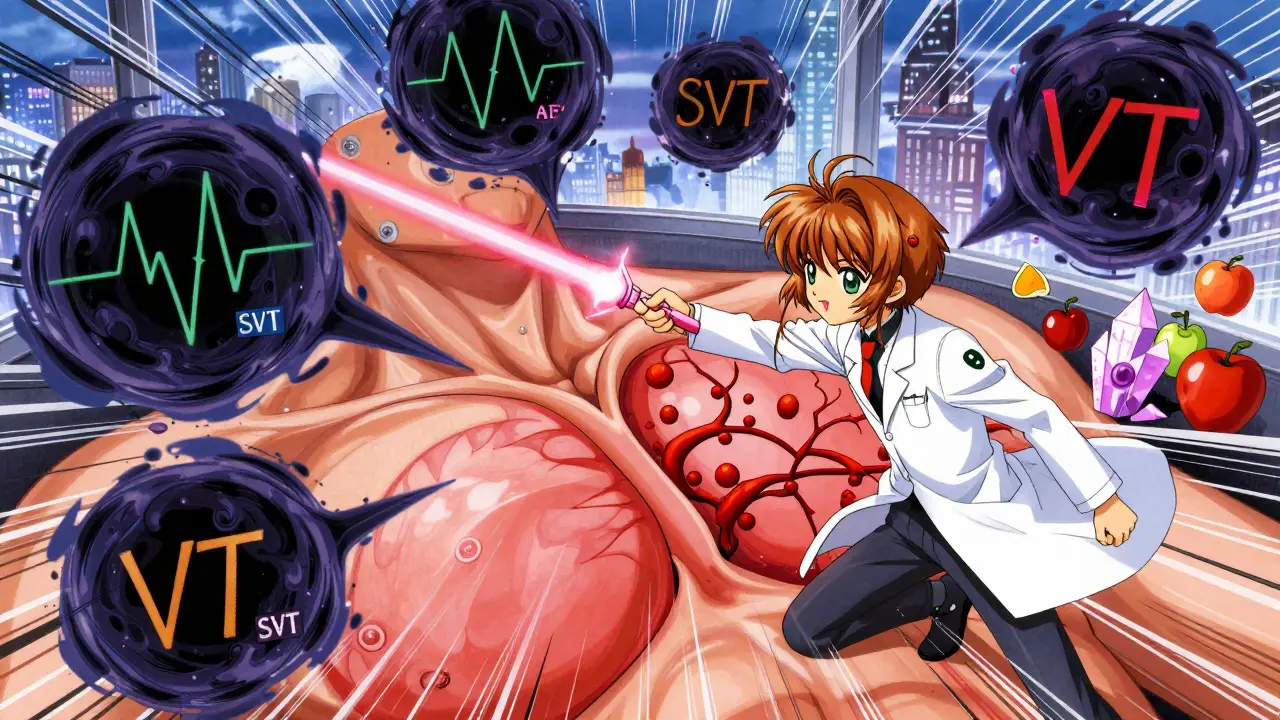
Tachycardia means your heart beats faster than 100 beats per minute at rest. Unlike AFib, which is chaotic, many types of tachycardia have a regular but dangerously fast rhythm. The most common forms are supraventricular tachycardia (SVT), atrial flutter, and ventricular tachycardia (VT).
SVT often hits young, healthy people and can strike suddenly during exercise, stress, or caffeine intake. You might feel your heart racing out of nowhere, along with chest tightness, anxiety, or sweating. Episodes can last seconds or hours. Atrial flutter is similar but originates in the right atrium and often has a more predictable pattern. Ventricular tachycardia is more serious-it starts in the lower chambers and can lead to sudden cardiac arrest if not treated quickly.
Triggers include stress, dehydration, excessive caffeine or alcohol, stimulant drugs, or underlying heart disease. In some cases, no clear cause is found. Diagnosis again relies on ECG, but for intermittent episodes, wearable monitors or event recorders are essential. An electrophysiology study-a more detailed test done in a hospital-can map out exactly where the abnormal signals are coming from.
For SVT, simple techniques like the Valsalva maneuver (bearing down as if having a bowel movement) or splashing cold water on your face can sometimes stop the episode. Medications like adenosine can be given in emergencies. Long-term, beta-blockers or calcium channel blockers help prevent recurrences. Catheter ablation is highly effective for SVT, with success rates above 90%.
Ventricular tachycardia is treated more aggressively. If you’ve had a heart attack or have weakened heart muscle, you may need an implantable cardioverter-defibrillator (ICD). This device watches your heart rhythm and delivers a shock if it detects a life-threatening fast rhythm. It’s like having a personal emergency responder inside your chest.
For many, lifestyle changes are just as important as medical treatment: cutting caffeine, avoiding smoking, managing stress, and staying hydrated can reduce episodes dramatically.
How Are They Different? A Quick Comparison
| Condition | Heart Rate | Origin | Common Symptoms | Main Treatment Goals |
|---|---|---|---|---|
| Atrial Fibrillation (AFib) | Irregular, often over 100 bpm | Upper chambers (atria) | Palpitations, fatigue, shortness of breath, dizziness | Control rate, prevent stroke, restore rhythm if needed |
| Bradycardia | Under 60 bpm | Heart’s natural pacemaker or conduction system | Dizziness, fainting, fatigue, shortness of breath | Restore adequate heart rate, often with pacemaker |
| Tachycardia | Over 100 bpm, often regular | Upper or lower chambers (SVT or VT) | Racing heart, chest pain, anxiety, lightheadedness | Stop episodes, prevent recurrence, protect against sudden arrest |
When to See a Doctor
You don’t need to panic every time your heart skips a beat. Occasional extra beats are normal, especially after coffee or stress. But if you notice any of these, get checked:
- Heart palpitations that last more than a few minutes
- Fainting or near-fainting spells
- Chest pain or pressure during or after a fast heartbeat
- Shortness of breath that doesn’t improve with rest
- Unexplained fatigue that’s getting worse
If you’ve been diagnosed with any of these arrhythmias, keep your follow-up appointments. Many people think once they’re on medication, they’re fine. But conditions like AFib can progress. Regular monitoring helps catch changes early.
Living Well With an Arrhythmia
Having an arrhythmia doesn’t mean you can’t live a full life. Thousands of people in Manchester, London, and beyond manage these conditions daily and stay active, work, travel, and enjoy time with family.
Here’s what helps:
- Track your symptoms in a journal-note when they happen and what you were doing
- Limit alcohol and caffeine-they’re major triggers for AFib and SVT
- Exercise regularly, but don’t overdo it. Talk to your doctor about safe limits
- Manage stress with breathing exercises, walking, or meditation
- Take your meds exactly as prescribed, even if you feel fine
- Know your emergency plan: when to call 999, who to contact, and what to say
Technology has made managing arrhythmias easier than ever. Wearable devices like Apple Watch or Fitbit can detect irregular rhythms and alert you. But they’re not a substitute for medical care. If your watch says you have AFib, see your GP-not just ignore it.
Can arrhythmias go away on their own?
Yes, some types can, especially if they’re triggered by temporary factors like stress, caffeine, or dehydration. Episodes of SVT or occasional AFib may stop without treatment. But if they keep coming back, or if you have underlying heart disease, they rarely resolve without medical help. Ignoring recurring symptoms can lead to complications like heart failure or stroke.
Is atrial fibrillation dangerous if I feel fine?
Absolutely. Many people with AFib have no symptoms at all, but they’re still at five times higher risk of stroke. That’s why doctors focus on stroke prevention-even if you feel perfectly normal. Blood thinners and regular check-ups are critical. Don’t assume feeling okay means you’re safe.
Can I still exercise with bradycardia or tachycardia?
In most cases, yes-but it depends on the type and severity. People with pacemakers or well-controlled arrhythmias can usually do moderate exercise like walking, swimming, or cycling. Avoid extreme exertion until your doctor clears you. For those with ventricular tachycardia or severe heart disease, certain activities may need to be limited. Always get personalized advice before starting or changing your routine.
Are there natural ways to manage arrhythmias?
Lifestyle changes play a big role: reducing alcohol and caffeine, quitting smoking, managing stress, losing weight, and eating a heart-healthy diet can all help reduce episodes. But they’re not replacements for medical treatment. If you have AFib, you still need blood thinners. If you have bradycardia causing fainting, you likely need a pacemaker. Natural methods support treatment-they don’t replace it.
How do I know if my arrhythmia is getting worse?
Watch for changes: more frequent episodes, longer duration, new symptoms like chest pain or fainting, or feeling more tired than usual. If your medications aren’t working as well, or if you’re needing more doses to control symptoms, it’s time to see your cardiologist. Progression is common with AFib and some forms of tachycardia, so regular monitoring is key.
Next Steps If You Suspect an Arrhythmia
If you’ve noticed unusual heart rhythms, start by writing down your symptoms: when they happen, how long they last, what you were doing, and whether anything makes them better or worse. Bring this to your GP. They’ll likely order an ECG and possibly refer you to a cardiologist or electrophysiologist.
Don’t wait for symptoms to get worse. Early detection means better outcomes. Whether it’s a pacemaker, a blood thinner, or just lifestyle tweaks, the right treatment can let you live without fear-and with a steady, healthy heartbeat.
Comments
AFib’s everywhere in the UK now. My grandad had it, and he just drank tea and carried on. No big deal.
they put those monitors in you so the gov can track your heart beats lol. next theyll control your breathing. i heard they use the pacemakers to trigger anxiety attacks. dont trust the system.
bro i had SVT last year and i did the vassalva thing while waiting for my coffee and it just stopped like magic. no drugs no surgery just hold your nose and bear down. life changing. also dont drink energy drinks theyre evil.
There exists within the human heart a quiet, rhythmic poetry-a cadence shaped by millennia of evolution, now disrupted by the clang of modernity: caffeine, stress, pharmaceuticals, and the silent erosion of vitality. To treat arrhythmia merely as a malfunction is to misunderstand its deeper narrative: it is the soul’s echo against a world that forgets to breathe.
Yet even in dissonance, there is grace. The pacemaker does not impose order-it restores dignity. The blood thinner does not merely prevent clot-it honors the fragile covenant between body and being.
We rush to fix. We forget to listen.
hey everyone i just wanna say i been living with afib for 8 years now and i know it sounds scary but you can still live a full life i used to think i had to sit around all day but now i walk 3 miles every morning and i do yoga and i even travel to india to visit family and my doctor says my heart is stronger than most people half my age. the key is just take your meds and dont stress too much and if you feel off just sit down and breathe deep its gonna be ok i promise. also try to eat more turmeric and green tea i heard it helps a lot.
My grandma in Mexico used to say if your heart skips a beat, it’s just your soul saying ‘hold on, we’re not done yet.’ She never saw a doctor, but she lived to 98. Maybe the answer isn’t just in the machine, but in the memory.
they said my tachycardia was from caffeine so i quit coffee and now i drink matcha and its way better i feel calmer and my heart dont race anymore also yoga helps like a lot
US doctors overdiagnose this stuff. Back in my day we just walked it off. Pacemakers? No thanks.
While the article is clinically sound, it omits a critical point: the role of autonomic tone in arrhythmia triggers. Many patients fail to recognize that sympathetic overdrive from chronic stress or sleep deprivation can precipitate episodes even without structural disease. A simple breathwork regimen-4-7-8 technique, twice daily-can reduce SVT frequency by over 40% in controlled studies. Not a cure, but a foundational tool.