
What Your Prescription Label Really Means
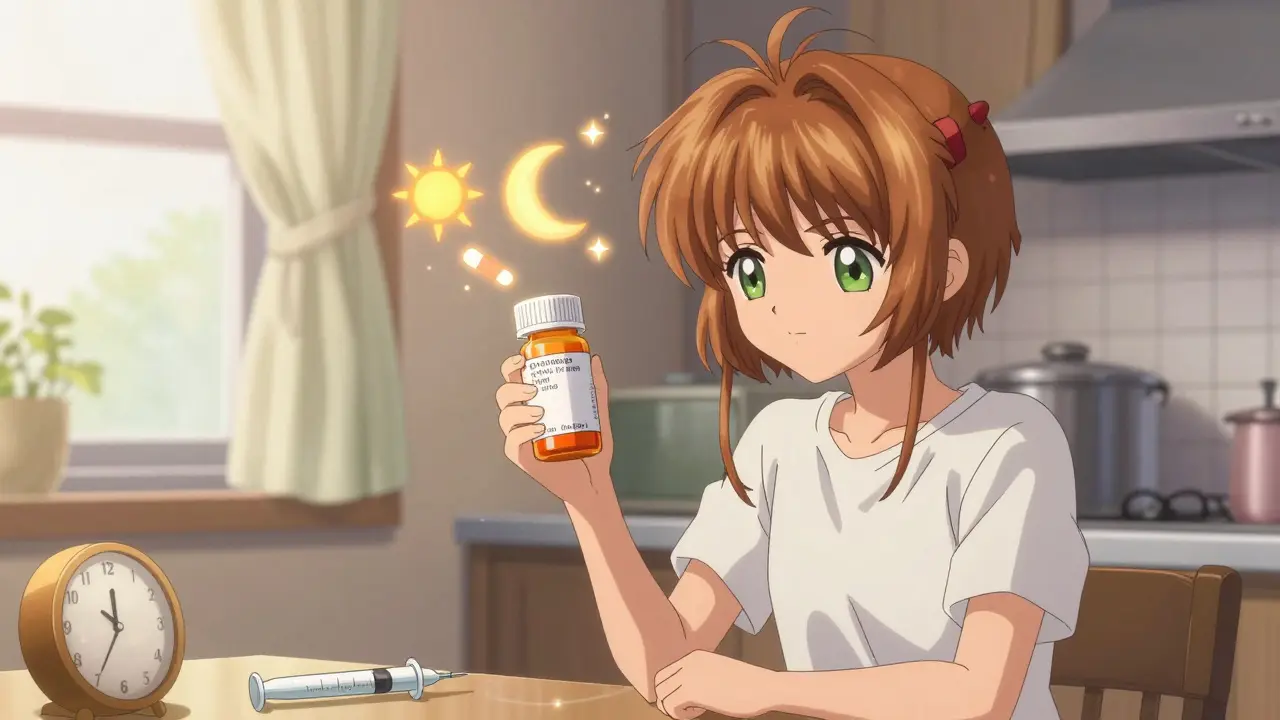
Look at your prescription label. It says "take twice daily." Sounds simple, right? But how many people actually know what that means in real life? Do you take it at 8 AM and 8 PM? Or just whenever you remember? If you’re unsure, you’re not alone. Nearly half of all patients misinterpret basic dosage instructions, and the mistakes can be dangerous.
The FDA says 43.7% of medication errors tied to prescription labels are because of confusing timing. That’s not a small number. It’s the difference between a drug working the way it should and causing side effects, missing doses, or even ending up in the hospital.
Why "Twice Daily" Isn’t Enough
"Twice daily" - or "b.i.d." - used to be standard on every label. But it’s vague. It doesn’t tell you when to take the medicine. For some drugs, timing matters a lot. Antibiotics like amoxicillin need to stay at steady levels in your blood. If you take both pills at night, the first dose wears off by morning, and the infection isn’t fully controlled.
For blood pressure meds, taking them at night instead of morning can actually raise your risk of heart attack. Diabetes meds like metformin cause stomach upset if taken on an empty stomach. That’s why labels now say "take with breakfast and dinner," not "take two tablets daily." The difference isn’t just wording - it’s safety.
Studies show patients who get explicit timing instructions - like "take one tablet with breakfast, one with dinner" - are 35% more likely to stick to their schedule. That’s not a minor improvement. It’s life-changing for people managing chronic conditions.
What "As Needed" Really Means
"Take as needed for pain" sounds flexible. But how many times is "as needed"? Is it three times? Five times? Once a day? The answer matters. Many painkillers like ibuprofen or acetaminophen have strict daily limits - 3,200 mg or 4,000 mg, respectively. Go over that, and you risk liver damage or stomach bleeding.
Consumer Reports found that 68% of people didn’t know the maximum daily dose for their "as needed" meds. That’s scary. Labels should include the max dose right on them. If yours doesn’t, ask your pharmacist. Don’t guess.
Same goes for sleep aids or anxiety meds. "Take as needed" doesn’t mean "take every night." Overuse leads to dependence. Always check the label for the maximum number of doses per day. If it’s not there, it’s an incomplete label.
Units Matter: mL, Not Teaspoons
Older prescriptions still say "take one teaspoon." But a teaspoon isn’t a precise tool. Kitchen spoons vary wildly. One person’s teaspoon might hold 4 mL; another’s might hold 7 mL. That’s a 75% difference in dose.
The FDA and U.S. Pharmacopeia now require oral liquid meds to use milliliters (mL) - not teaspoons or tablespoons. If your label says "5 tsp," that’s outdated and unsafe. You should see "5 mL" instead. Always use the measuring cup or syringe that came with the medicine. Never use a kitchen spoon.
A 2022 NIH study found that 27% of patients made dosing mistakes because they used spoons. That’s nearly one in four. It’s not carelessness - it’s bad labeling. If your label still uses non-metric units, ask for a new one. Pharmacies are supposed to fix this.
Timing That Works for Your Life
Some labels say "take in the morning and evening." But what if you work nights? Or your schedule changes every day? That’s a real problem. A 2022 study found 22% of shift workers got confused by "morning" and "evening" instructions.
Good labels adapt. If you’re on a night shift, your pharmacist should adjust the timing to match your routine. Instead of "take with breakfast," they can write "take when you wake up" or "take before your first meal of the day." It’s not just about medical accuracy - it’s about real-life usability.
Don’t be afraid to ask: "Can we change this to fit my schedule?" Pharmacists are trained to do this. They just need you to speak up.
What to Do When the Label Doesn’t Make Sense
If you see abbreviations like "q.d." or "t.i.d.", stop. Those are outdated. The American Medical Association says only 37% of patients understand them. The label should say "once daily" or "three times daily" - plain language, no jargon.
If the label says "as directed," that’s a red flag. It’s not specific enough. The FDA requires all prescriptions to include exact instructions. If yours doesn’t, call the pharmacy. Ask: "Can you clarify exactly when and how often I should take this?"
Also check for food instructions. Some meds need an empty stomach. Others need food to work right. Levothyroxine, for example, loses effectiveness if taken with coffee, calcium, or food. If your label doesn’t say "take on an empty stomach," ask.
What’s Changing on Prescription Labels
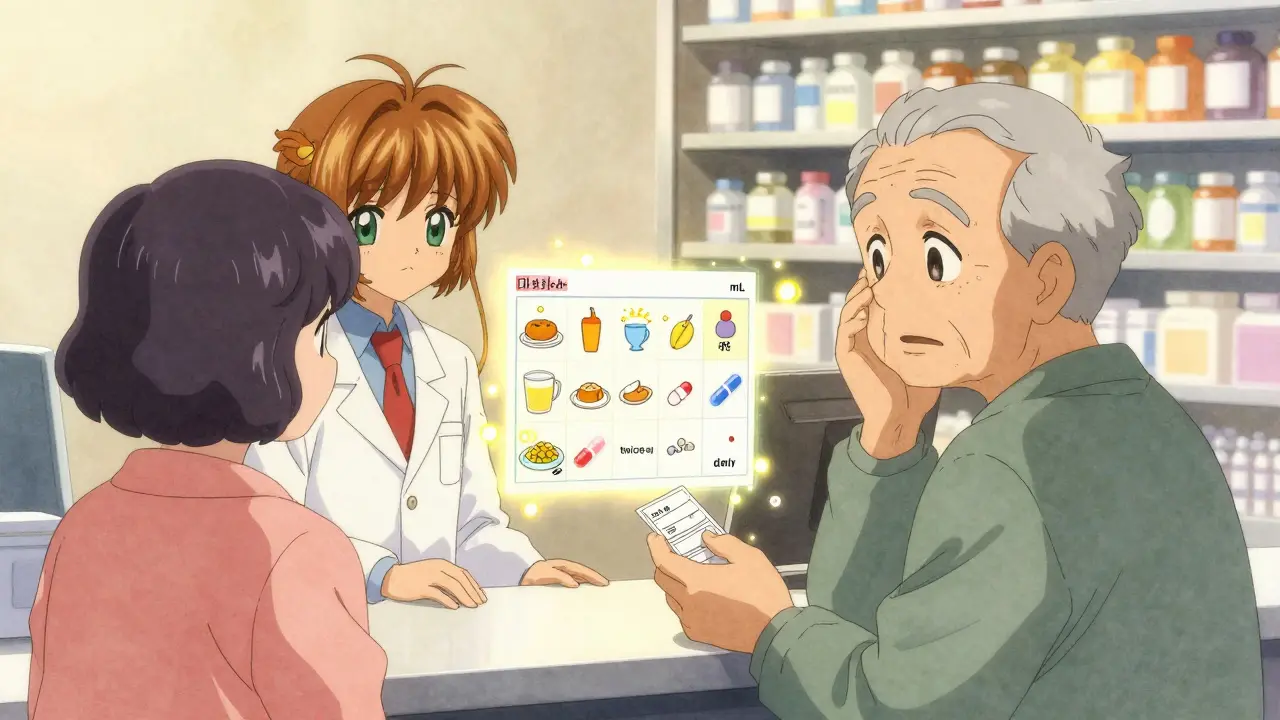
The rules are getting stricter. Starting January 1, 2024, all new drugs must include explicit timing on their labels. By 2027, every prescription in the U.S. will need a "Medication Schedule Grid" - a simple chart showing exactly when to take each dose, day by day.
Some states, like California, already require pictograms: small icons showing a clock with a pill, or a plate with food. These help people who read slowly or have low health literacy. Even if your label doesn’t have them yet, they’re coming.
Pharmacies are also using digital tools. Scanning your label with your phone might show a video of how to take the medicine. A pilot program found this cut timing errors by over half.

How to Double-Check Your Own Labels
Before you leave the pharmacy, ask yourself these five questions:
- Does it say exactly when to take each dose? (e.g., "with breakfast and dinner")
- Is the dose in mL for liquids? No teaspoons or tablespoons?
- Is there a maximum daily dose listed for "as needed" meds?
- Does it say whether to take it with or without food?
- Are there any abbreviations like "b.i.d." or "q.d."? If yes, ask for plain language.
If any answer is "no," ask your pharmacist to rewrite the label. They’re required to help you understand it.
When to Call Your Doctor or Pharmacist
Don’t wait until you feel sick. If you’re unsure about your dosage, call right away. Here are three clear signs you need help:
- You’ve missed a dose and don’t know whether to take it late or skip it.
- You’re taking multiple meds and aren’t sure if they can be taken together.
- You feel worse after starting the new medicine - not just side effects, but something new.
Pharmacists are trained to catch these issues. They can spot interactions, timing conflicts, or dangerous overlaps. Use them. Don’t just pick up your pills and go.
Final Tip: Write It Down
Even with the best label, memory fails. Write your schedule on your phone or a sticky note. Put it on your fridge or bathroom mirror. Say it out loud: "I take my blood pressure pill when I brush my teeth in the morning, and my diabetes pill with lunch and dinner."
Clarity saves lives. Your prescription label isn’t just a piece of paper - it’s your safety plan. Make sure you understand every word on it.

Comments
OMG I just realized I’ve been taking my blood pressure med at bedtime for TWO YEARS because the label said 'twice daily' and I thought 'evening' meant bedtime 😭 This post is a LIFE SAVER. I’m calling my pharmacy tomorrow to get it rewritten. Why do they even use b.i.d.?? 🤦♀️
This is why America’s healthcare system is failing. People don’t read labels. They don’t ask questions. They just swallow pills like candy. And then they wonder why they’re in the ER. The FDA should mandate a mandatory 10-minute counseling session with every prescription. No exceptions.
It is imperative to note, however, that the U.S. Pharmacopeia’s standardized nomenclature guidelines-codified under USP <17>-explicitly mandate the use of metric units for liquid dosing, and the avoidance of abbreviations such as 'b.i.d.' or 'q.d.' is a non-negotiable component of patient safety protocols. Failure to comply constitutes a breach of the standard of care.
If your pharmacist still gives you a label with 'teaspoon' on it, walk out. Don’t wait. Don’t ask. Just leave and go to another pharmacy. They’re either lazy or incompetent. Your life isn’t a suggestion.
I work night shifts and I’ve been taking my diabetes meds at 7 AM because that’s what the label said. I didn’t realize it was killing my sleep cycle until I read this. I’m going to ask my pharmacist to adjust it to 'take when you wake up.' I never thought that was an option.
i used to use a spoon for my kid’s antibiotics til i almost killed him. now i only use the syringe. no joke. the difference between 5ml and 7ml is like giving a toddler a whole extra pill. dumb. so dumb.
I had no idea about the max dose on painkillers 😳 I thought 'as needed' meant 'whenever I hurt'... I’ve been taking ibuprofen 6 times a day for months 😭 Thank you for this. I’m deleting my old prescription label and writing the max dose on my mirror. 💊❤️
Writing your schedule down is the single most effective tool I’ve found for medication adherence. I keep mine in my wallet. It’s saved me from missed doses during travel, holidays, and even power outages. Simple. Low-tech. Life-changing.
I appreciate this guide. But I also think we need to stop blaming patients. Many of us are elderly, non-native English speakers, or have cognitive challenges. The system needs to adapt-not just the patient.
This is why I don’t trust big pharma. They want you confused so you keep buying more pills. If they made it simple, people might actually get better. And then where’s the profit?
i live in india and here most labels still say 'ts' for teaspoon... i had to learn ml from my nephew. he was 12. it’s sad. but thank you for sharing this. maybe one day our system will catch up.
The idea of a Medication Schedule Grid is brilliant. Visuals transcend language barriers. In rural India, many patients rely on icons and colors to understand their regimens. This should be global, not just American.
my dad took his heart med at night for 5 years because the label said 'twice daily' and he thought night was one of them. he ended up in the hospital. this post made me cry. pls share this with everyone you know.